


December 2, 2025, 4:48 am | Read time: 4 minutes
Many balcony plants bring joy to the warm season with their vibrant colors and lush growth. But as temperatures drop, the question arises: How do you properly overwinter the plants so they sprout healthily again next year? myHOMEBOOK plant expert Franka Kruse-Gering explains the key points to consider when overwintering balcony plants.
What Is Hardy and What Is Not?
Not all balcony plants tolerate frost equally. Hardy species like small conifers, lavender, or ivy can stay outside even in low temperatures, but need some protection from prolonged cold. Non-hardy plants such as geraniums, fuchsias, lantanas, or Mediterranean container plants are sensitive to frost and must be moved indoors. A clear classification saves a lot of effort in winter and prevents losses.
Where Should You Overwinter Balcony Plants?
Non-hardy balcony plants need a bright, cool, and frost-free location. Ideal places are conservatories, bright basements or stairwells, or unheated rooms with enough daylight. It’s important to maintain a temperature between about 41 and 54 degrees Fahrenheit to keep the plants in winter dormancy without freezing. Hardy species remain outdoors. However, they should generally be placed against a sheltered house wall or in a corner that receives less wind and precipitation.
Check for pests
Before moving them to winter quarters, balcony plants should be thoroughly checked for pests. Aphids, whiteflies, or spider mites multiply particularly quickly in enclosed spaces and can cause significant damage there.
Infested plants should be thoroughly rinsed or treated with suitable agents before being moved to the quarters. It is advisable to place them separately from other plants despite treatment, so that in case of infestation, the pests do not spread to healthy plants. Regular checks during the winter months are also worthwhile, as pests can remain active even during dormancy.
Also interesting: 4 Plants That Stay Green Even in Winter
This Protection is Needed for Balcony Plants That Stay Outside in Winter
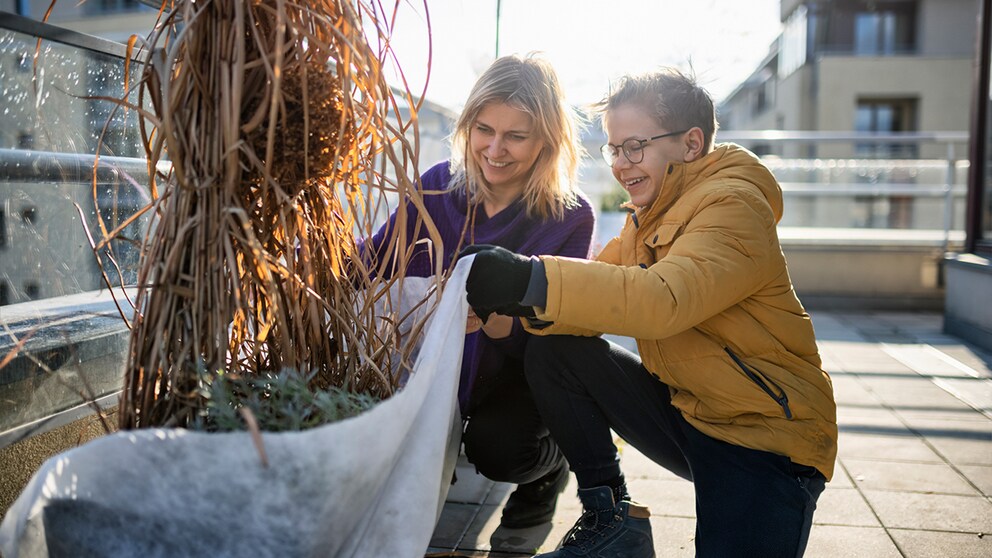
Even hardy species need more protection in pots than in garden soil because the roots can freeze more easily. Containers should therefore be insulated, for example, with burlap, fleece, coconut mats, or bubble wrap, with breathable materials being preferred. The pot should also be placed on wooden or Styrofoam boards to prevent direct ground cold. Additionally, a wind-protected location offers further protection.

How to Properly Overwinter Agapanthus

What to Consider When Overwintering Hydrangeas
Adjust Watering Habits When Overwintering Balcony Plants
Proper watering habits in winter are crucial, as both dryness and waterlogging can severely damage plants during the cold season. Generally, overwintering plants need significantly less water than during the growth phase. For non-hardy species in winter quarters, the soil should be kept only slightly moist—never wet. This means watering only when the top layer of soil has dried out. Too much moisture promotes root rot, especially at low temperatures and low evaporation. At the same time, the soil must not dry out completely, as the fine root system also needs water during dormancy to avoid drying out.
For hardy plants that remain outside, a slightly different rhythm applies. They only need water on frost-free days, and only in small amounts. Especially evergreen species like boxwood or cherry laurel evaporate water through their leaves even in winter and dry out faster than expected if left dry for too long. It is important to water only when temperatures are above freezing, so the water does not freeze in the pot and damage the roots. An ideal location is one where rain does not continuously reach the container, as natural precipitation can also lead to waterlogging. A well-thought-out, adjusted watering routine ensures that balcony plants make it through the winter months stably and sprout vigorously in spring.
Gently Wake Them After Winter
Slowly bringing plants out of winter dormancy is crucial to prevent stress after the winter rest. Once temperatures in spring consistently rise above about 50 degrees Fahrenheit and no severe night frosts are expected, plants can gradually be acclimated to outdoor conditions. Initially, place them in a semi-shaded, sheltered spot for a few days to get used to fresh air, wind movement, and natural temperature fluctuations. Plants that spent the winter indoors are particularly sensitive to direct sunlight; their leaves can actually burn.
After several days in partial shade, they can gradually spend more time in the sun until they finally return to their usual spot on the balcony. During this phase, careful pruning, removal of dead shoots, and possibly repotting are worthwhile. Only when the plants are fully acclimated should you start fertilizing again. A gentle transition out of winter ensures that balcony plants start the new season strong and undamaged.