


November 13, 2025, 2:34 pm | Read time: 3 minutes
When the flower balls of the African lily begin to fade in late summer, its main season is coming to an end. The Agapanthus, as the elegant plant is botanically known, originates from southern Africa and loves sun and warmth. In our regions, it can only tolerate frost to a limited extent. To ensure it sprouts vigorously and blooms reliably next year, it needs a frost-free winter location and some attention during its dormant period. myHOMEBOOK gardening expert Franka Kruse-Gering explains what to keep in mind.
Origin and Characteristics of the African Lily
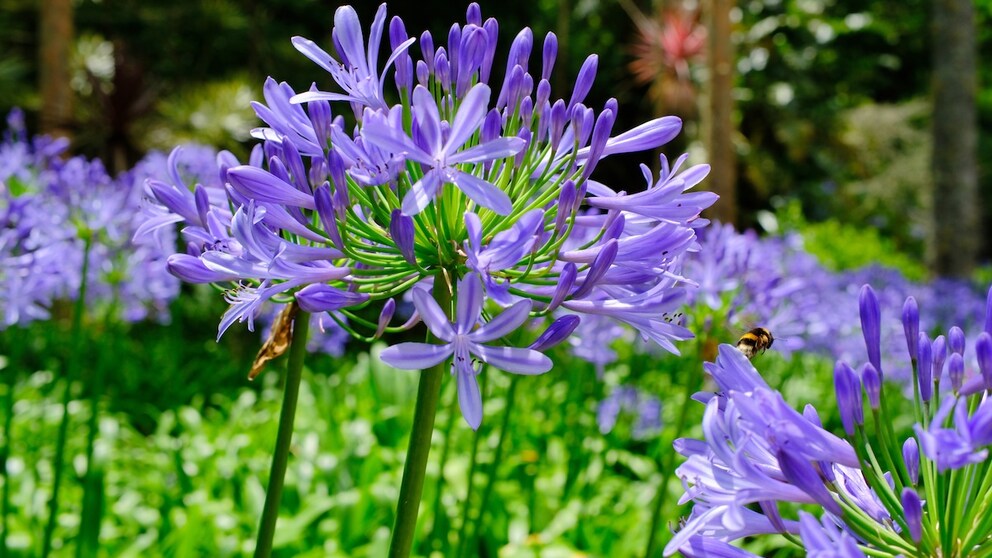
The African lily belongs to the amaryllis family. It is known for its long, narrow leaves and the impressive, usually blue or white, flower balls. Originally, it grows in South Africa on sunny slopes and in coastal regions with mild winters. This origin explains why it is sensitive to cold in our climate.
Different Types with Different Needs
There are evergreen Agapanthus species and those that shed their leaves. Evergreen African lilies retain their leaves during the cold season and are particularly sensitive to cold. The species that shed their leaves are a bit more robust and can withstand frost for a short time, but these Agapanthus species need to be overwintered.
Timing is Crucial
As soon as the nights become noticeably cooler in the fall and temperatures drop below five degrees, the Agapanthus should be moved to a sheltered place for overwintering. Those who keep it in a pot have it easy: Simply clean the pot, remove wilted leaves, and place the plant indoors or in a frost-free room.
Plants in the ground must be dug up and placed in a pot before the first frost. The root ball should remain as undamaged as possible.
The Perfect Place for Winter Dormancy
African lilies need two main things in winter: frost-free conditions and dryness.
A bright, cool location with temperatures between five and ten degrees is ideal. For example, a conservatory, a bright stairwell, or a frost-free basement with a window.
Evergreen species need a bit more light, while deciduous species can manage well in darker rooms. Water sparingly, just enough to prevent the root ball from drying out completely. The plants do not need fertilizer during this time.

What’s Important for Overwintering Balcony Plants

How to Successfully Overwinter Geraniums
How to Care for the African Lily During Winter Dormancy
During winter, the plant is largely dormant. Every three to four weeks, check if the soil is too dry or too wet. Dead leaves can also be removed at this time.
If the first shoots appear in late winter, it’s a good sign. The plant is preparing to sprout. Then you can gradually give it a bit more water and move it to a warmer place.
What to Consider with Agapanthus After Overwintering
From mid-May, once there is no longer a threat of night frosts, the Agapanthus can be moved back outside. It should initially be placed in a semi-shaded spot for a few days to acclimate to the sun and temperature fluctuations. After that, it can be moved to its final location–sunny, sheltered from the wind, and in well-drained soil.
After the winter break, fertilization begins: Apply a liquid fertilizer for flowering plants about every two weeks. This ensures a strong start to the new season.