


May 23, 2024, 1:13 pm | Read time: 6 minutes
They are beautiful, fragrant, or sometimes look like imaginative candies–poisonous plants in the garden. Many of us don’t even know they’re toxic. Beautiful, poisonous plants can be especially dangerous for children. myHOMEBOOK editor Franka Kruse-Gering lists five popular but poisonous garden plants that parents should avoid.
Poisonous plants are found in many gardens. Some are gifts, others creep over from a neighbor’s yard, and sometimes we simply forget to check the label when buying. Some children are magically drawn to the flowers or fruits and want to taste or at least touch them. But this can have devastating consequences with some garden plants, as they can be toxic, especially to children.
1. Monkshood
The Blue Monkshood (Aconitum napellus) is probably the most well-known. It grows in many gardens and is even used by professionals in floral arrangements, despite being one of Europe’s most poisonous plants. Children are attracted to its blue color and often want to pick it and show it to their parents. But this can lead to poisoning. The plant is toxic in all parts, especially the root and seeds.
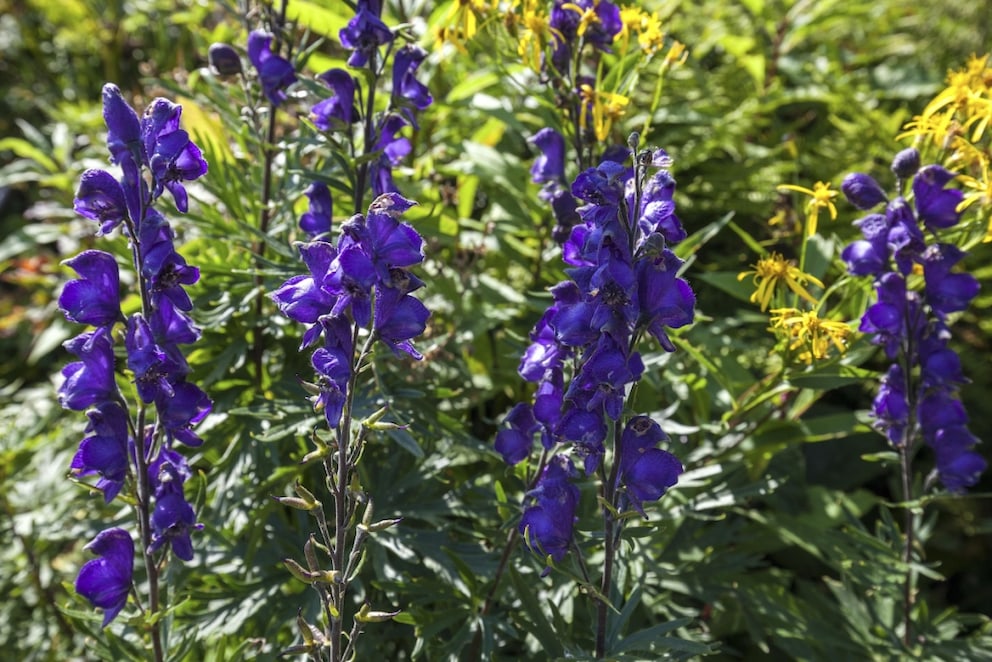
In 2005, the Blue Monkshood was named Poisonous Plant of the Year. The primary toxin is aconitine. Mere skin contact can cause skin irritations.
Ingesting it can have much worse consequences, writes the Goethe University Frankfurt: “Its alkaloid, aconitine, is lethal to humans in amounts of 3 to 6 milligrams.” If children frequently visit the garden, it’s best to avoid this poisonous plant.
2. Yew
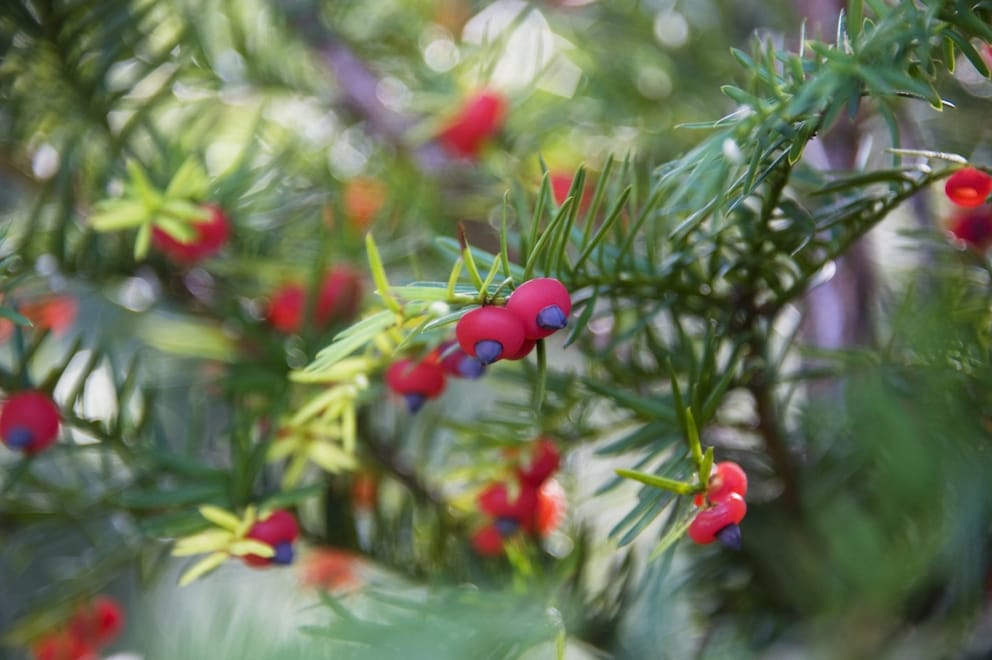
The yew is a popular hedge plant and is also found as a tree in many gardens. It is very low-maintenance and, as an evergreen plant with red fruits, is quite appealing. However, it is also one of the poisonous plants in the garden that families with children should avoid. The yew is extremely toxic to pets as well, warns the Lower Saxony State Office for Consumer Protection and Food Safety. “Except for the red seed coats, all parts of the plant–both fresh and dried–are highly toxic when ingested,” it states.
The Poison Center Bonn lists the following symptoms of yew poisoning: “Dry mouth, reddening of the lips, pupil dilation, pallor, nausea, abdominal pain, dizziness, diarrhea, heart and circulatory disorders, liver and kidney damage, seizures, death.” As attractive and easy to care for as the yew may seem, it is not suitable for gardens with children.
3. Angel’s Trumpet

Angel’s Trumpet (Brugmansia) appears like something out of a fairy tale in the garden under the sun. The plant is very popular due to its beauty. It can appear as a bush or a tree. What many owners don’t know: Angel’s Trumpet, also colloquially known as the trumpet tree, is one of the most poisonous plants in our region. It is toxic in all parts.
It is recommended to wear protective clothing when working with this plant, as even touching it can cause skin rashes. Smelling the plant too intensely can have an intoxicating effect. Contact poisoning can also lead to confusion and loss of consciousness, writes the Federal Institute for Risk Assessment. This condition can last up to two days.
4. Mountain Laurel
The Mountain Laurel (Kalmia) has many names. It is also known as the laurel or kalmia broadleaf. Its diamond-shaped flowers invite admiration and touching. However, this should be avoided, as it is one of the very dangerous plants. Especially for children and pets, this plant is not a good idea for the garden, as it is very toxic. In English-speaking regions, it is also called “Lambkill” due to its toxicity. The plant contains acetylandromedol. According to the science magazine Spektrum, acetylandromedol can cause “intoxicated states accompanied by convulsions and heart paralysis.”
Note: The popular rhododendron also contains this toxin. When planting it, special attention should be paid to the location, as its sprawling greenery invites children to play hide and seek.
Watch out! These 5 Early Bloomers Are Poisonous
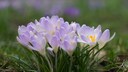
How Toxic Are Crocuses Really?
5. Castor Bean
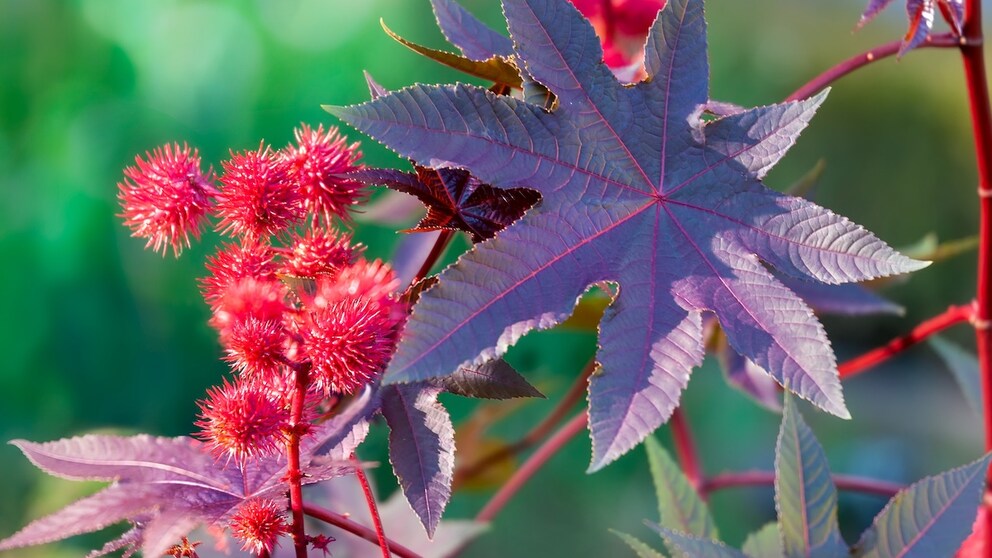
The Castor Bean, also known as the wonder tree, stands out for its extraordinary appearance. In Germany, it is grown as an annual ornamental plant in gardens and parks. In 2018, it was named Poisonous Plant of the Year. If you have children, you should avoid the Castor Bean in the garden, as it is very toxic.
The pink fruits can be particularly enticing to children. They look like small, bright chestnuts. The plant is toxic in all its parts, but the toxin ricin is highly concentrated in the seeds. Depending on ingestion, the poisoning can have different symptoms, warns the Robert Koch Institute.
Oral ingestion can show symptoms such as nausea or vomiting, and diarrhea is also possible. Skin contact can cause skin irritations. Ingestion through injection or inhalation is also possible, but these cases do not occur in gardens and were therefore not considered in this article.
How to Act in Case of Possible Poisoning
The Poison Center Bonn advises the following on its website if a child has swallowed a poisonous plant in the garden: “Let the child drink water, tea, or juice in small sips and amounts. This should be done as quickly as possible in cases of acid and alkali poisoning.” It is strongly advised against inducing vomiting.
In case of skin contact, the Poison Center Bonn recommends immediately removing the affected substances from the body. If eye contact occurs, rinse them for at least ten minutes. Additionally, the Poison Center is available around the clock at the following number: 0228/19240.