


July 24, 2025, 7:38 am | Read time: 3 minutes
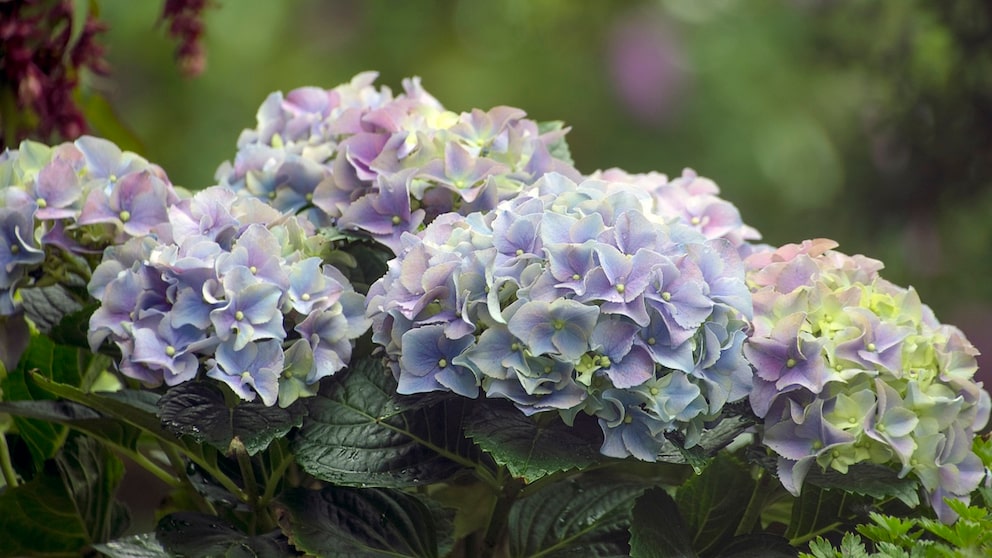
Hydrangeas, especially the colorful mophead hydrangeas, are among the most popular garden plants due to their impressive bracts, often mistakenly perceived as flowers. They captivate with colors like pink, magenta, violet, and blue. If a hydrangea loses its color, it may indicate certain changes or issues. myHOMEBOOK reveals what’s behind it.
pH Level Affects Hydrangea Color
Hydrangeas are not only impressive because they are among the few flowers on Earth that can bloom blue. You can even influence the color of the bloom. The key factor is the soil’s pH level. This means if you plant a blue hydrangea in the garden and it gradually loses its color, the pH level could be responsible. This also applies to hydrangeas of other colors.
To maintain the blue color, the garden soil must be acidic. Only then can the plant absorb trace elements like aluminum, which are responsible for the blue color. If you want the blooms to remain pink or magenta, you should ensure the pH level is higher, meaning more alkaline.
By the way: You can take advantage of this hydrangea trait. To change a pink hydrangea to blue, you should use the right fertilizer. Rhododendron and hydrangea fertilizers have a low pH level. Additionally, you can mix the garden soil with rhododendron soil. This is also acidic and ensures a blue color.
Also interesting: 5 Common Mistakes When Watering Hydrangeas

Do Rusty Nails Really Help Hydrangeas Bloom Abundantly?
How Effective Is Hydrangea Soil Really?
Hydrangeas Fade with Age
If the flower clusters fade slowly but gradually, it may be related to the plant’s age. As hydrangeas bloom, the colors of the flower heads become lighter and turn green. This is a completely normal process that every hydrangea goes through.
The popular perennial typically blooms only in summer. From June, the first varieties display their magnificent flower clusters. The last ones can still be admired in September. Hobby gardeners might be unsettled if the blooms fade and turn green very early. Usually, these are specimens that were pre-grown the previous year and sold in bloom. They actually bloom too early—and therefore also fade earlier. The early fading is no cause for concern but is related to the age, specifically the pre-growing.
Hydrangea Loses Color Due to Too Much Sun
The hydrangea is not considered demanding. However, like any plant, there are places where it feels more comfortable than others. Hydrangeas are originally forest plants. They prefer a partially shaded location. If the perennial receives too much sun, it can cause its color to fade.