

August 2, 2025, 4:53 am | Read time: 4 minutes
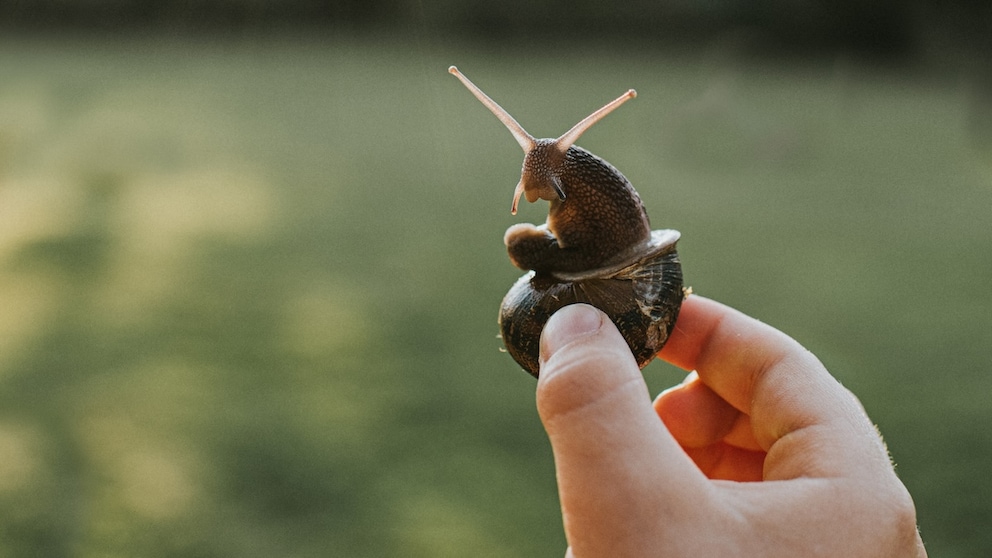
They slowly crawl through gardens, across sidewalks and streets–and it’s not uncommon for people to want to help the seemingly defenseless snails when danger looms. However, those who think they can simply pick up snails by their shells might unintentionally harm them. An expert explains why grabbing the shell is problematic and how to properly move snails.
Follow myHOMEBOOK on WhatsApp now
Why You Shouldn’t Pick Up Snails by Their Shells
Snail expert Walter Wimmer, head of the “Regional Nature Conservation” division at the Lower Saxony State Agency for Water Management, Coastal and Nature Conservation, warns: “If there is a strong pull on their shell, it can actually cause injuries to the snail’s soft body due to overstretching of sensitive structures.”
In particular, the so-called mantle, which connects the body and shell, can be damaged–in the worst case, with fatal consequences. This is because snails use slime and muscle power to firmly attach themselves. Abruptly pulling them off risks serious damage.
Also interesting: How a sacrificial plate can help against snails in the garden
How Snail Adhesion Works
The impression that snails “stick” is an oversimplification. Their foot is a highly specialized muscle organ that, through wave-like movements combined with slime secretion, develops enormous adhesive power–even upside down. This connection is so strong that a sudden detachment can overstretch the internal structures, particularly the retractor muscle. Therefore, scientific articles and snail forums clearly warn against forcibly removing the animals from surfaces.
Does Touching Snails Harm Them?
“There’s nothing wrong with touching snails,” says Wimmer. “However, there should be no substances on your fingers that could harm the moist surface of the snail’s body, such as salt or hand cream.”
Since snails absorb many substances through their skin, it’s important to wash your hands thoroughly beforehand–ideally with just water and without soap or cream residues. You should also wash your hands afterward, as snails can eat carrion and feces–including dog feces in cities. Their slime can contain pathogens that, while rarely dangerous to humans, are still undesirable.
A Gentle Trick: Tap Instead of Pull
Among snail enthusiasts, gently tapping the shell is considered a helpful trick: The animals get startled and often detach themselves from the surface voluntarily. “Gentle tapping can indeed support detachment,” explains Wimmer. “But it should be done in a way that does not damage the snail’s shell.”

What Really Helps Against Slugs in Raised Beds?
Tigerschnegel: Why This Slug Is Good for Your Garden
How to Properly Relocate Snails
If it’s necessary to relocate a snail–for example, to protect it from cars or remove it from the vegetable garden–you should proceed as follows:
- Never pull on the shell: Especially not when the snail is actively crawling.
- Gentle tapping or coaxing: With light tapping on the shell or by patiently coaxing with your finger, the snail often detaches on its own.
- Use tools: A wet leaf, a damp brush, or a clean plastic card can help gently release the foot.
- Moist hands or surface: The sensitive slime layer cannot tolerate dryness–so moisten your hands or use a damp tool.
- Find a suitable location: Never relocate the snail to a dry place, but to a shady, moist spot with plants–preferably near where it was found.
Conclusion: Mindfulness Protects Snail Lives
Snails are sensitive creatures with remarkable abilities. Those who wish to help them should know not to pick them up by the shell. “With a bit of care and understanding, you can avoid accidentally harming the animal,” says Wimmer.
Whether relocating or simply observing: Treating snails with respect helps preserve their role in the ecosystem.
This text first appeared on our partner portal PETBOOK