


July 31, 2025, 3:59 am | Read time: 3 minutes
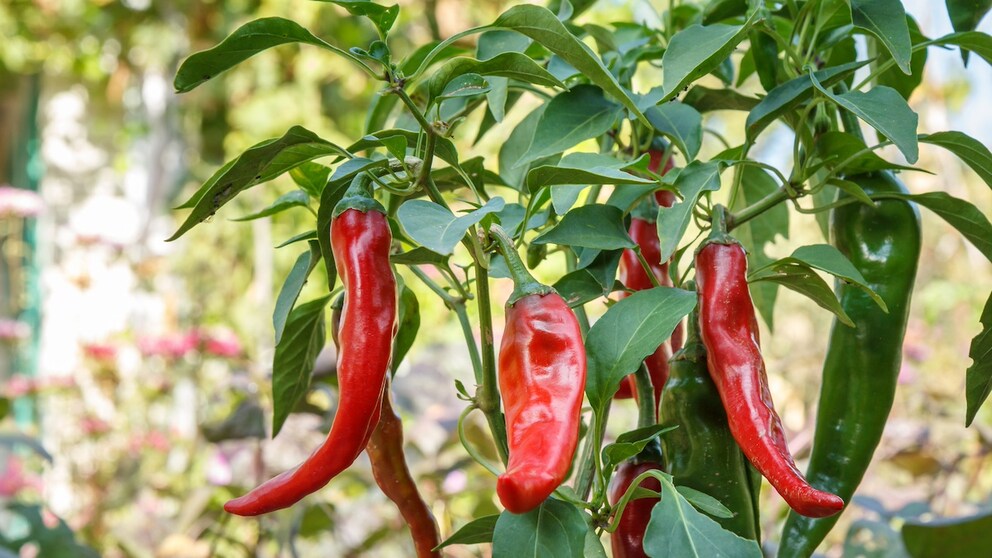
If you’re growing chilies in your garden or on your balcony, you’re likely aiming for spicy fruits. In fact, you can influence the heat level of the pods. The following tips can help make chilies hotter.
Plenty of Sun, Plenty of Heat
Chilies are not native plants; they originate from the tropical and subtropical regions of Central and South America. To grow, they need plenty of sun and warmth. Through sunlight, chili plants perform photosynthesis, generating energy. This energy is necessary for robust growth, the formation of flowers and fruits, and the production of capsaicin.
Capsaicin is a secondary plant compound responsible for the fruit’s heat. It is not produced for humans to spice their food–quite the opposite. It is a defense mechanism to protect against predators.
Also interesting: Researchers make solar cells more efficient with chili heat
During the day, the ideal temperature is between 77 and 86 degrees Fahrenheit. At night, it should not drop below 59 degrees Fahrenheit. At temperatures below 50 degrees Fahrenheit, chili plants stop producing capsaicin and may suffer damage.
Low-Nitrogen Fertilization
To grow and develop fruits, chilies need sufficient nutrients, which are provided through fertilization. It’s important to note that more fertilizer is not automatically better. The composition and dosage are more crucial.
Hobby gardeners should focus on targeted fertilization. Chilies need nutrients, but not all in the same amount. Special care should be taken with nitrogen. Too much nitrogen leads to many leaves but few flowers and fruits. The plant grows lushly but bears only a few (spicy) pods. This doesn’t mean you should completely avoid nitrogen. It can be helpful for young plants and promote growth.
For flavorful chilies, focus on potassium during the fruiting phase. This nutrient affects fruit quality and heat. Tomato fertilizer is one suitable option.
Extra Tip: Good soil is crucial for healthy chili plants. It should be well-draining and nutrient-rich. Hobby gardeners can use tomato soil, for example.
How to Easily Grow Your Own Peppers
Fertilizing Zucchini: Top Tips for a Bountiful Harvest
“Stressing” Chilies
Generally, plants in the garden, on the balcony, or indoors should be stressed as little as possible. Yes, you heard right! Plants can also be stressed. For example, some species react sensitively to frequent changes in location. Another cause of stress: too little water. However, this drought or heat stress can be beneficial for chilies in moderation.
Back to the chili plant’s homeland: In Central and South America, it’s warm, sunny, and there’s relatively little rain or moisture. The chili plant is ideally adapted to these conditions. They grow particularly well and produce many fruits. By watering your chilies less, you induce slight stress in the plant. Chilies then respond by producing the defense compound capsaicin, the heat substance. It’s best to water the chili only when the top two to three centimeters are dry. Additionally, hobby gardeners should water the plant less frequently but more thoroughly. A drainage system is essential to prevent root rot.
At the same time, this means: If you prefer milder chili pods, avoid intentionally stressing the chili. Frequent watering results in more leaves and fewer milder fruits. But beware: The risk of root rot and fungal diseases also increases.
Variety Choice Can Determine Heat
Although hobby gardeners can influence the heat of chilies through proper or improper care, there are limits. The flavor strongly depends on the variety. The heat is genetically determined. The Jalapeño is relatively mild. Thai chili is medium-hot, and varieties like Habanero or Carolina Reaper are very hot.