


April 21, 2026, 12:48 pm | Read time: 3 minutes
Asparagus season is a culinary exception. Few other vegetables are so eagerly awaited, celebrated, and simultaneously traded at such high prices. This makes offers at farmers’ markets all the more tempting: “Two kilos for the price of one!” But while the joy over the bargain is great, a practical question quickly arises: What to do with the suddenly doubled amount of asparagus? Can you freeze asparagus without compromising taste and quality, or is the delicate vegetable too precious for that? myHOMEBOOK consulted an expert from the Federal Center for Nutrition (BZfE).
Can You Freeze Asparagus?
“Asparagus can be easily frozen for longer storage,” explains Astrid Donalies from the BZfE. The process is relatively simple, the expert explains: “Wash the stalks, peel them, and optionally blanch them briefly. For later use, you can cut them into pieces as desired. The asparagus can then be used without thawing.” Once frozen, asparagus can be enjoyed for months, as it keeps for six to twelve months.

What to Consider When Freezing Pumpkin

Can You Actually Freeze Eggs?
Keeping Asparagus Fresh for a Short Time
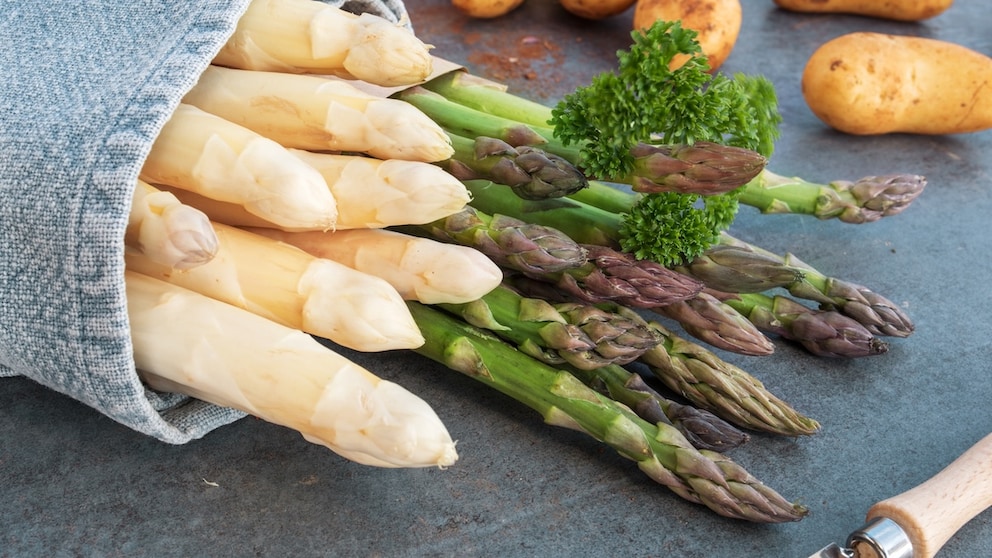
If you only want to store asparagus for a few days, you don’t need to freeze it immediately. There are other ways to keep it for a few days. However, it’s important to note that asparagus loses flavor with each passing day. “Fresh white asparagus is best stored at home in the refrigerator. Wrapped in a damp, clean cotton cloth, it keeps for about one to three days. Green asparagus also stays fresh standing in a container with a little water. Pre-peeled asparagus should always be kept cool and used the same day,” Donalies advises. The expert adds that asparagus should not be stored next to strong-smelling foods in the refrigerator, as it easily absorbs odors.
What to Consider When Cooking Asparagus
If you prefer to eat asparagus right away, there are several options, Donalies reveals. “Asparagus can be prepared in many ways. For example, it can be steamed, sautéed, baked in the oven, and even grilled. Traditionally, the stalks are boiled in salted water for ten to 15 minutes, depending on their thickness and the desired firmness. To reduce bitterness in asparagus, a pinch of sugar in the cooking water helps. Woody ends should be trimmed by about one to three centimeters.” Before processing, it’s important to wash the asparagus thoroughly, as sand can sometimes be found in the slightly open tips.
If you want to consume asparagus raw, you should choose particularly thin and tender stalks, the expert explains. “People with sensitive digestion sometimes do not tolerate raw asparagus well.”