


November 17, 2025, 4:44 am | Read time: 5 minutes
Those who carve pumpkins in the fall, make soup, or prepare roasted vegetables often discard pumpkin seeds without a second thought. Yet, they hold a lot of potential—not just for snacking, but also for planting next year. With a few simple steps, pumpkin seeds can be dried and preserved. We’ve summarized how this works, what to consider, and how to make the seeds particularly flavorful.
Overview
Why It’s Worth Saving Pumpkin Seeds
Pumpkin seeds are true all-rounders: They contain valuable nutrients like magnesium, zinc, iron, and unsaturated fatty acids. Roasted as a snack, they are healthy and delicious, and as seeds, they provide the foundation for new plants next year. So, if you’re already preparing pumpkin dishes, you can use the seeds as well—saving money, reducing waste, and ensuring a sustainable harvest.
Drying Pumpkin Seeds—Step by Step
Step 1: Remove Seeds from the Pumpkin
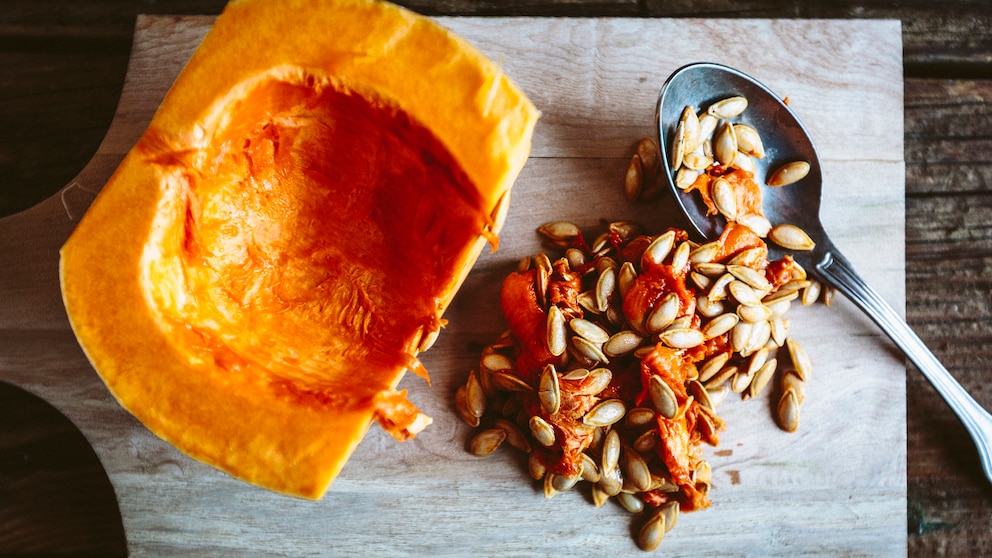
After cutting open the pumpkin, use a spoon to scoop out the seeds from the fibrous, moist flesh, which initially feels a bit sticky. It’s best to place the mass in a sieve and rinse thoroughly under lukewarm water. This makes it easy to remove the fibers.
Tip: With Hokkaido, butternut, or muscat pumpkins, the effort is particularly worthwhile—their seeds are usually large and flavorful.
Step 2: Clean Thoroughly
To prevent the pumpkin seeds from molding while drying, they should be as clean and dry as possible. After rinsing, spread the seeds on a kitchen towel and gently pat them dry. Make sure no flesh remains attached—it could rot or smell unpleasant during drying.
Step 3: Let Pumpkin Seeds Dry—Air or Oven
Now it’s time for the actual drying. There are two options:
- Air Drying: Spread the clean seeds on baking paper or a clean cloth. The place should be dry, warm, and well-ventilated—such as a sunny windowsill or an airy spot near a heater. Turn the seeds daily to ensure even drying. After about a week, they should be completely dry. Advantage: energy-saving, gentle, ideal for seeds.
- Oven Drying: If you want to speed up the process, you can dry the seeds in the oven. Preheat the oven to 50 to 60 degrees Celsius and leave the door slightly open to let moisture escape (e.g., wedge a wooden spoon in the door). After about 1.5 to 2 hours, the seeds are dry.
Important: If you want to use the pumpkin seeds as seeds, do not dry them in the oven, as the heat usually destroys their germination ability.
Step 4: Store or Process Further
Once the pumpkin seeds are completely dry, they can either be processed further as a snack or stored for planting. For the latter, store the seeds in paper bags or jars with screw lids—dry, dark, and as cool as possible. This way, they will last until the next planting season.
Roasting Pumpkin Seeds—How to Make Them Crunchy and Flavorful
If you’d rather snack right away, you can also roast the dried seeds. Simply heat some oil in a pan or preheat the oven to 160 degrees Celsius with convection. Place the seeds on a baking sheet, lightly salt them, and roast for 10–15 minutes until golden brown. If desired, season with paprika powder, a cinnamon-sugar mix, or herbs—depending on whether you want them sweet or savory.
Tip: With a bit of soy sauce, dried pumpkin seeds become particularly savory.
Harvesting Seeds—Which Seeds Are Suitable?
Not every pumpkin provides seeds that will bear fruit again next year. Hybrid varieties (F1) are often bred so that their seeds are not true to type—the next generation then produces different, often inedible fruits.
So, if you want to save pumpkin seeds for planting, focus on heirloom or open-pollinated varieties—such as ‘Hokkaido Red Kuri,’ ‘Butternut,’ ‘Musquée de Provence,’ or ‘Baby Bear.’ The dried seeds can be sown directly in the spring or pre-grown in pots.

3 Ideas to Use Leftover Pumpkin

What to Consider When Freezing Pumpkin
Common Mistakes When Drying Pumpkin Seeds
- Too High Temperature: Heat causes the proteins in the seeds to coagulate—rendering them unusable as seeds.
- Moist Storage: If the seeds are not completely dry after drying, mold can form during storage.
- Flesh Residues: These can rot during storage and cause a musty smell.
- Light and Heat: Both shorten the shelf life—so store in a dark and cool place.
Sustainable Side Effect: Nothing Is Wasted
By drying pumpkin seeds, you truly utilize the entire pumpkin. The flesh becomes soup or roasted vegetables, the peel can be composted, and the seeds provide healthy snacks or new plants.

Two Methods to Shell Pumpkin Seeds
“Many crack the flavorful seeds with their teeth. However, there are a few tricks to make shelling easier. For example, with a rolling pin: Roast the pumpkin seeds in the oven at about 180 degrees. Then gently roll over the seeds with a rolling pin, and the shell will come off. Alternatively, you can boil the seeds in boiling water before drying until the shells rise and can be skimmed off. Then dry the seeds.”