


September 12, 2025, 2:47 pm | Read time: 4 minutes
Fresh from the garden or balcony, herbs taste best. But often the harvest is larger than can be used immediately. Those who want to preserve basil, thyme, or rosemary for longer can easily dry them. myHOMEBOOK explains the methods available, which herbs are suitable, and how to best preserve aroma and nutrients.
Overview
Why Should You Dry Herbs?
Drying removes water from the plants, making it harder for bacteria and mold to form during storage, and the herbs remain usable for months. They can also be stored compactly and used anytime for cooking or tea. Besides freezing, pickling, or canning, drying is simply another method to preserve food.
Which Herbs Are Suitable for Drying?
Not every herb retains its full flavor when dried. Particularly suitable are robust, woody types often from the Mediterranean region:
Delicate herbs like basil, parsley, or chives lose much of their aroma when dried. Freezing is more suitable for them.
The Right Harvest Time
Harvesting should always be done on a dry day, preferably in the morning when the dew has dried. At this time, the leaves contain the most essential oils–and thus the best aroma. Additionally, plant parts in a dry state naturally take less time to dry completely.
Methods for Drying Herbs
1. Air Drying
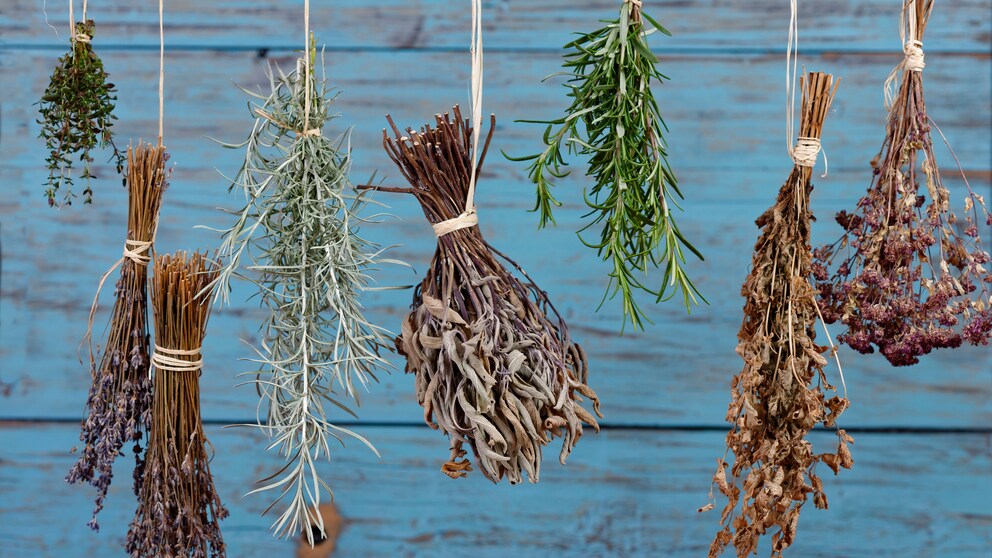
The gentlest method: Bind the herbs into loose bundles and hang them upside down in a warm, dry, but shaded place. Avoid direct sunlight, or they will quickly lose aroma and color. After about one to two weeks, the leaves are dry. This is also called “rustle dry,” because the bundles rustle softly when moved.
2. On a Baking Sheet
If you want faster results or have large quantities of herbs, you can also dry them in the oven:
- Line a baking sheet with parchment paper
- Spread herbs loosely on it
- Dry at 40–50 degrees Celsius with convection, leave the oven door slightly open (stick a wooden spoon between the door and frame)
- After two to three hours, the herbs are ready
3. In a Dehydrator
A dehydrator dries evenly, gently, and is especially practical if you regularly want to preserve larger quantities of herbs or other foods. The temperature can be set low, so vitamins and essential oils are better preserved.
How to Tell If Herbs Are Really Dry
Once all moisture has left the herbs, the leaves can be easily crumbled between the fingers and rustle when touched. Stems should break easily when bent. If this is not the case, continue drying!
Storing Dried Herbs
Store the dried herbs airtight in jars or containers–dark and in a dry location as well, to preserve flavor and color as long as possible. Screw-top jars or small tin containers are practical and also look nice in the kitchen.

How Juniper Berries Unleash Their Full Flavor in Cooking
How to Keep Cut Herbs Fresh Longer
Tip: Crush Just Before Use
Many make the mistake of grinding the herbs right after drying. But the smaller the pieces, the faster the aromas dissipate. Better: Leave the leaves whole and crush or cut them only when cooking. For teas, the leaves can even go whole into the tea strainer.
Creative Uses for Dried Herbs
Dried herbs are not only suitable for seasoning dishes. If you want to get creative, you can also use them for scented sachets, homemade herbal teas, or as an ingredient for bath salts–great gifts from your own (balcony) garden. Rosemary, lavender, and sage can also be placed in small fabric bags that spread a pleasant scent in the closet and keep moths away. This way, the herbs have a double benefit.

Drying Is Especially Worthwhile in Late Summer
“Especially in late summer, it’s worth drying herbs from the garden or balcony. Many plants have now developed their full aroma and can be harvested in larger quantities. I find it nice to take a piece of summer into winter this way–whether for tea, cooking, or as a little fragrant greeting in the closet. This way, the herb supply also reminds us of sunny days in the garden during the cold season.”