


June 11, 2026, 10:41 am | Read time: 3 minutes
Aluminum foil is controversial: On one hand, it’s a practical kitchen tool that reliably protects food from air, light, and odors. On the other hand, it’s far from environmentally friendly. Both its production and the extraction and recycling processes are extremely energy-intensive. Additionally, aluminum is suspected of posing health risks and potentially contributing to diseases such as breast cancer or Alzheimer’s. When combined with certain foods, the foil can partially dissolve.
These Foods Cause Aluminum Foil to Dissolve
Despite its practical properties, aluminum foil should be used with caution. The key is which foods you store in it and for how long. “Acidic and salty foods should not be wrapped directly in aluminum foil or stored in uncoated aluminum trays for extended periods,” says Manon Struck-Pacyna from the German Food Association to myHOMEBOOK.
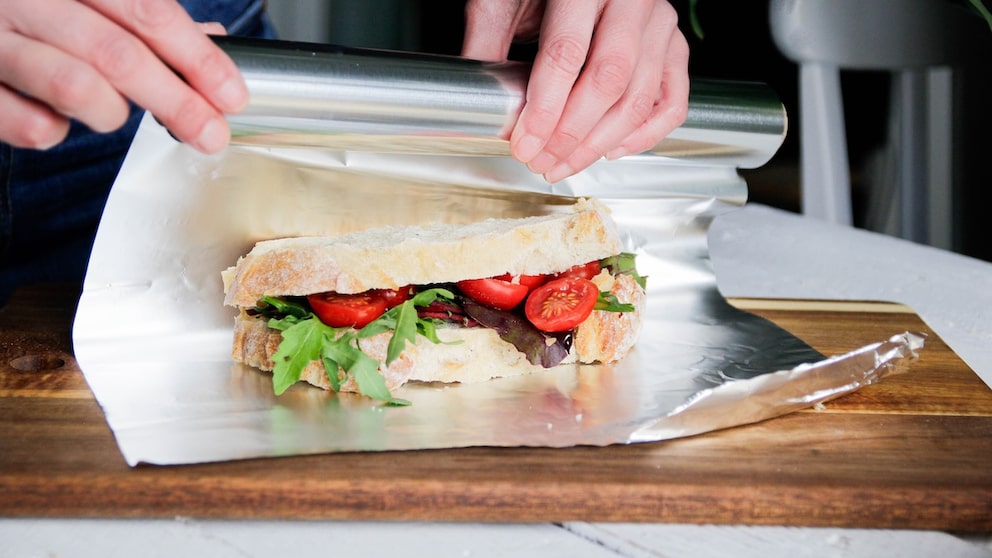
This includes marinated and heavily salted foods. Caution is also advised with fruits high in acidity. The expert lists: “sliced apples, peeled citrus fruits, tomatoes, pickles, as well as sausage, ham, or cheese.”

Which Meat Shouldn’t Go on the Grill

Why You Should Avoid Using Aluminum Trays When Grilling
Health Risks from Aluminum in Food
“Aluminum is a reactive metal,” notes Struck-Pacyna. When in direct contact with highly acidic or salty foods for extended periods, a chemical reaction can occur. “This can lead to the oxidation of aluminum, and as a result, small amounts of aluminum ions can transfer to the food.”
Generally, the amounts of aluminum you can ingest this way are small. For healthy individuals, it’s usually harmless. The body can eliminate most of it through the kidneys. However, scientists are researching the connection between aluminum and diseases like Alzheimer’s or breast cancer, according to the Federal Institute for Risk Assessment (BfR).
Aluminum Foil Alternatives
To minimize health risks, it’s advisable to avoid wrapping acidic and salty foods in aluminum foil for extended periods. However, Struck-Pacyna reassures that short-term use of aluminum foil, such as for temporary covering, poses no problem. According to Struck-Pacyna, there’s also no need to worry about aluminum meal trays or grill trays. They are usually coated and, therefore, not comparable to regular aluminum foil in use. “The coating prevents direct contact between the food and the metal.”
For those who want to be completely safe, it’s best to avoid aluminum foil—also for the sake of the environment. Alternatives like plastic containers, reusable glass containers, or plastic bags offer several advantages: “These materials are durable, reliably protect food, and can be reused multiple times,” the expert notes.