


April 7, 2026, 4:12 am | Read time: 3 minutes
An elegant parquet floor adds warmth and character to any room—but without proper care, even high-quality wood quickly loses its appeal. How can you effectively clean parquet flooring without damaging it? And when is a more intensive treatment necessary? An expert at myHOMEBOOK provides answers.
How Often Should Parquet Be Mopped?
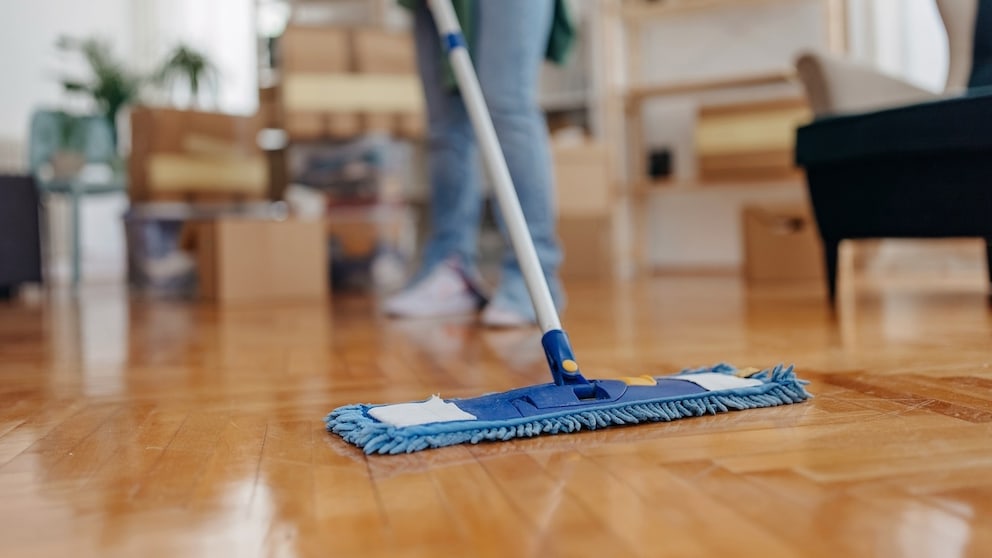
“Mopping should be done according to the level of dirt,” explains Michael Schmid, chairman of the Association of German Parquet Industry in Bad Honnef, in response to a query from myHOMEBOOK. Generally, the expert recommends mopping the floor about once a week. Important: Always vacuum before mopping to remove fine dust particles that could otherwise cause scratches.
Warm or Cold–Which Water Is Better?
“As long as the water isn’t boiling hot, parquet can handle warm water well,” says Schmid. In many cases, cold water is perfectly sufficient. The key is less about the temperature and more about using an appropriate cleaning agent, ideally according to the manufacturer’s instructions.
Common Mistakes in Cleaning
A common mistake is using too much water: Standing puddles can seep into the wood and cause damage. “What doesn’t work at all are flat and often aggressive cleaning agents like scouring milk,” adds Schmid. “They could cause permanent damage.”
Which Cleaning Agents Are Suitable?
According to Schmid, “cleaning agents specifically designed for parquet with wipeable and polishable self-shine emulsions” are suitable for maintenance. Always follow the recommendations of the manufacturer or a professional service. Common all-purpose cleaners are risky, as they may contain ingredients that can damage the wood surface.
How to Keep Your Hardwood Floors Beautiful for Decades

How Colored Parquet Flooring Can Transform a Room’s Ambiance
Use Steam Cleaners with Caution
“Steam cleaners should be used with caution and only in exceptional cases,” warns Schmid. The hot steam can attack the protective varnish or oil layer. If you still want to use a steam cleaner, be sure to check with the manufacturer about its suitability beforehand.
When a Complete Refresh Is Worthwhile
If the floor is visibly aged, a comprehensive refresh may be worthwhile. Two methods are available: a professional deep cleaning or sanding by specialists. Sanding removes the top layer. “After sanding, an oil or varnish layer is applied again for long-term surface protection,” recommends Schmid. “Then the wood shines like new.”
Alternatively, an intensive deep cleaning is often sufficient. The parquet is not sanded but cleaned with suitable agents and visually refreshed.

A Walnut Can Help with Scratches
“If there are small scratches in the parquet floor, you can make them almost invisible with a walnut. Simply rub the nut over the spot—and the parquet shines again. Background: The oils in the nut ensure that the scratch is less visible. Nut particles also remain in the grooves and fill them in.”