


August 18, 2025, 12:48 pm | Read time: 4 minutes
Tiles in the bathroom are not only practical but also an important visual element of room design. To keep them looking good and hygienically clean for a long time, they need proper care. Simply grabbing any cleaner risks not only streaks but, in the worst case, damage to the surface. myHOMEBOOK reveals which products can be used to clean your tiles and what to watch out for.
Follow myHOMEBOOK on WhatsApp now
Suitable Cleaning Products for Bathroom Tiles
Choosing the right cleaning product is crucial to keeping tiles looking good and not losing their shine due to improper care. In the bathroom, there are generally two main types of dirt: lime deposits and soap and shampoo residues. Lime is mainly caused by hard water, while soap residues often leave a slightly greasy film. Both types of dirt require different active ingredients to be effectively removed.
Mild all-purpose cleaners or pH-neutral bathroom cleaners are suitable for regular, gentle cleaning of tiles. They remove everyday dirt and ensure that no stubborn dirt film forms. These cleaners are safe for almost all types of tiles and do not damage the glaze or grout.
For stronger lime deposits, a slightly acidic cleaner is often necessary. Products with citric acid are particularly popular here because they are effective against lime and gentler than vinegar cleaners. Vinegar cleaners have an even stronger effect but should only be used on acid-resistant tiles like ceramic or porcelain stoneware–sensitive materials like natural stone can be permanently damaged by acids.
For grease and soap residues, surfactant-containing bathroom cleaners are ideal. These contain active washing substances that break down fats and oils, making them easy to rinse off. Products that simultaneously combat lime and soap residues are particularly effective, as both often occur together in the bathroom.
Match Cleaning Products to Tile Type
Not every tile can be cleaned the same way. While robust ceramic tiles can withstand almost anything, more sensitive materials like natural stone react very sensitively to certain ingredients. To keep your tiles in the best condition for a long time, you should know exactly what material is installed in the bathroom and how it should be cared for.
Ceramic and Porcelain Stoneware Tiles
These two types of tiles are among the most common in bathrooms. They are very dense, usually glazed, and resistant to most commercial cleaners. Even acidic lime removers based on citric or vinegar acid can be used here without concern, as long as they are not left on too long. For textured surfaces or matte glazes, however, it is advisable to use mild cleaners to maintain the shine and color intensity in the long term.
Glazed Tiles
They have a protective glaze layer that repels dirt and moisture, making them easy to clean. Often, a mild bathroom cleaner or a solution of warm water and a bit of dish soap is sufficient. Aggressive scouring agents, metal sponges, or cleaners with coarse particles can damage the glaze and lead to dull spots.
Natural Stone Tiles
Natural stone is a visual highlight but more demanding in care. The greatest danger for these materials is acidic cleaners. Even mild acids like citric acid can cause permanent etching. Vinegar cleaners and chlorine-containing products are also off-limits. Instead, you should use pH-neutral special cleaners for natural stone that gently remove dirt and soap residues without attacking the surface.

Is It Safe to Clean Tiles with Vinegar?

Common Mistakes to Avoid When Cleaning Your Shower
Which Products to Avoid
Avoid abrasive cleaning agents or metallic sponges, as they can roughen surfaces. This can cause dirt and lime to settle even faster in the future. Highly concentrated chlorine cleaners are only advisable in exceptional cases, such as to combat mold in the grout, as they can attack the grout and possibly even the tile glaze.
Also interesting: These home remedies make dirty grout white again
Step-by-Step Guide to Cleaning Tiles
- Preparation: Remove coarse dust and dirt with a dry or slightly damp cloth. For floor tiles, vacuum or sweep thoroughly first.
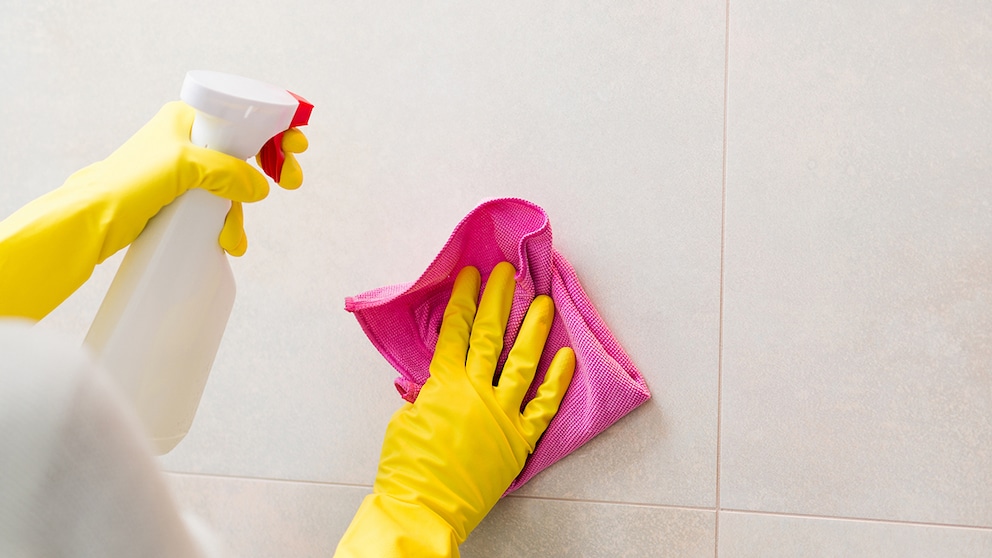
- Apply Cleaner: Apply the appropriate cleaner with a soft sponge or microfiber cloth. For lime stains, let the cleaner sit for a few minutes.
- Gently Scrub: Wipe over the tiles in a circular motion. For grout, it’s best to use a soft grout brush.
- Rinse Thoroughly: Wipe with clear water to remove residues–otherwise, streaks can quickly form.
- Dry: Dry the tiles with a soft cloth or a squeegee to prevent new lime stains.