


April 11, 2026, 12:45 pm | Read time: 4 minutes
For decades, vinegar has been considered a household miracle worker. The cleaning trick has been passed down through generations and celebrated online. Vinegar is known as a limescale remover, all-purpose cleaner, and odor eliminator, but what happens when you consistently use it to clean tiles? Does everything become sparkling clean, or does it create shine with side effects? myHOMEBOOK tried it out.
Vinegar has long made a name for itself as a descaler and a secret tip for sparkling windows. But what happens when you want to use the acidic solution to clean tiles? To test what results vinegar really leaves behind, we dared a self-experiment.
Preparation
The test area is the bathroom of a rental apartment, equipped with classic glazed white wall tiles and visible grout. After a few days without cleaning, the shower fixtures are a hotspot for limescale marks, along with soap residue and the usual limescale and water spots on the tiles. It’s not an extreme case, but a realistic zone.
Instead of reaching for a commercial bathroom cleaner, a solution of water and household vinegar is mixed. For strong descaling effects, a 1:1 ratio is recommended online. What immediately stands out: The smell is sharp, almost aggressive and biting. To protect skin and airways, cleaning gloves and a mask are worn.
First Impression
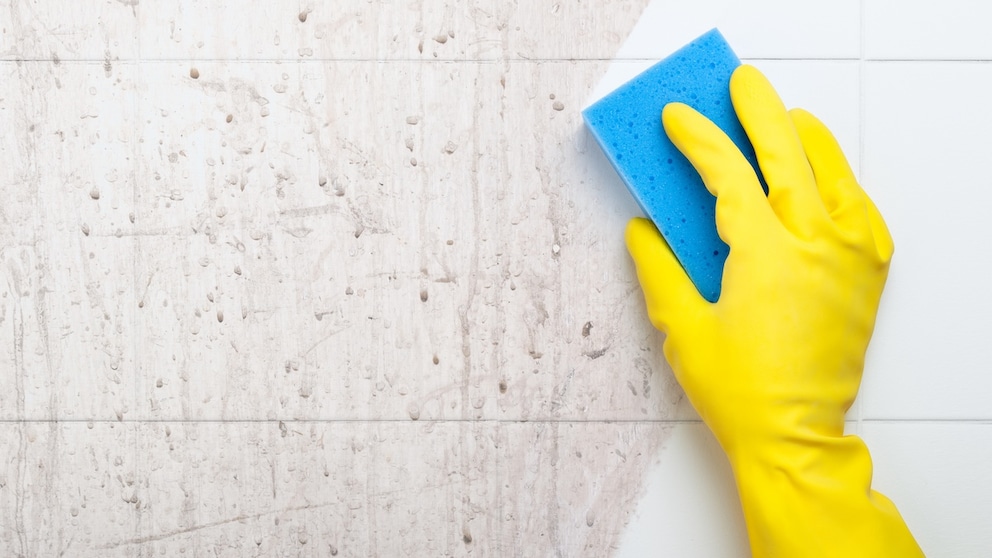
A household sponge is used to apply the solution to the tiles, and a microfiber cloth is used for wiping.
After just a few minutes, it becomes clear why vinegar has such a good reputation. After a short exposure time, the surface shines remarkably clear. Even the floor tiles in the shower, which usually appear dull due to water, suddenly show their full brilliance, and even stubborn limescale spots can be removed with moderate pressure—less polishing, a better finish. Despite all the positive effects, it doesn’t bother that the entire bathroom suddenly smells like vinegar. An unpleasant odor that quickly dissipates.
While still enjoying the results, another detail in the bathroom catches the eye: the grout.
Also interesting: Simple home remedy makes ceramic cooktops shine again

How to Properly Clean Your Tiles

Do Not Put Vinegar in the Washing Machine Under Any Circumstances
Disadvantages of Vinegar
The tiles still shine in the highest gloss after about 10 minutes, but the grout already shows initial changes. After drying, they appear slightly lightened and feel rougher than before. A second cleaning round confirms the impression. Vinegar is unproblematic for the tile, but not for the material in between.
A look into material science confirms that cement-based grout indeed reacts to the composition of vinegar. The acetic acid contained can lead to gradual erosion with regular use, it is said. The grout would then become crumbly, lose substance, and in the worst case, even become permeable. Therefore, vinegar should only be applied strongly diluted on both cement and silicone grout. The tested solution was simply too intense.
By the way: Natural stone tiles can also show significant changes after using vinegar. Here, the use of the solution should be completely avoided to prevent major damage.
Coated fixtures should also not be cleaned permanently with the aggressive acetic acid. Especially painted and black fixtures can be damaged.
Long-Term Test
We draw a lesson and use only a vinegar solution in a 1:5 ratio for the long-term test, meaning much more water than vinegar. After two weeks of regular use, the tiles remain visibly clean and limescale-free. The cleaning effort is minimal, and the typical vinegar smell has become familiar. The new, weaker solution is less biting.
Even though the grout is still lighter and appears somewhat duller, they seem to tolerate the diluted solution much better.