

October 11, 2026, 11:21 am | Read time: 3 minutes
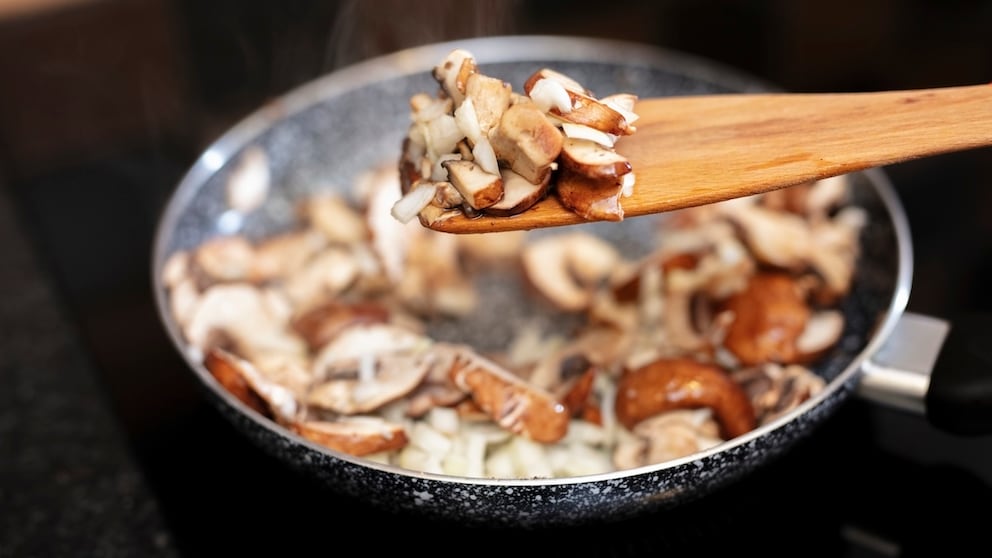
Many amateur cooks focus on taste and freshness when it comes to mushroom dishes. However, there’s an often underestimated risk in preparation: If mushrooms aren’t cooked long enough, even edible types can cause health issues. What experts recommend and how mushrooms and mushroom leftovers should be properly stored.
At Least 15 Minutes Cooking Time for Mushroom Dishes
When experiencing discomfort after eating mushrooms, many initially think of poisonous look-alikes. In fact, nausea, stomach pain, or diarrhea can also occur if mushrooms aren’t cooked thoroughly.
While some recipes suggest cooking times of just five to ten minutes, and for chanterelles sometimes only three to four minutes, the Federal Institute for Risk Assessment (BfR) recommends at least 15 minutes of cooking time for any mushroom meal. Mushroom expert Stefan Fischer from Kayna, Saxony, goes a step further. He suggests 15 to 20 minutes at a consistent heat of 70 to 80 degrees Celsius. According to him, honey mushrooms should be cooked for about 30 minutes.
Also interesting: Can you sell self-picked mushrooms?
Never Eat Wild Mushrooms Raw
Some cultivated mushrooms like button mushrooms can be eaten raw in small amounts, such as in salads. However, this does not apply to wild mushrooms. “There are many edible mushrooms that are toxic when raw, such as red-capped mushrooms, morels, and also honey mushrooms,” says the secretary of the German Mycological Society (DGfM).
Fischer also reports on people who have eaten a found porcini mushroom raw in the forest. That’s risky. “The chitin contained in the cell walls of mushrooms is difficult to digest,” Fischer explains.
Also interesting: What is the hole in the pan handle for?
Ensure Complete Cooking for Large Mushroom Portions
Special attention is required for large mushrooms and larger quantities in the pan. Breaded parasol mushrooms, in particular, can be significantly thicker in the middle than at the edges.
“When breading large slices of a parasol mushroom, you should ensure that the thicker middle is properly cooked through and fry them thoroughly,” says Fischer.
Even with a fully loaded pan, it can happen that individual mushroom pieces barely reach the hot pan bottom or are heated unevenly.
Can You Really Not Reheat Mushrooms? Expert Explains

What to Consider When Freezing Pumpkin
Spoiled Mushrooms Can Also Cause Discomfort
Not only a too-short cooking time can be problematic. Often, mushrooms that are already spoiled are also consumed.
“Ideally, you should eat collected mushrooms on the same day,” advises Stefan Fischer. He would store cleaned mushrooms only until the next day. “But only in the refrigerator,” says the mushroom expert.
Before consumption, the mushrooms should be checked again. Mold, mushy spots, or heavy infestation by maggots are reasons not to eat them. Fischer explains: “Maggots can strike again overnight–they keep eating actively.”
Lightly worm-infested areas can be generously removed. “A little worm damage is okay. You can cut it out generously. But if it’s still wriggling on the mushroom, that’s a different story,” Fischer says.
Mushroom Leftovers Can Be Reheated
The widespread advice not to reheat mushroom dishes is now considered outdated. Modern refrigerators allow for safe storage.
“You can certainly reheat them. The myth that it’s not possible comes from times without refrigerators. Mushroom leftovers should be treated like leftovers from delicate vegetables.”
To cool the dishes as quickly as possible, Fischer recommends placing a still-hot pot in cold water and then storing it directly in the refrigerator. This maintains the cooling chain.
With material from dpa