


April 30, 2026, 1:40 pm | Read time: 4 minutes
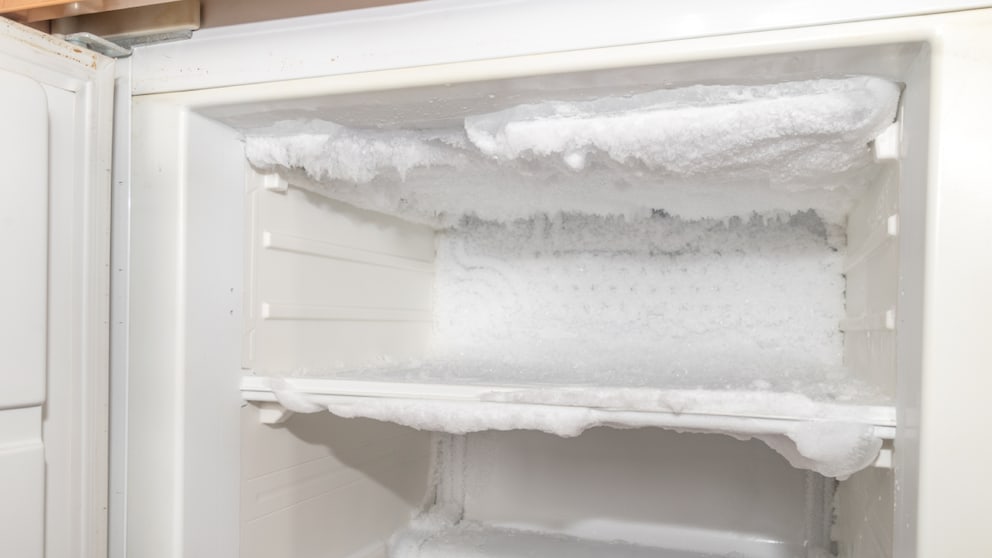
Ice buildup in the freezer is a common issue for many households. Regular defrosting takes time, and a thick layer of ice affects the appliance’s efficiency. An unusual trick circulating online suggests placing aluminum foil in the freezer to reduce icing. But does it really work?
Why Ice Forms in the Freezer
To evaluate the usefulness of the foil trick, it’s worth understanding how ice forms in the freezer. Ice forms when moist air enters the freezer and condenses. This often happens when placing or removing food, allowing warm, moist air to enter. The moisture in the warm air condenses when it hits the cold surfaces inside the freezer.
The condensed water immediately freezes into ice. With each door opening or each moist item placed inside, more water enters, gradually building up the ice layer. A heavily iced freezer worsens insulation and makes efficient cooling difficult—the appliance has to work harder to maintain the desired temperature.
Aluminum Foil in the Freezer–How to Proceed
Place the aluminum foil on the shelves in the freezer. Ensure the foil is cut to fit the surface and covers it as completely as possible. It can also be attached to the interior surfaces with suitable tape. However, make sure it doesn’t come into contact with important cooling fins, sensors, or electrical components inside the freezer.

Can a frozen water bottle really cool a room?

These Heat Hacks Don’t Help
How the Aluminum Foil Trick Is Supposed to Work
The idea is quite simple: Place aluminum foil on the freezer shelves or tape it to the interior surfaces. The reflective surface of the foil is said to achieve two effects in the freezer. First, a more even temperature distribution could play a role. Aluminum has high thermal conductivity and reflects both cold and heat radiation. This is supposed to prevent the formation of so-called heat islands—areas where the temperature is slightly higher than the surroundings. Moisture from the air tends to condense at these points, which then freezes and leads to ice layers. The reflective and conductive properties of the foil would keep the temperature more uniform throughout the compartment, potentially reducing these condensation points.
Another effect concerns the delay of condensation itself. If the interior surfaces cool down less or their temperature quickly equalizes after opening the compartment, moisture from the incoming air finds it harder to settle. This leaves less free moisture to freeze, and ice formation proceeds more slowly overall.
Additionally, the foil forms a practical protective and separating layer. If ice does form, it generally adheres less to the smooth surface of the foil than to the rough plastic of the freezer. This makes cleaning and defrosting much easier. Instead of laboriously scraping ice from the wall, you can simply peel off and replace the foil along with the ice layer.
Consideration: Although aluminum foil may seem practical at first glance, its use is ecologically questionable. If you have leftover foil at home, feel free to try the trick, but don’t buy new foil just for this purpose.
How Effective Is the Trick Really?
As with many household tricks, caution is advised: The aluminum foil trick is not a miracle solution, and its effectiveness is not scientifically well-documented. There are a few points to consider. First, the foil does not guarantee complete ice freedom. Especially in high humidity or frequent freezer openings, ice formation is unlikely to be completely prevented. The foil can only delay ice formation, not entirely prevent it.
Additionally, the foil can tear, wrinkle, or allow moisture to pass through. If applied too tightly or poorly laid, condensation could form under the foil. Also, be cautious with food contact, as germs can accumulate on the foil. Regularly replacing the foil is advisable.
The trick may lead to reduced ice formation, but the thermal effect is likely too minor to rely solely on the trick. Therefore, continue to ensure the freezer door is not left open too long. Regular defrosting is also recommended.