

February 19, 2021, 2:00 pm | Read time: 3 minutes
If mold starts spreading on or inside your wardrobe, it’s important to act quickly. What are the first signs? How can you prevent mold growth? And what should you do if it’s already happened?
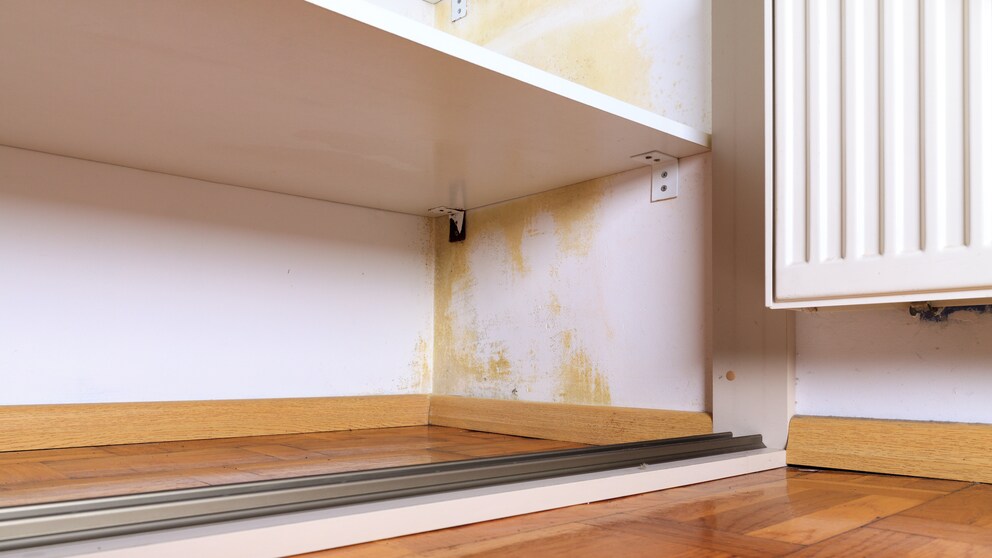
In most homes, the wardrobe is located in the bedroom–and this room is often where mold spreads particularly quickly. Sometimes, the mold spores can even affect the clothing. In other cases, mold is found in the gap between the back of the wardrobe and the wall and may only be discovered when moving out.
Overview
How Does Mold Form in the Wardrobe?
The bedroom, along with the bathroom, is a place where mold often spreads. The reason: We spend a lot of time in this room, where we release a lot of moisture every night through breathing and sweating while sleeping. If you don’t ventilate regularly in the morning, the moisture can’t escape and remains in the room. It also penetrates the wardrobe, where mold can quickly form. Since the wardrobe is often closed, the moisture cannot escape easily.
The back of the wardrobe, which stands directly against the wall, is also a common place for mold growth–for example, due to condensation on a cold or poorly insulated exterior wall. Additionally, the room temperature in the bedroom is often lower than in the living area, which promotes condensation.
Also interesting: How to Properly Plan a Walk-In Closet
How to Recognize Mold in the Wardrobe?
If the black mold is clearly visible, it’s usually already too late. It’s important to pay attention to the first signs. For example, if the clothes smell musty and moldy, this is a clear warning signal. You should then remove the clothing and check for mold traces–as well as the wardrobe. It’s also worth moving the wardrobe forward and checking behind it.
Related: Living with Roommates or Family? Then You Should Ventilate More Often

Leaving Windows Ajar? Why That’s Not a Good Idea

Why You Should Place a Bowl of Salt on Your Windowsill
What to Do in Case of an Infestation?
If there’s mold in the wardrobe, you should act quickly, as it will continue to spread. This also has health consequences, as you could inhale the mold spores while sleeping. The following steps should be taken when mold forms in the wardrobe:
- Completely empty the wardrobe and locate the spot
- Thoroughly clean the wardrobe with vinegar or a special mold cleaner to remove the mold
- Wash affected clothes at 140 degrees Fahrenheit, possibly soaking them in hot water with detergent for 30 minutes beforehand, then let them dry well
- Let the cleaned wardrobe air out extensively, possibly with a fan
- Then put the clothes back in
If the mold is only superficial, it can usually be wiped off. However, if it has already penetrated the material, such as the uncoated back panel, you should replace it, as you won’t be able to get rid of the spores otherwise.
How to Prevent Mold Growth?
The best protection against mold–not just in the wardrobe–is regular ventilation, even in winter. It’s also advisable to leave the wardrobe doors open. Additionally, it should not stand directly against the wall, so the air can circulate behind it. In the wardrobe, clothes should not hang or lie too closely together.