

August 2, 2026, 10:31 am | Read time: 2 minutes
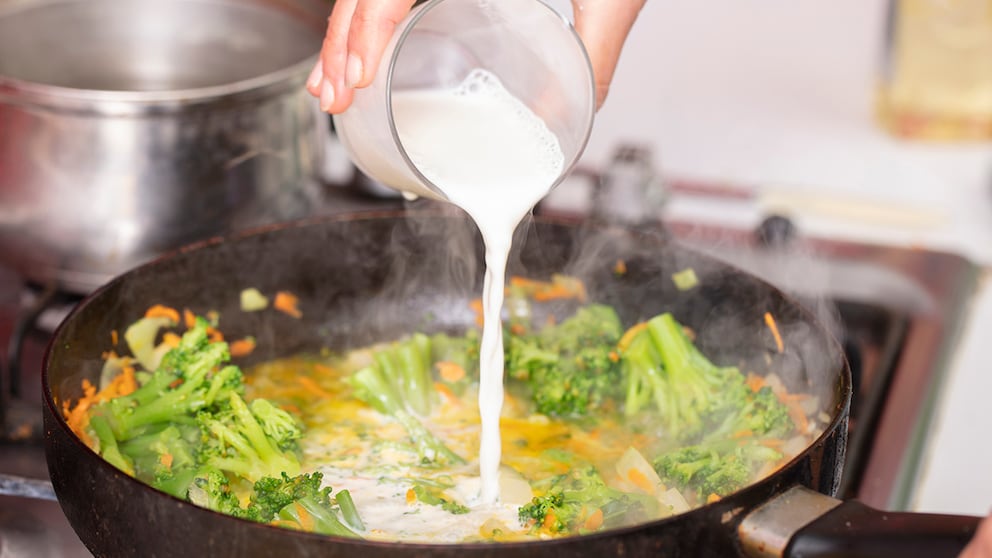
A dash of cream makes soups, sauces, and many other dishes especially creamy. But now, various options sit side by side in the refrigerated section: whipping cream, cooking cream, and cooking crème. Which is suitable for what, and why does cream sometimes curdle when cooking? myHOMEBOOK explains the differences.
Fat Content and Ingredients Make the Difference
Cream has long been considered an easy way to add more creaminess and flavor to dishes. However, besides classic whipping cream, there are now other products with different compositions and lower fat content.
According to the Bavarian Consumer Center, the variants mainly differ in fat content:
Why Cooking Cream and Cooking Crème Are Less Likely to Curdle
The differences are not limited to fat content alone. “Thickeners such as carrageenan, locust bean gum, or starch can be used in both cooking cream and cooking crèmes,” says Sabine Hülsmann, a nutrition expert at the Consumer Center.
Additionally, plant-based fats, emulsifiers, or stabilizers may be included. These ensure that the products remain stable and do not curdle when heated or combined with acidic ingredients.
However, certain additives are sometimes also found in classic whipping cream. Hülsmann also points this out: “A look at the ingredient list helps identify this additive.” Those who wish to avoid carrageenan should therefore carefully check the ingredient list.

Can You Freeze Cream?

These Ingredients Make Homemade Ice Cream Really Creamy
How to Keep Whipping Cream Creamy When Cooking
When using whipping cream, consumer advocates recommend some caution. It is best stirred in only when the dish is no longer boiling vigorously.
Wine, lemon juice, or other acidic ingredients should also be added as late as possible. This reduces the risk of the cream curdling.
Fewer Calories with a Simple Trick
Those who want to retain the typical cream flavor but save calories can reduce the amount specified in the recipe. According to Hülsmann, the cream content can often be halved without issue.
If this results in a lack of liquid in the dish, it can simply be replaced with milk or broth. This way, the desired consistency is maintained while the fat and calorie content decreases.
With material from dpa