

December 29, 2025, 9:52 am | Read time: 3 minutes
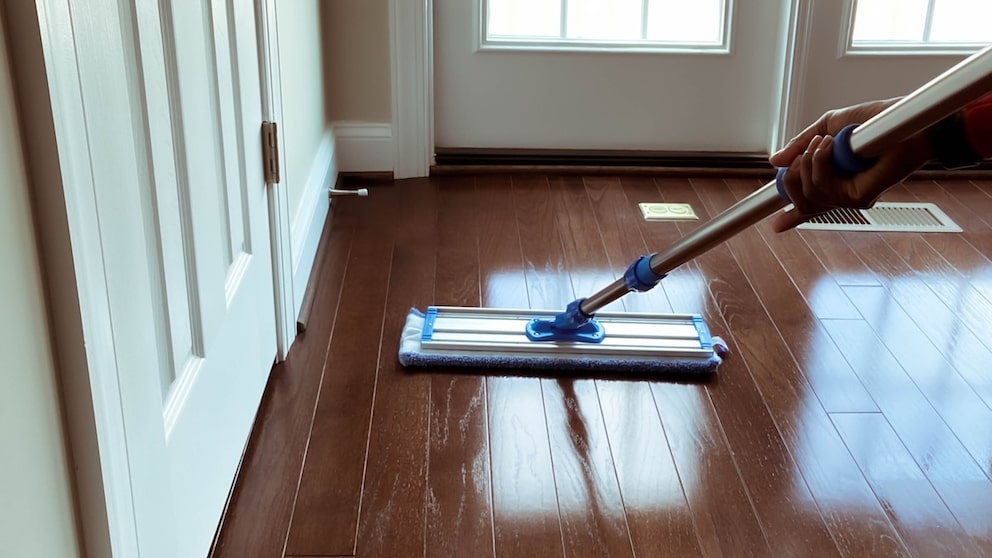
Some people know this: After cleaning the wooden floor with special cleaning agents, it may be clean but no longer shiny. To restore the shine, you can clean it with vinegar.
Wood is an organic material that requires special care. Often, it’s better not to rely on chemical cleaners, which can also be harmful to dogs and cats, but instead use vinegar for cleaning the wooden floor. This alternative is not only pet- and eco-friendly but also inexpensive and effective.
Overview
Clean Wooden Floors with Home Remedies—Chemical-Free Clean
What many don’t know: Vinegar is an effective way to clean wooden floors. The acidic household helper not only helps the wood become clean again but also protects it from bacteria and makes it supple, making it less prone to streaks and scratches.
Note: Before mopping, you should vacuum. If you don’t, you’ll spread dust particles with the damp mop on the wood. They act like tiny sandpaper grains and leave small, fine scratches on the wood.
Clean Wooden Floors with Vinegar—Instructions
- First, mix the cleaner. For two liters of water, add 1.5 cups of household vinegar. Caution: Do not use red wine or balsamic vinegar! They will discolor the wood. If you prefer to use the more aggressive vinegar essence, use half a cup.
- To improve the scent, you can add a few drops of tea tree, lavender, or lemon oil to the mixture.
- If you want to care for the wood at the same time, you can also add 2.5 cups of regular vegetable oil. For dark wood, it’s best to use linseed oil; for lighter woods, olive oil is preferable.
Important: This household trick only works for hardwood floors, such as beech, oak, and ash. Softwood floors, like pine, birch, and spruce, should be cleaned with vinegar only cautiously. It’s best to test the cleaner on an inconspicuous area first, such as in a corner.

6 Practical Tricks to Make Your Wooden Furniture Look New Again
Make Your Own Vinegar Cleaner With Just 3 Ingredients
Make Your Own Orange-Scented Vinegar Cleaner
Especially in winter, many households accumulate orange peels in the trash. But they don’t always have to be thrown away. You can easily make a pleasantly scented cleaner from them.
- Place the collected orange peels in a jar with a screw lid.
- Fill the jar with vinegar until the orange peels are covered. The peels tend to float to the surface, so you can add a bit more vinegar afterward.
- Seal the jar tightly and let it sit in a cool, dark place for about a week.
- After a week, the color of the vinegar will have turned brownish. You can then strain the liquid through a sieve to remove the orange peels, and you’ll have a homemade cleaner.
- You can now add the cleaner to the mop water to clean the wooden floor.
How Often Should You Clean Wooden Floors?
Ideally, you should clean with the homemade vinegar cleaner at least once a month. It’s best to use a soft, wringable mop or cotton floor cloths. Avoid microfiber cloths, as they can damage the floor. Tip: Don’t use too much water, as it can cause the floor to swell or leave stains.