

October 17, 2026, 7:16 am | Read time: 5 minutes
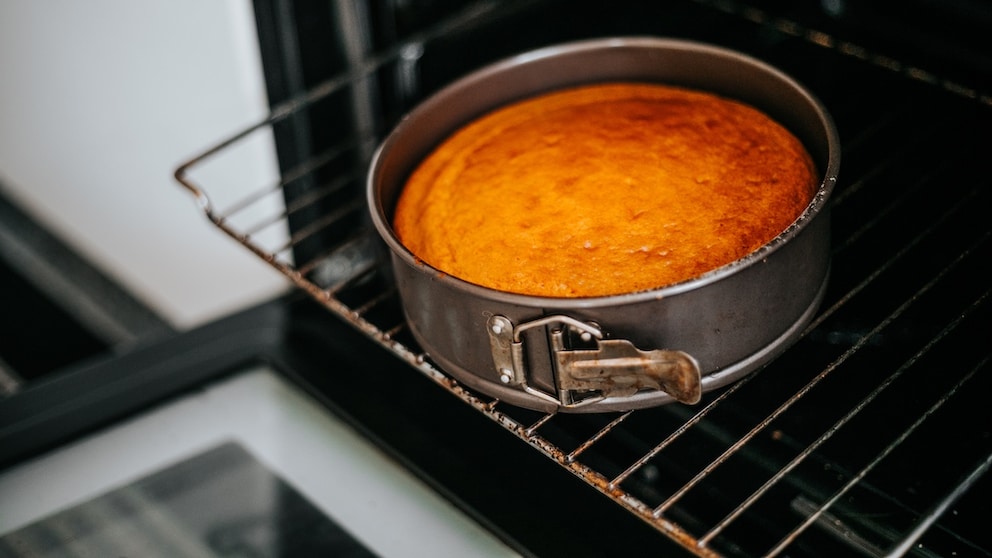
The cake rises wonderfully in the oven, but as soon as it’s out, an unsightly dip forms in the middle. Many amateur bakers are familiar with this problem. However, a sunken cake is not automatically a sign that the recipe was bad. Often, other reasons are responsible for a cake collapsing.
Many amateur bakers notice an unsightly pattern in their cake: The middle forms a dip after cooling or collapses when taken out of the oven. This is often due to a slight imbalance during baking. The batter in the middle is not yet stable enough, the oven is not operating at the intended temperature, or the amount of ingredients was altered. Mistakes can also occur during mixing and baking.
The good news: The result often reveals what went wrong.
1. The cake is not fully baked
This is one of the most obvious causes of a sunken middle. A cake can appear firm and golden brown at the edges while the center is still soft. As long as the batter inside hasn’t firmed up enough, it can’t reliably hold its risen shape. When cooling, the unstable middle then collapses. Particularly telling is a dip that forms after removing the cake from the oven and is accompanied by a moist or sticky core.
What helps: Don’t judge the cake solely by the specified baking time. Depending on the oven, pan, and batter, the additional baking time may vary. A toothpick test can help check the doneness in the middle.
2. The oven temperature is incorrect
Not every oven maintains the set temperature precisely. If the oven is significantly too cool, the cake takes longer to develop its structure. The middle remains soft for longer.
But too high a temperature can also cause problems. Then the surface or edge may already be well-baked while the inside is not stable enough. A cake that quickly browns on the outside but remains unfinished in the middle can indicate an unfavorable oven temperature.
What helps: Preheat the oven sufficiently and, if problems persist, check whether the actual temperature matches the set one. A separate oven thermometer can be helpful.
3. Too much baking powder or baking soda
Does the middle of the cake lose height and collapse after baking? Baking powder or baking soda could be to blame, especially if too much is used. More leavening agent doesn’t automatically mean a fluffier cake. Baking powder and baking soda cause gases to form in the batter, making the cake rise. If significantly more is used than the recipe calls for, the batter may initially rise strongly. However, its structure must also support this additional volume.
If it can’t, the cake may collapse afterward. Too much leavening agent is therefore a known cause of unstable or sunken cakes.
Also interesting: Why the cake fork has only three prongs
4. The ingredient ratio is incorrect
Baking relies on the interplay of ingredients. Flour, liquid, fat, sugar, and eggs each play different roles and together influence the cake’s structure. For example, using significantly more liquid or reducing the amount of flour changes the batter’s consistency. Even small deviations can matter in delicate recipes. A cake collapsing in the middle can also be due to incorrectly measured ingredients.
5. Incorrect preparation method
The cause can also lie in the mixing. There isn’t one rule that applies to every cake equally. Depending on the recipe, both under-mixing and over-mixing can be problematic.
In batter cakes, for example, creaming butter and sugar plays a role. If the mixture isn’t processed enough, the desired structure may be missing. After adding flour, however, mixing should not continue unnecessarily long. Over-beating can also introduce too much air into the batter. This additional air can cause the cake to rise initially and later lose height.
6. The oven door was opened too early
The temptation is often great: The cake already looks promising, and you want to take a quick peek. However, opening the door during the early baking phase can be unfavorable. When opened, cooler air enters the oven, changing the temperature. If the cake hasn’t yet built a sufficiently stable structure, it can lose volume.
A cautious glance is not strictly forbidden, but unnecessary opening during rising should be avoided.

These Brownie Waffles Are Irresistible
The differences between baking powder, baking soda, and soda ash
7. The baking pan doesn’t match the recipe
The pan is more important than it might seem at first glance. A recipe is usually designed for a specific size and shape of the baking pan. If the batter is poured into a significantly smaller pan, a higher batter layer forms. This can take longer for the middle to fully bake. A larger pan, on the other hand, has the opposite effect: The batter spreads thinner and can bake through faster.
The wrong pan can therefore alter the balance between browned surface, edge, and still-soft middle. The right pan size is an important part of a baking recipe.
A sunken cake is not automatically a failure
A dip in the middle may look annoying, but it doesn’t initially say anything about whether the cake still tastes good. What matters is the cake’s internal condition. If it’s fully baked and just slightly sunken, the result can often still be served without issue. However, if there’s a moist or still raw core, it should first be determined whether the cake needs further baking.
For the next attempt, it’s worth not changing multiple things at once. If you change the amount of baking powder, temperature, and baking time all at once, you won’t know which change made the difference. It’s better to check the most likely cause and adjust only that factor in the next bake.