

October 25, 2022, 3:07 pm | Read time: 3 minutes
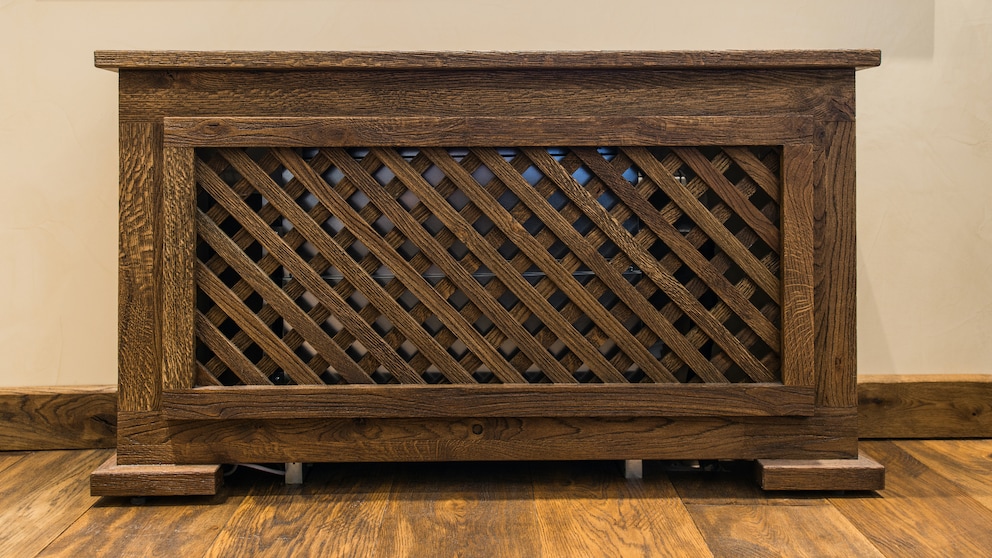
Radiators are practical, but often far from visually appealing. If you’re tired of the sight, you can cover the heater with a wooden casing. Whether purchased or homemade, it often looks much better than the heating unit itself. But does this result in a loss of heat?
If you don’t have underfloor heating, you’ll typically find the dust-collecting classics in your home. Older radiators, in particular, are anything but attractive. A cover for the heater can help in this case. But is installing a cover also sensible from an energy perspective?
Overview

Heater Covering–Which Material Is Suitable?
The first step in planning is choosing the material: Should it be wood or metal? Both materials have their pros and cons.
- Wood doesn’t conduct heat as well, but it’s easier for DIY enthusiasts to work with and can be painted to match personal preferences. If you choose wood, opt for multiplex boards. Although more expensive than other wood, they won’t warp from heat. Another advantage of wood over other materials: You can have it cut to your specified dimensions at your local hardware store.
- With metal, it’s a bit more complicated. It’s not as easy to work with as wood. However, some hardware stores do offer metal cutting services. Otherwise, it’s advisable to purchase ready-made metal covers.
Related: 6 Common Heating Mistakes
How to Elegantly Integrate Radiators into Your Home Design
13 Simple Tips to Save on Heating Costs at Home
How Much Space Should Be Considered?
Before starting, you need to measure the depth, width, and height of the radiator. To ensure the cover fits loosely over the heater–allowing air to circulate–add a few centimeters in all directions.
“An additional 15 centimeters above and below is recommended,” explains Matthias Wagnitz from the Central Association for Sanitation, Heating, and Air Conditioning in Sankt Augustin. There should be at least as much space in front as there is between the radiator and the wall.
Additionally, space must be left for the pipes and ideally for the thermostat, which should be easily accessible. However, you can place it under the cover and install a remote sensor to control the heating via radio.
Are Covers Worth It from an Energy Perspective?
Wagnitz is not a fan of such covers, as they are not recommended from an energy perspective. “It’s inevitable that the room won’t be heated as well as without a cover,” he says. The cover hinders the rapid and even distribution of heat in the room. The expert suggests considering the alternative of installing new–and thus more attractive–radiators.
Also interesting: Do My Heating Costs Increase If My Neighbor Doesn’t Heat?
Note: If you still decide on a cover, ensure that its front has many holes to allow as much heat as possible to pass through into the room. This can be achieved with wooden grilles, curtains, or meshes.