


February 4, 2026, 4:59 am | Read time: 2 minutes
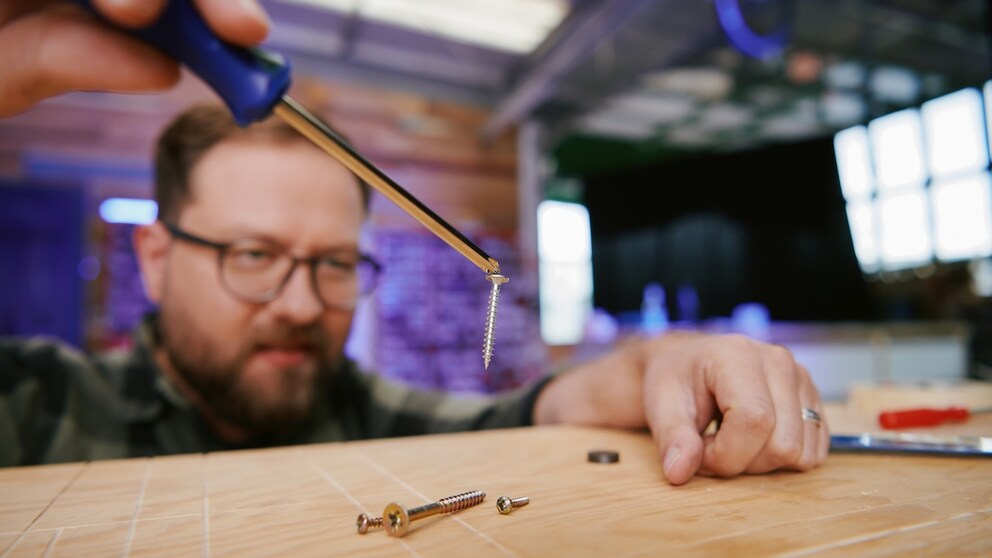
Small screws disappear on the floor faster than you can blink—and the annoying search begins. However, there’s a simple trick that makes life easier for many DIY enthusiasts: A magnetic screwdriver ensures that screws stay where they belong. How to magnetize a regular screwdriver is explained by myHOMEBOOK editor-in-chief Felix Mildner on “Easy DIY.”
Why a Magnetic Screwdriver Is Helpful
Especially for delicate tasks or in hard-to-reach places, a magnetized screwdriver proves to be a great advantage. Magnetic screws adhere better to the tip, fall less often, and can be screwed in more precisely. If you don’t have a magnetic screwdriver, you can magnetize existing tools yourself with a few simple steps.

5 Tips for Better Organization in the Workshop

Simple System Brings Order to the Workshop
Choosing the Right Tool
A household magnet is sufficient for magnetization. Alternatively, you can use a special magnetizer designed specifically for this purpose. It’s important that the magnet is not too small, so the magnetization is strong enough to hold the screws reliably.
Properly Magnetizing a Screwdriver
The starting point is the middle of the screwdriver blade. From there, the magnet is evenly guided down to the tip. This process is repeated several times. The more often the magnet is moved along the blade, the stronger the magnetization becomes. This is especially useful when dealing with larger or heavier screws.
The Effect Doesn’t Last Forever
“The magnetic effect doesn’t last permanently and can quickly diminish depending on use. Even during work, the magnetization can weaken, especially if many screws are being driven in. For longer projects, it’s advisable to re-magnetize the screwdriver occasionally to maintain full adhesion strength.”