


July 28, 2025, 9:23 am | Read time: 4 minutes
The so-called elephant skin is not a paint in the traditional sense but a special, durable wall coating that is particularly used in high-traffic living areas. Its name derives from the resilient, slightly textured surface that resembles an elephant’s skin. myHOMEBOOK explains what exactly this coating is and which areas it is particularly well-suited for.
What Exactly Is Elephant Skin?
Elephant skin is a transparent or slightly tinted sealant based on synthetic resin, usually with a satin finish. It is often applied over wallpaper, such as woodchip, or painted surfaces, and it protects them from moisture, abrasion, and dirt. It forms a water-repellent, washable layer and prevents the penetration of liquids.
Which Living Areas Are Suitable for Elephant Skin?
The product is particularly suitable for living areas where walls are subject to higher stress or need to be cleaned regularly. This includes primarily kitchens and dining areas, as the walls there are more exposed to splashes, grease, and moisture. Elephant skin protects against this, is also wipeable with a damp cloth, and is resistant to many common household cleaning agents. Especially around the stove and sink, if the tile backsplash is not set very high, the use of elephant skin can be beneficial.
Hallways and entrance areas, where frequent use and contact with jackets, bags, or shoes quickly cause signs of wear, can also benefit from its application. Therefore, this protective coating is often used in the hallways of apartment buildings.
In children’s rooms, it can happen that walls are drawn on, stuck with stickers, or become dirty. Here, too, a coat of elephant skin can help. On the one hand, it allows for easy cleaning of the wall, and on the other, it effectively protects against damage.
Advantages of Elephant Skin
Elephant skin is generally a good choice if you want to protect an existing wall color or wallpaper or only treat specific areas.
A key advantage of elephant skin is its high abrasion resistance and wipeability. Dirt can be easily removed with a damp cloth without damaging the surface. This makes maintenance significantly easier and ensures a consistently well-kept appearance of the living wall. Additionally, it protects the underlying plaster or wallpaper from moisture, which can be particularly advantageous in the kitchen or dining area, where splashes or steam are expected.
Visually, the treatment with elephant skin can also offer benefits, as it is available in various gloss levels and can be well combined with color designs. Overall, its application contributes not only to functionality but also to the preservation and visual enhancement of living walls—a practical and aesthetic protection for daily life.
What Should You Consider When Applying?
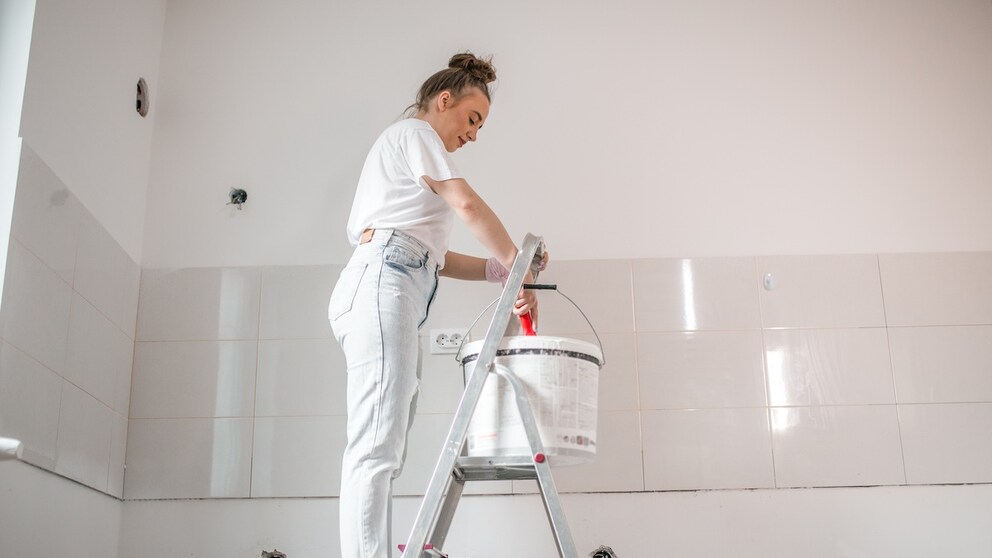
Before painting the wall with elephant skin, it should be thoroughly prepared. It must be clean, dry, and grease-free. Cracks or holes should be filled in advance. The base coat is then applied. Elephant skin is usually applied over a colored or white coat or directly onto the wallpaper. A short-pile roller or brush is suitable, depending on the wall’s texture. The layer should be applied thinly and evenly to avoid streaks or gloss differences.
Since the product is often solvent-based, good ventilation during and after application is important.
Which Wallpaper Is Suitable for the Bathroom

Chalk paint is particularly well-suited for this purpose.
Can Elephant Skin Be Removed?
Yes, but with effort. The sealant is not designed for easy removal. When applied to wallpaper, it can significantly complicate later removal, as the sealant repels water during soaking. In such cases, the wallpaper must be perforated mechanically, such as with a nail roller and a lot of patience, to reach the adhesive underneath.
On plaster or painted surfaces, it can only be removed by sanding or with special stripping agents. This involves dust, dirt, and possibly damage to the wall.
Caution: Renters should clarify before use whether they need to return the wall to its original condition upon moving out. Since elephant skin can significantly complicate the removal of wallpaper or even cause wall damage, many landlords require restoration to the original state upon moving out. It is generally advisable to obtain the landlord’s approval in advance.
Alternative Methods
As an alternative to liquid elephant skin, there are special protective films that can be directly applied to wall surfaces. These wall protection films are available in different formats, material thicknesses, and surface finishes, and they can be selected according to individual needs.
In general, the thicker the film, the more resistant the protected surface is to stress. For areas like the kitchen and bathroom, the use of robust films with a thickness of about two millimeters is recommended. However, on woodchip wallpaper, the use of protective films is usually problematic, as they do not adhere well to the uneven texture. In such cases, elephant skin can be used instead.