


July 22, 2025, 8:36 am | Read time: 5 minutes
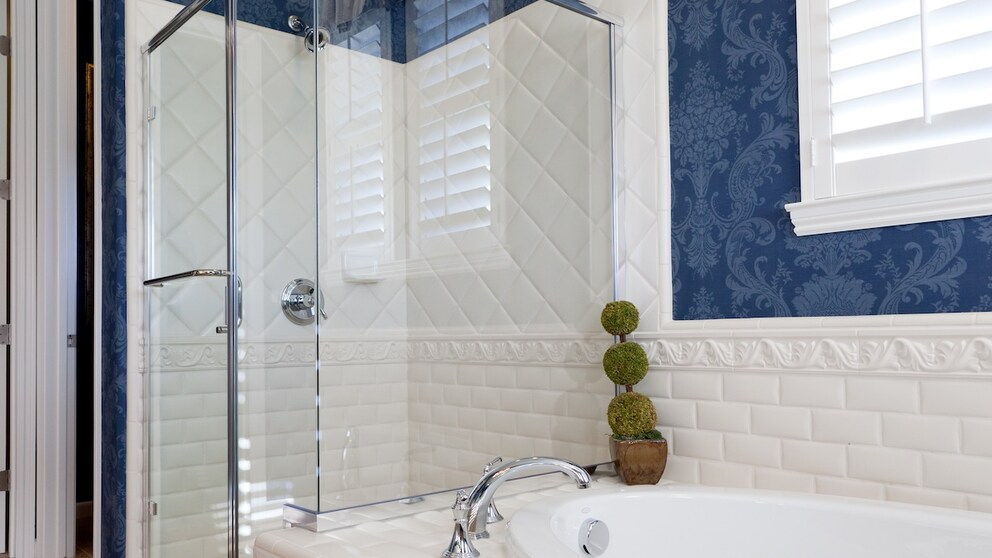
Wallpaper in the bathroom was long considered tricky because moisture, temperature fluctuations, and the risk of mold made it seem unsuitable as a wall covering. However, thanks to modern materials and proper preparation, wallpaper can be used stylishly in the bathroom. To ensure the result not only looks good but also lasts long-term, there are several things to consider.
Follow myHOMEBOOK on WhatsApp now
The Right Environment: Is My Bathroom Suitable for Wallpaper?
Before deciding on wallpaper in the bathroom, you should check the structural conditions. Good ventilation is especially important. A bathroom with a window or an efficient ventilation system is much more suitable, as the humidity can be quickly removed after showering or bathing. In poorly ventilated rooms, moisture can accumulate in the walls, creating an ideal breeding ground for mold.
The condition of the walls also plays a role: The surface should be clean, dry, smooth, and stable. Old wallpaper, peeling paint, or porous plaster must be completely removed before wallpapering.
What Criteria Must Bathroom Wallpaper Meet?
Not all wallpaper can handle the high humidity in a bathroom. Regular paper or woodchip wallpapers are unsuitable because they absorb moisture and can quickly warp or mold. For wallpaper to be suitable for bathroom use, it should meet the following criteria:
- Wash-resistant: Dirt and light water stains can be easily wiped off the wallpaper.
- Highly wash-resistant: Normal dirt and water stains can be removed with a damp cloth and soapy water. Fresh grease stains can also be removed.
- Scrub-resistant: Dirt can be removed with a sponge or soft brush and cleaning and scouring agents. Oil or grease stains can also be cleaned.
- Highly scrub-resistant: Highly scrub-resistant wallpapers are very durable and can be intensively cleaned with cleaning agents and brushes.
Depending on the area of use, the requirements for bathroom wallpaper vary. Generally, the wallpaper should be at least wash- or highly wash-resistant for bathroom use. In particularly cleaning-intensive areas such as around the sink, the choice should be scrub- or highly scrub-resistant wallpaper to ensure stubborn dirt can be easily removed.
These 3 Wallpapers Are Especially Suitable for Bathrooms
1. Fiberglass Wallpaper
Fiberglass wallpaper is made from woven glass fibers and is resistant to moisture and water vapor, making it fundamentally suitable for bathroom use. It is durable, paintable (usually with latex paint), and thanks to its dense structure and the right coating, mold-resistant. Since it is rather heavy and stiff, a special dispersion adhesive is needed for its application.
2. Non-Woven Wallpaper
Non-woven wallpapers are made from cellulose and polyester fibers, making them tear-resistant and dimensionally stable. This means they do not expand or shrink with moisture. They come in various textures, colors, patterns, and even with 3D effects. They are easy to apply and breathable, meaning they allow moisture to pass through, supporting the room climate. While they withstand splashes well, they should not be used in wet areas like near the shower, as they are too sensitive for that.
3. Vinyl Wallpaper
Vinyl wallpapers are a good choice for damp rooms. They consist of a PVC layer on a paper backing, making them water-repellent and steam-resistant. Their smooth plastic coating also makes them washable and scrub-resistant, allowing for easy removal of heavy dirt. A well-installed vinyl wallpaper can be used in splash-prone areas like behind the sink or above the bathtub, as long as there is no constant water contact.
However, there is an increased risk of mold because vinyl wallpaper is not breathable, meaning it cannot absorb moisture.
Also interesting: Should You Tile the Bathroom Halfway or Floor-to-Ceiling?
Where “Elephant Skin” Is Useful as Wall Sealant
How to Properly Clean Your Tiles
How to Properly Apply Wallpaper in the Bathroom
Careful preparation is crucial. First, the wall to be wallpapered should be dust-free, dry, and free of mold. Ideally, a smooth wall serves as the base. Then, it can be primed. For damp rooms like the bathroom, it is recommended to use a special wallpaper adhesive for wet areas that hardens water-resistantly–especially for heavy vinyl wallpapers.
Before applying the wallpaper, cut the individual strips, allowing for an excess of ten centimeters. When wallpapering, ensure the strips are applied precisely from top to bottom. Air bubbles and wrinkles can be smoothed out with a wallpaper brush from the center to the sides. The excess wallpaper can then be easily trimmed with a cutter. Depending on the type of wallpaper, the recommended application method should be followed.
Keep It Beautiful: Don’t Forget Maintenance and Ventilation
Even with the best wallpaper, the bathroom will only remain mold-free if it is regularly ventilated. After showering, you should always ventilate thoroughly–open the window wide so the moist air can escape quickly. A tilted window for an extended period is not sufficient.
Clean the wallpaper gently with a slightly damp cloth or a soft brush. Avoid aggressive cleaners to keep the surface intact and hygienic.