


October 27, 2022, 8:52 am | Read time: 3 minutes
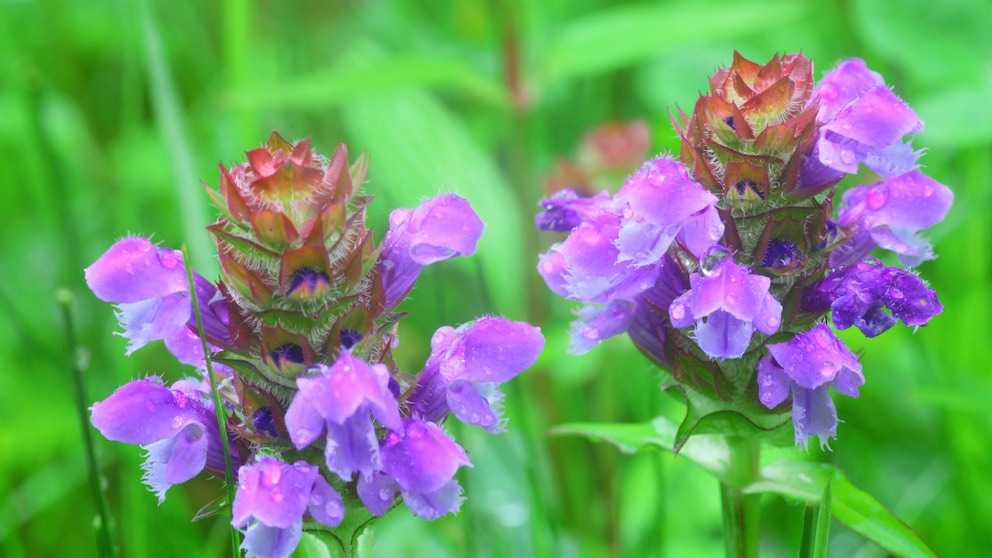
With its bright violet flowers, the small self-heal certainly stands out. However, the Flower of the Year 2023 is not favored by every hobby gardener. myHOMEBOOK explains its benefits and how to get rid of it.
Raise the curtain! The small self-heal has been named the Flower of the Year. “With its numerous small, violet flowers shaped like an upper and lower lip, and its growth height of 5 to 25 centimeters, the small self-heal (Prunella vulgaris) appears rather delicate at first glance.” This is according to the Loki Schmidt Foundation, which annually selects a flower as the Plant of the Year.
What makes the small self-heal so special?
What distinguishes Prunella vulgaris, also known as the small self-heal? The plant is “tough,” according to the foundation’s plant experts. “It survives even in regularly mowed lawns and tolerates grazing and trampling by livestock on pastures.” By choosing this seemingly inconspicuous plant, the foundation highlights the increasingly noticeable loss of many wildflowers.
Related: The Orchid of the Year 2023 has been chosen
What does the small self-heal look like?
The “small” in its name is well-deserved. This delicate plant reaches only 25 centimeters in height. However, its brightly violet flowers are hard to miss, lasting until October. The flowers are not only beautiful but also provide an important food source for butterflies, bees, and bumblebees, just before the cold, harsh season.
You might also be interested in: How to easily make nettle manure yourself
Best Tips for Fighting Weeds in Your Lawn
Best Tips for Fighting Weeds in Your Lawn
Is the small self-heal endangered?
Yes. The main threat comes from the high levels of nitrogen in the environment. The experts from the Loki Schmidt Foundation cite several reasons for the chemical surplus: over-fertilization with manure, as well as wastewater and exhaust gases.
Nitrogen is actually an important element, even for plant growth. The Loki Schmidt experts explain the issue on their homepage: “With an excess of nitrogen in the soil, grasses and other nitrogen-loving, tall-growing plants, such as nettles and dock, dominate and displace smaller wild plants like the small self-heal.” Additionally, frequent mowing and weed control in both gardens and agriculture are reasons why the population of wild plants is significantly declining.
Also interesting: Weeds between paving stones? 5 natural methods to effectively get rid of them
The dark side of the small self-heal
Among enthusiasts of purely green lawns, this wild plant is an unwelcome guest in the garden. While the small self-heal is considered a good ground cover, once established, it grows quickly, creeping and herbaceous, and displaces other grasses.
What one hobby gardener sees as a valuable wild plant, another may view as a bothersome weed. However, it should not be removed with harsh chemicals. If you absolutely do not want the small self-heal on your lawn, consider the following:
- Pull out individual plants by hand. If root runners have already formed, dig them out with a sharp digging fork and fill the hole with fresh soil.
- Beware of flowering: The plant reproduces in the fall when seeds are dispersed by raindrops. To prevent new growth, mow your lawn regularly from early summer.
- Do not apply lime to the lawn if the small self-heal is already growing! Lime application only promotes the growth of the wildflower. Instead, spread rock dust.
- Regularly aerate the lawn–myHOMEBOOK explains how here.
- Cover a large “infestation” in the fall with fleece or a light-blocking garden film. After some time, the plants will die off, but the grass area usually recovers.