

April 29, 2026, 2:52 pm | Read time: 5 minutes
A smooth lawn requires a lot of care. It’s all the more frustrating when you find wild herbs growing among the grass blades. Often, weeds are a sign that the lawn needs attention. The denser and healthier the turf, the less likely weeds are to take hold. Proper care is the key to getting rid of and preventing weeds in the lawn
Overview
- What Weeds Grow in My Lawn?
- How Can You Prevent Weeds in the Lawn?
- What Matters When Mowing the Lawn
- Which Fertilizer Is Best to Strengthen the Lawn?
- Watering the Lawn Sufficiently
- Does Scarifying Help Against Weeds in the Lawn?
- Lawn Wellness–Proper Aeration
- How to Get Rid of Clover in the Lawn
- Removing Weeds
What Weeds Grow in My Lawn?
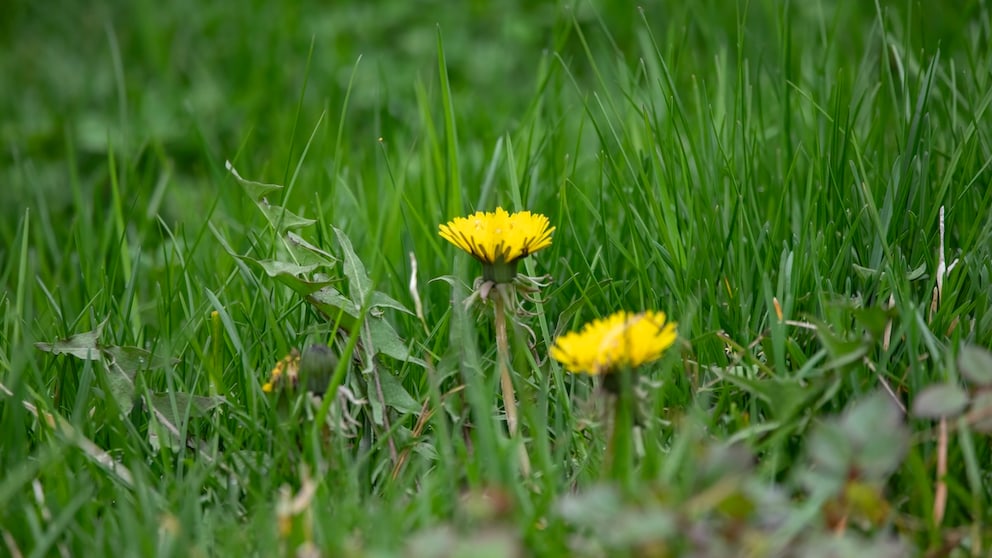
For some, it’s annoying weeds; for others, it’s wild herbs that help insects. However, if you want to curb the wild growth, you should first know what you’re dealing with. The following lawn weeds are particularly common in Germany:
- Ground elder
- Quackgrass
- Mosses
- Daisies
- Creeping buttercup
- Plantain
- Dandelion
- Speedwell
- Yarrow
- Clover
- Lady’s mantle
- Chickweed
- Bugleweed
How Can You Prevent Weeds in the Lawn?
Consistency is key in lawn care, says Dr. Harald Nonn from the German Lawn Society (DRG) when asked by myHOMEBOOK. Basic care steps include:
- Mowing
- Fertilizing
- Watering
- Scarifying
- Aerating
- Removing weeds and moss
What Matters When Mowing the Lawn
Proper lawn care starts with mowing: Many make the mistake of cutting the grass too short. While this might save you some work because you need to mow less often, it also invites moss, clover, buttercup, ground elder, or quackgrass to spread and displace the grass blades. Additionally, many weeds grow so low that the lawnmower doesn’t affect them.
Tip: Mowing the lawn to a height of three and a half to five centimeters allows the blades to cast enough shade to inhibit the germination of weeds.
Additionally, “Regular mowing promotes lawn density,” says the expert. The grasses will develop new side shoots, leaves, and runners. This gives wild herbs less chance to spread.
An extra tip from the pro on mulching: Lawn mulching with your own clippings serves as a natural fertilizer. The nutrients can return to the soil as they decompose, strengthening the lawn. This protects against drying out and promotes healthy soil life. Nonn emphasizes: “The lawn should be as dry as possible for this. Also, the clippings should not be too long and should be evenly distributed over the area.”
Which Fertilizer Is Best to Strengthen the Lawn?
If lawns suffer from nutrient deficiency, weeds have an easy time. Without nourishment, the lawn is weakened. According to Nonn, the most important nutrients for the lawn are:
- Nitrogen: improves growth, contributes to better greening
- Phosphorus: promotes root growth (energy carrier)
- Potassium: strengthens the plants’ resilience (against drought, cold, diseases)
It’s also crucial that the nutrients are provided in the right form and amount. Nonn points to special long-term lawn fertilizers. Additionally, “Agricultural or horticultural fertilizers have the wrong nutrient composition for the needs of the lawn.” Organic fertilizers are also unsuitable, according to the lawn expert. “They have too low nutrient content, and their effect is not controllable.”
Watering the Lawn Sufficiently
“Lawn grasses consist of almost 80 percent water,” informs Nonn. Therefore, the rule for a healthy, strong lawn is: “Go big, not small.” In dry conditions, water the lawn thoroughly once or twice a week. The best times are morning and evening to avoid burning the grass blades.
Expert’s extra tip: “Remember that grasses under trees need water more frequently.”
Does Scarifying Help Against Weeds in the Lawn?
Mossy lawns are often a sign of too much soil moisture. To counteract this, it’s advisable to scarify the grass at least once a year. Ideally, clear the lawn of so-called thatch in the fall and spring so that the grass roots can better absorb water, air, and essential nutrients.
Reseed bare spots and fill larger holes with sand or potting soil. This ensures even growth and also attracts earthworms, which loosen the soil. Even in shady areas, weeds will no longer feel comfortable.
Tip: Trim adjacent hedges, trees, and shrubs so that enough light falls on the lawn.
Lawn Wellness–Proper Aeration
“When aerating, rotating tines comb through the space between the lawn plants,” explains the expert. This additional care step is not a must, but it benefits the lawn. The airier turf allows nutrients and water to reach the roots more effectively. “It’s recommended to aerate, especially before fertilizing and during the summer season when the lawn needs water.”
Best Tips for Fighting Weeds in Your Lawn
Should you scarify lawn in the fall? A professional explains
How to Get Rid of Clover in the Lawn
Every soil is different, and even the most well-maintained lawn is not immune to weed infestation. While moss can usually be easily removed by weeding, digging, or scarifying, getting rid of clover in the lawn is a bit more challenging. The stubborn wild growth often requires a lot of effort and painstaking work to remove.
Tip: As with moss removal, start by tackling clover with a scarifier or lawn rake. It’s important to address the root of the problem, not just cut it off superficially. A weed puller is particularly effective for removing the entire weed plant from the ground. Afterward, fertilize the lawn well.
Removing Weeds
Proper care is essential to prevent weeds and moss in the lawn. It’s also important to identify the causes of moss and weeds specifically.
Moss
Moss arises from factors such as mowing too low and nutrient deficiency. Shade and waterlogging can also be possible causes. To eliminate it, adjust the mowing height and apply the right fertilization. Additionally, improving the soil can help.
Weeds
Wild herbs typically grow in sparse or poorly fertilized lawns. A dense turf is essential to prevent and eliminate weeds. Manual removal of the herbs, such as with special weed pullers, is also recommended. For severe infestations, scarifying and reseeding are advisable.