


August 5, 2025, 3:07 pm | Read time: 2 minutes
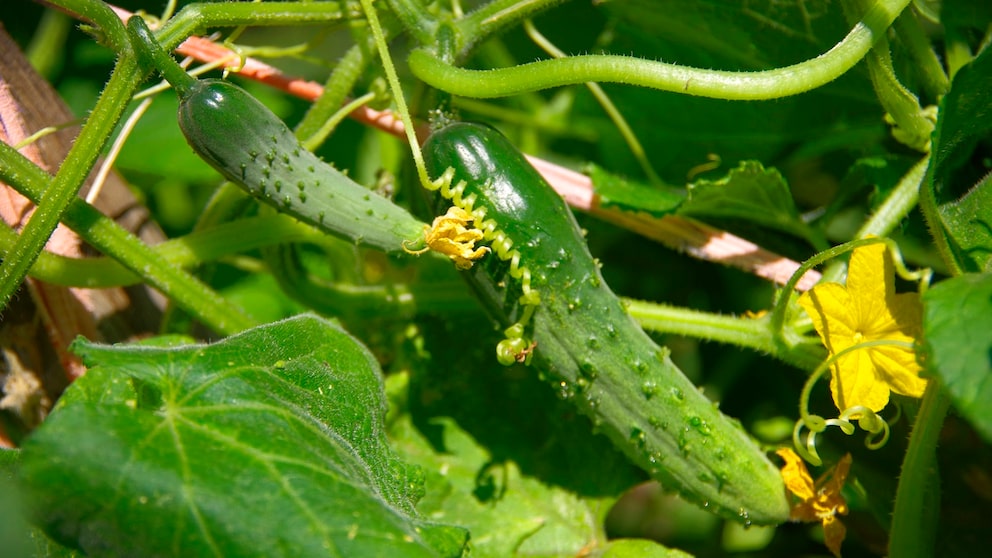
Cucumbers are among the most popular vegetables for home gardening. Over months, the plants are nurtured from seed to fruit. However, cucumbers can be a bit unforgiving if conditions aren’t right. Rain can become an issue. myHOMEBOOK gardening expert Franka Kruse-Gering explains what to consider when caring for cucumbers in the rain.
1. Cucumbers Need Ventilation
To protect cucumber plants from fungal diseases such as powdery mildew or gray mold, good air circulation is crucial in damp weather. Therefore, it’s important to plant them with sufficient spacing from the start. After prolonged rain, prune the cucumbers by removing side shoots and dense foliage. This allows rainwater to dry more quickly and reduces the humid, warm climate inside the plant, where fungi thrive. Additionally, any affected leaves or shoots should be removed immediately and disposed of in household waste to stop the spread of spores.

Should You Remove Leaves from Vegetable Plants?

What Happens When Tomato Leaves Get Wet While Watering
2. Fertilize Cucumbers After Prolonged Rain
Heavy or persistent rain can leach nutrients from the soil—especially nitrogen, which is essential for cucumber plant growth. The effects are often visible quickly: leaves turn yellowish, growth stalls, and fruit production declines. Therefore, after such rainy periods, targeted fertilization is necessary, such as with organic liquid fertilizer, compost tea, or a light application of horn meal. This helps stabilize the plant’s nutrient balance, keeping the cucumber crop strong and productive.
Also interesting: 6 Hardy Cucumber Varieties for Outdoor Cultivation
3. Don’t Leave on Wet Ground
When cucumbers lie on wet ground, the risk of fruit rot increases significantly, as constant moisture attacks the underside of the fruits, making them quickly mushy or brown. To prevent this, gently lift the cucumbers off the ground and place them on a dry surface. Flat wooden pieces, overturned flower pots, small grids, stones, or dry straw pads work well—what’s important is that the fruit no longer has direct contact with the damp soil. For those who regularly face this issue, special fruit supports or trellises can be used to keep cucumbers off the ground and improve air circulation. Even a small distance from the soil can be enough to prevent rot and significantly enhance the quality of the harvest.