


August 13, 2025, 12:44 pm | Read time: 4 minutes
In the vegetable garden, greenery is thriving–and the shears are quickly at hand. But not every leaf should be removed indiscriminately. Whether and how to trim the leaves of tomatoes and other vegetable plants is explained here on myHOMEBOOK.
Overview
More Light, Less Moisture
Many hobby gardeners reach for the shears to keep their plants healthy. Fungal diseases such as powdery mildew or blight occur mainly when damp foliage dries slowly. By thinning out the foliage, air can circulate better, and the leaves dry faster after a rain shower.
Fruit development also benefits from more light and visibility: In dense canopies, flowers are often so well hidden that even pollinators overlook them. Additionally, fruits need enough sun and warmth to ripen–both of which are hard to reach the fruit set when foliage is dense. And: Every leaf costs the plant energy. The more leaf mass it has to support, the less energy remains for flowers and fruit. However, before reaching for the shears, it’s worth taking a closer look at the functions of the leaves and the potential risks of pruning.
The Benefits of Leaves
For a good harvest, the plant needs one thing above all: healthy, strong leaves. Photosynthesis takes place in them, converting sunlight into energy. If too many leaves are removed, energy production decreases–and often so does fruit quality.
Moreover, large leaves have a protective function: They shade the soil and help retain moisture in the root area longer. This can be advantageous, especially in hot, dry summers.
Follow myHOMEBOOK on WhatsApp now
When Pruning Makes Sense and When It Doesn’t
Removing leaves can be quite sensible if done selectively and moderately. Here’s an overview of how this looks for the most important types of vegetables:
Tomatoes
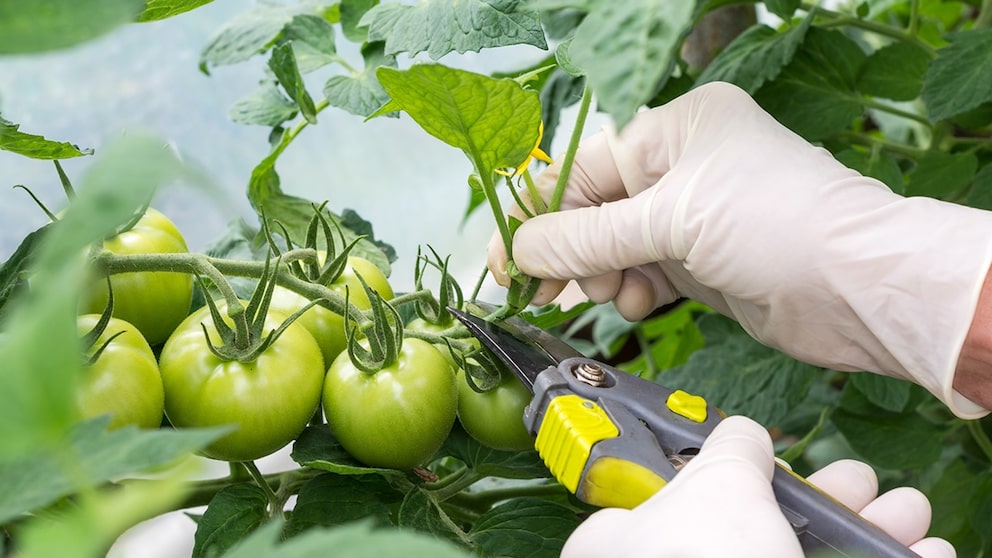
For upright-growing tomato plants, especially stake tomatoes, it makes sense to remove the lower leaves up to the first fruit cluster–especially if they touch the ground or are very dense. However, this measure should only be taken once the plant is well developed.
In the upper area, individual leaves can also be removed–such as the first one below a fruit cluster. It’s important to leave several leaves above each cluster, as these primarily supply the fruits with energy.
Note: “Pinching out”–removing shoots in the leaf axils–is not to be confused with defoliation. Pinching out involves removing unnecessary side shoots, while defoliation involves the targeted removal of foliage.
Zucchini, Pumpkins, and Cucumbers
For zucchini and pumpkins, it can also be beneficial to remove some leaves in the lower area–especially if they have ground contact or are unhealthy. The leaves above the fruit set are crucial for fruit supply.
Important: The cut should be as close to the stem base as possible. This prevents rain or irrigation water from collecting in the hollow leaf stems and promoting rot. For cucumbers, especially in greenhouses, removing the lower leaves can also help improve air circulation and prevent diseases.
What to Consider When Enhancing Vegetables
Prune tomato plants correctly for a bountiful harvest
The Right Time to Prune
Not only the how but also the when plays a role. It’s best to remove leaves on a dry, slightly overcast morning. This allows the cut surfaces to dry quickly, keeping the risk of infection low.
What to Consider When Pruning
Every cut is an injury and thus a potential entry point for pathogens. Therefore, those who defoliate should proceed with particular care:
- Use sharp, clean tools: This prevents bruising and the transmission of diseases. For infected plants, the tools should be thoroughly cleaned after each cut.
- Do not remove too many leaves at once: A too-severe cut weakens the plant. It’s better to defoliate in several stages, giving the plant time to recover in between.