


November 17, 2025, 4:08 pm | Read time: 3 minutes
In winter, many houseplants struggle to stay healthy. Even hardy species face challenges. This is because many indoor conditions change during the cold season. Light, air, and temperature—everything plants need to thrive—are different from what they are in summer. myHOMEBOOK plant expert Franka Kruse-Gering identifies three reasons why houseplants don’t survive winter and what mistakes to avoid.
Why Winter Is Problematic for Houseplants
In winter, the sun is lower, the days are significantly shorter, and the light is weaker. At the same time, the heating is on, making the air dry. Regular ventilation also causes temperature fluctuations and drafts. All this means stress for plants. They grow more slowly, use less water, and become more sensitive to changes.
1. Too Little Light
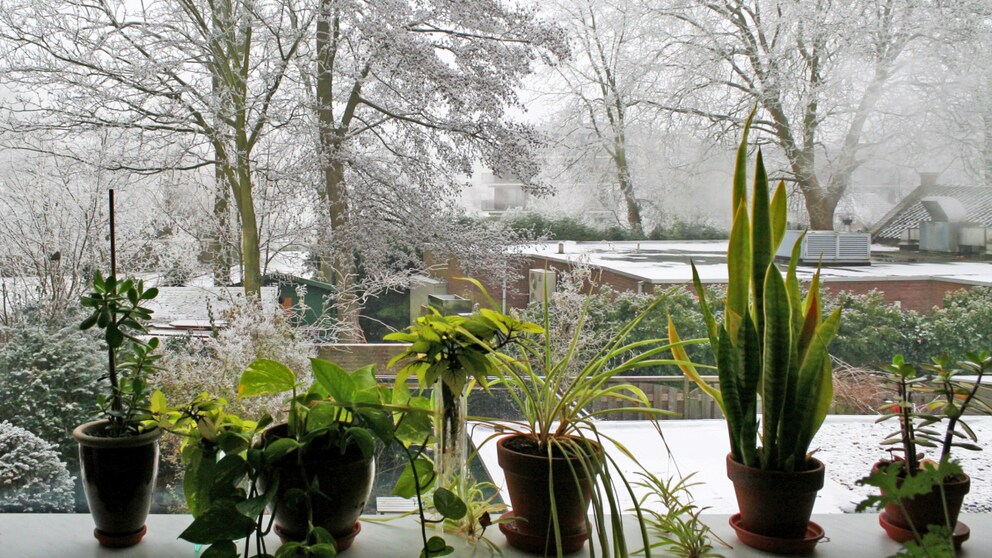
Lack of light is the biggest problem in winter. Even at bright windows, daylight is often insufficient. Plants largely stop growing, while they thrive vigorously in summer. If watering or fertilizing continues as in the warm season, the roots can easily rot. Tropical species like Monstera or Calathea are particularly affected. A location as bright as possible is important—ideally right by the window, where the light is strongest. However, ensure the leaves don’t touch the cold windowpane, as this can cause cold damage. An additional plant lamp can help until more sunlight is available in spring.
2. Too Much Water
Many houseplants are overwatered in winter. Due to the lack of light, they hardly grow and need significantly less water. Moist soil stays wet longer, and waterlogging quickly leads to root rot. Yellow leaves or a musty smell from the pot are warning signs. It’s enough to water only when the top layer of soil is dry and to remove excess water from the saucer.
What to Consider for Orchids in Winter

5 Popular Houseplants That Don’t Tolerate Relocation
3. Dry Heating Air
Heating air draws moisture from the leaves, making them susceptible to pests like spider mites. Plants with thin or large leaves—such as Ficus, ferns, or Philodendron—are particularly affected. A bowl of water on the heater, regular spraying of the leaves, or using a humidifier can help improve humidity.
How to Help Your Houseplants in Winter
Houseplants need rest and adjusted care in winter. They should be placed as brightly as possible, ideally right by the window, where the light is strongest. It’s important that the leaves don’t touch the cold windowpane to avoid cold damage. When ventilating, it helps to temporarily move the plants aside or shield them with a curtain. Watering should be done sparingly—only when the soil is dry on top, and waterlogging should be avoided. To combat dry heating air, use water bowls, humidifiers, or regular spraying. By following these simple measures, you ensure that the plants stay healthy through the cold season.