


December 15, 2024, 11:22 am | Read time: 3 minutes
Poinsettias are typical plants for the winter season. However, there are several common mistakes in their care. myOMEBOOK explains why a poinsettia might lose its leaves and what can be done about it.
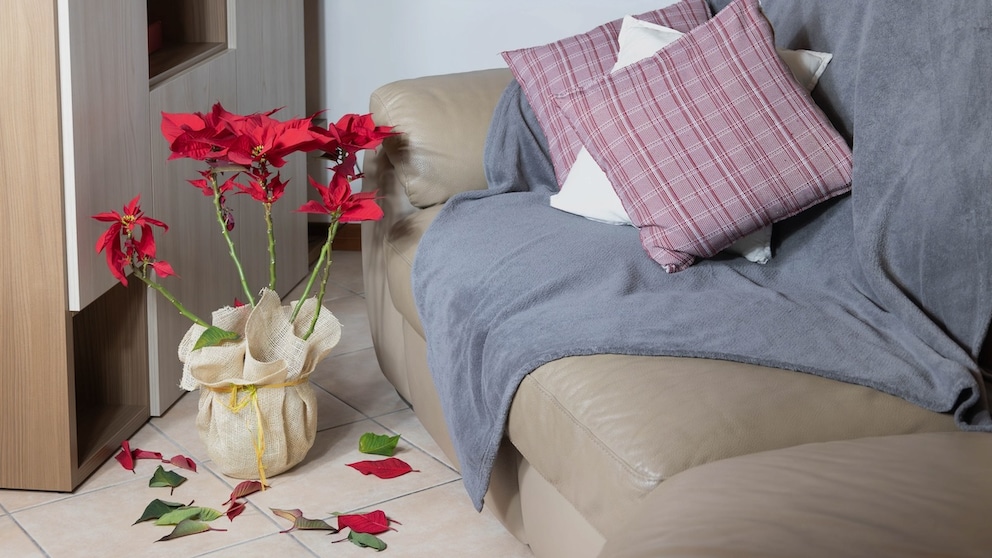
Poinsettias are considered easy to care for and are often bought and given as gifts during the winter when they are in full bloom. However, they are not as low-maintenance as they are said to be. They often barely survive the holidays, even though they are actually perennial plants. If a poinsettia loses its leaves, there can be several reasons for this, according to an initiative of European poinsettia growers called “Stars for Europe.”
1. The Poinsettia Needs a Pleasant Indoor Climate
Poinsettias need a lot of light. Therefore, they should be placed as close to a window as possible. They thrive in temperatures between 59 and 72 degrees Fahrenheit. Directly above a heater is not a good location. Note: The warmer it is, the more frequently you need to water.
If it is too cold, the poinsettia may lose its leaves. If the plant is too close to a cold windowpane, for example, it can damage the leaves. Better: leave a few inches of space from the pane.
Often, the poinsettia is placed on a cold tile floor or a cool windowsill. Providing the plant with a felt or cork coaster ensures that the roots stay warm.

3 Typical Reasons Houseplants Don’t Survive Winter

4 Mistakes the Poinsettia Won’t Forgive
2. The Poinsettia Is Particular About Air
Drafts can also harm the poinsettia and lead to leaf loss. Therefore, it should be kept away from open windows and doors. If you need to ventilate, it’s best to temporarily move the plant to a protected spot.
If the leaves turn yellow, it is usually a sign that the poinsettia has been overwatered. Rolled-up leaves, on the other hand, can indicate insufficient watering or air that is too dry. This is especially a problem in winter when the heating is on. In this case, a humidifier can help.
3. Don’t Overdo It with Watering
In general, you should only water the poinsettia when the soil feels dry two to three centimeters deep. Room-temperature, soft water is best. Waterlogging should be avoided at all costs, as it can cause the roots to rot.
By the way: If you’ve forgotten to water, you can place the plant in a container with lukewarm water until no more bubbles rise from the soil. Then remove the pot and let excess water drain well. However, already damaged leaves usually do not recover and will fall off.
With material from dpa