


June 4, 2026, 5:04 am | Read time: 3 minutes
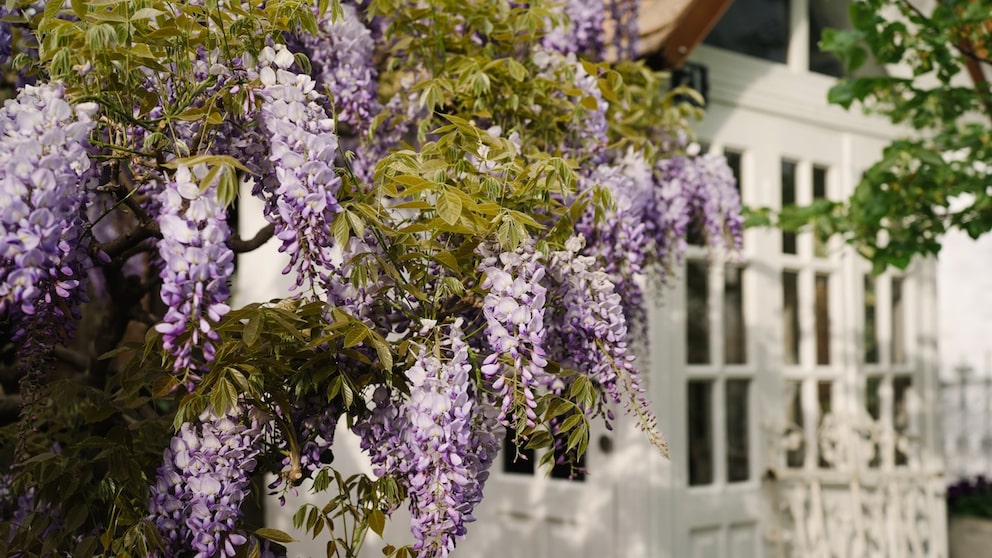
Wisteria captivates with its striking flower clusters from April to June. The flower clusters can bloom in blue, violet, white, or pink, adding a romantic and dreamy charm to any garden. To ensure the plant grows beautifully and blooms again each year, proper care is necessary. myHOMEBOOK explains which care mistakes to avoid with wisteria.
1. Mistake: Lack of Pruning
A primary care measure for hobby gardeners with wisteria is: Please prune regularly. Wisteria grows very vigorously. Without pruning, the climbing plant puts a lot of energy into growth, resulting in abundant foliage and long shoots. However, this affects the blooming.
Therefore, wisteria, also known as glycine, should be pruned twice a year. In summer, trim back new long shoots, leaving five to seven leaves on these shoots. In winter, cut the long shoots back to two to three buds. Important: Pruning should not occur before blooming, as this could remove flower buds.
2. Mistake: The Wrong Fertilizer
Plants need a lot of energy to produce impressive blooms. Depending on the type and variety of wisteria, the flower clusters can grow up to 50 centimeters long. Impressive, but also energy-intensive. To support the plants, the right fertilizer should be used. Conventional garden or lawn fertilizers typically contain a lot of nitrogen, a nutrient that promotes leaf growth in wisteria and inhibits blooming.
It’s better to fertilize wisteria moderately with compost. To specifically promote blooming, potassium- and phosphorus-rich fertilizers are ideal.

Why Wisteria Might Not Bloom

5 Plants Suitable for a South-Facing Balcony
3. Mistake: Thin Support Trellis
As a climbing plant, wisteria needs a support trellis. A common mistake is using lightweight wooden frames or thin wires. The plant develops enormous strength over the years and also bears heavy flower clusters. If this is not considered, the plant can deform pergolas, damage gutters, or bend railings. Therefore, a stable support trellis that can bear the plant’s weight should be chosen.
By the way: If you grow wisteria from seeds, patience is required. It can take ten years or more for the plant to bloom for the first time. That’s why many gardeners choose grafted plants, as they often bloom after just a few years.
4. Mistake: No Bloom in the Wrong Location
The location is crucial for blooming. Therefore, the choice should be well thought out. Once planted, wisteria should not be transplanted too often, as this could negatively affect growth and blooming. So, what does the ideal location look like? Clearly sunny. Wisteria needs a lot of sun. Ideally, it should receive at least six hours of direct sunlight a day. While the climbing plant grows well in partial shade, it blooms significantly less.