


July 6, 2023, 3:14 pm | Read time: 4 minutes
Even a north-facing balcony can be lushly greened. It all depends on the choice of plants. Some species prefer shade and can hardly tolerate sunlight. Find out which plants are suitable for a shady north-facing balcony here.
To grow and bloom beautifully, plants need important nutrients, water, and sunlight. However, this factor is generally absent on a north-facing balcony. But that doesn’t mean the balcony boxes have to remain empty. There are various plants that can thrive with little or no sunlight on a north-facing balcony.
Is There Sun on a North-Facing Balcony?
“The sun rises in the east, takes its course in the south, sets in the west, and is never seen in the north”–this well-known saying already indicates that a north-facing balcony receives little or no natural sunlight. However, how bright or shady the area actually is can vary. Not every balcony is exclusively north-facing.
These Plants Thrive on a North-Facing Balcony
Grasses and ferns, in particular, can be planted in the shade without any problems. But flowering specimens can also be cultivated on a shady north-facing balcony.
1. New Guinea Impatiens (Impatiens-Neu-Guinea Hybrids)
The New Guinea Impatiens proves that plants can bloom even in the shade. Many colors are possible, from red to yellow to violet. The flower grows bushy and quickly fills balcony boxes. It feels most comfortable in a semi-shaded or shaded spot, making it ideal for a north-facing balcony. It’s important that it is sheltered. The soil should be loose and well-drained. With drainage, hobby gardeners can prevent waterlogging.

Especially on hot summer days, the New Guinea Impatiens needs a lot of water. The plant is cultivated as an annual potted plant in this country. It does not tolerate the local temperatures in fall and winter well.
Also interesting: These plants are not allowed on the balcony
2. Barren Strawberry (Waldsteinia ternata)
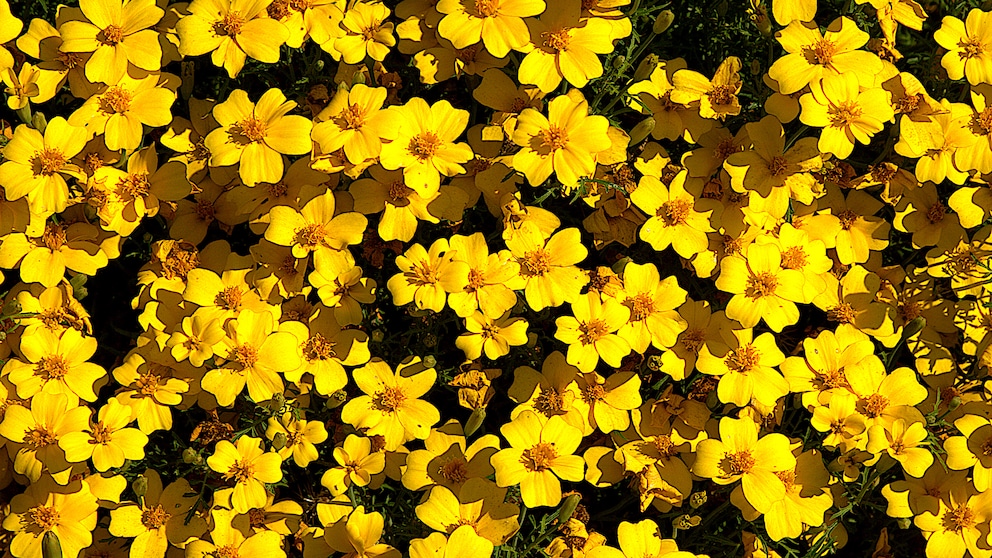
With the Barren Strawberry, also known as Carpet Goldberry, you can transform a north-facing balcony into a sea of yellow blooms. From April to June, the pretty, small flowers appear. Bees and other insects also enjoy the flowers and nectar. It is an undemanding plant that copes well with shady locations. The soil should be loose and humus-rich. The robust plant requires little care. During long dry periods, it is important to water the plant. In the fall, the ground-covering plant can be pruned back.

3. Lesser Periwinkle (Vinca Minor)
With its carpet-like growth, the Lesser Periwinkle is a good ground cover for the garden bed. But it can also be cultivated on a balcony. Hobby gardeners can plant it in both sunny and shady spots. The Periwinkle has no demands on the soil. In terms of care, there is little that can go wrong, as the plant copes well with drought. During long dry periods, hobby gardeners should not hesitate to reach for the watering can.

After blooming in the fall, the Lesser Periwinkle can be pruned back. As it is a perennial plant, the balcony box should be wrapped in fleece or jute in winter. This way, the roots are protected from frost damage.
Also interesting: 8 easy-care plants for the balcony
11 Ground Covers That Thrive in the Shade

8 Low-Maintenance Plants for Your Balcony
4. Ground Ivy (Glechoma hederacea)
Herbs also feel comfortable on a shady north-facing balcony, including Ground Ivy. It naturally grows in forests, a clear sign that the plant prefers a shady location. The soil should be humus-rich and calcareous. The herb is not demanding in terms of care, and fertilization is not necessary. However, the soil should always be moist. Ground Ivy has been used as a medicinal herb for a long time. Due to the substance Glechomin, large amounts should not be consumed, as the toxin can cause nausea.

5. Incense Plant (Plectranthus forsteri)
The Incense Plant has many useful properties. Its scent is said to repel insects, such as moths and mosquitoes, which is why it is also called the Moth King. The plant can also be cultivated on a north-facing balcony, as it thrives in bright shade. It is important to provide it with enough water. Fertilizing the Incense Plant is not necessary.
