


March 19, 2024, 4:22 pm | Read time: 6 minutes
In nature, there are few things that are truly blue, and flowers are no exception. This is despite the fact that bees and other insects can perceive this color particularly well and are attracted to such flowers. myHOMEBOOK presents various blue flowers for the garden and balcony that will delight both gardeners and insects.
When searching for blue flowers, it may be difficult to spontaneously name even two types. However, this is not a gap in general knowledge. In fact, not many flowers worldwide bloom in a true shade of blue. It’s a real shame when you consider the calming effect the color can have on our mood. It’s no wonder that the Blue Flower is the symbol of Romanticism in the eponymous era, and blue is the most commonly mentioned favorite color worldwide. This was found in an international online survey by YouGov. No wonder that one would want to be surrounded by the refreshing color in the form of blue flowers in the garden or on the balcony.
When searching for blue flowers, it might be challenging to spontaneously name even two species. However, this is not a gap in general knowledge. In fact, not many flowers worldwide bloom in a true shade of blue. It’s a real shame when you consider the calming effect the color can have on our mood. It’s no coincidence that the Blue Flower is the symbol of Romanticism in the eponymous era, and blue is the most frequently mentioned favorite color worldwide. This was found in an international online survey by YouGov. No wonder that one would want to be surrounded by the refreshing color in the form of blue flowers in the garden or on the balcony.
1. Forget-Me-Not (Myosotis)
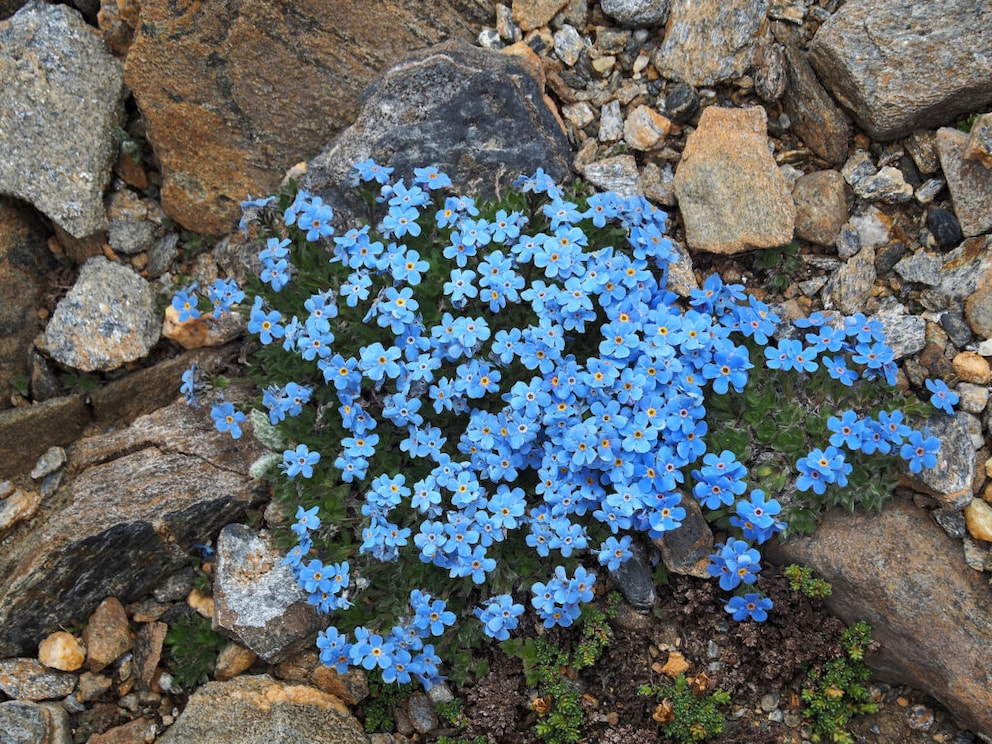
Without a doubt, the flowers of the forget-me-not appear in a bright shade of blue. If you want to cultivate the plant in the garden or on the balcony, you should make sure to choose a partially shaded spot. The forget-me-not is relatively easy to care for. It requires regular watering to keep the soil consistently moist. However, waterlogging should be avoided at all costs.
If you want to prevent the plant from self-seeding, you should remove the withered flowers.
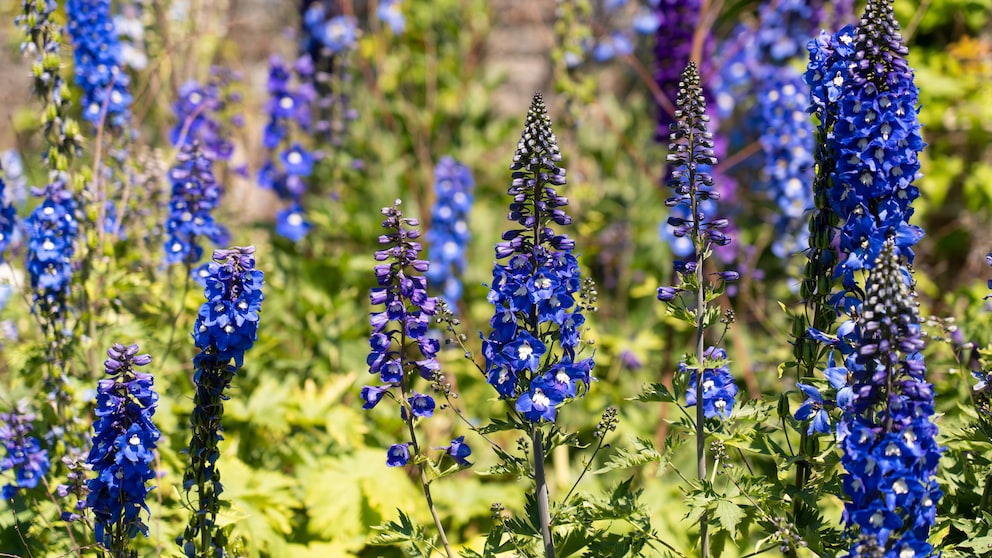
2. Larkspur (Delphinium)
Larkspur blooms in a variety of colors, from blue to pink and white. The plant owes its name to the pointed spur on the flower. This spur resembles the point on the heel of a knight’s armor, which is used to spur the horse.
Larkspur is a thirsty plant. It requires plenty of water. It’s important to remove withered flowers to encourage a second bloom.
Also interesting: This lilac variety should not be planted in the garden
3. Blue Star Creeper (Isotoma fluviatilis)
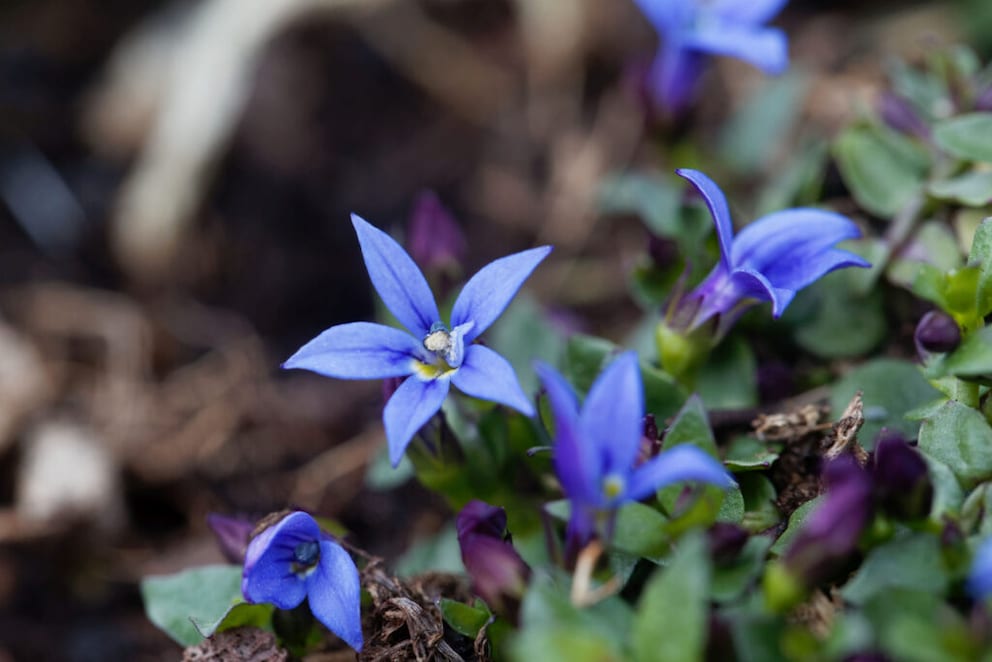
The Blue Star Creeper blooms in both delicate and light as well as intense and dark shades of blue. The plant doesn’t grow tall. It stays low to the ground, forming dense carpets. The plant is an ideal ground cover for garden beds. But it also thrives in a box on the balcony.
It requires a semi-shaded spot. The Blue Star Creeper is easy to care for and undemanding. However, during long dry periods, it should be watered. Pruning is usually not necessary.
4. Cornflower (Centaurea cyanus)
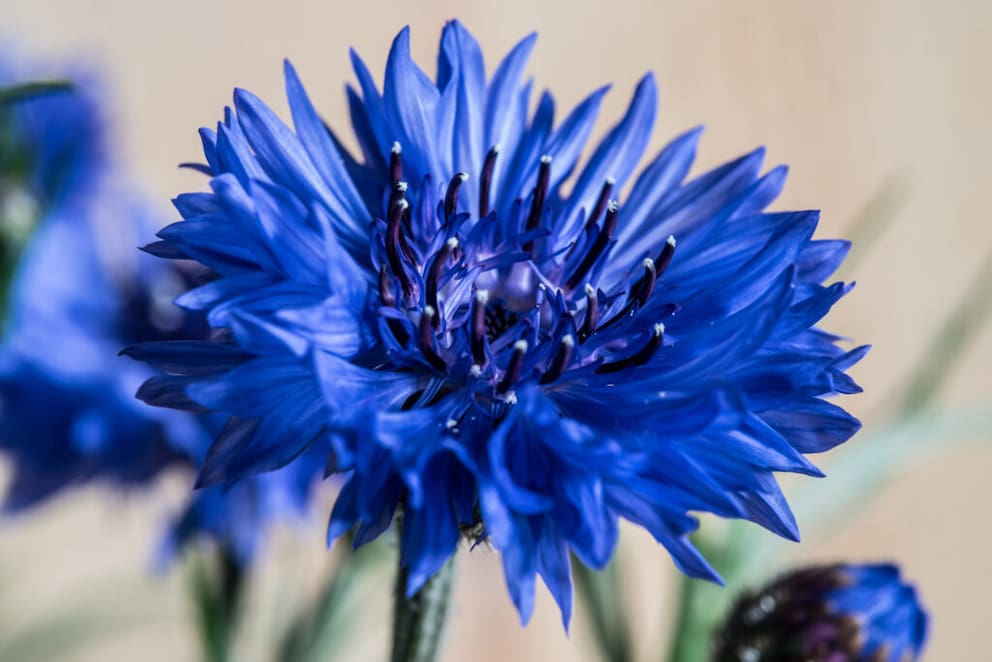
Cornflowers, like other field and meadow flowers, can also be cultivated in your own garden. The blue flower also feels at home on the balcony. For this, a pot with sufficient space is needed. If the plant is watered regularly, it requires little maintenance. Fertilizer can largely be dispensed with. Remove withered flowers to encourage new blooms.
5. Hydrangea (Hydrangea)
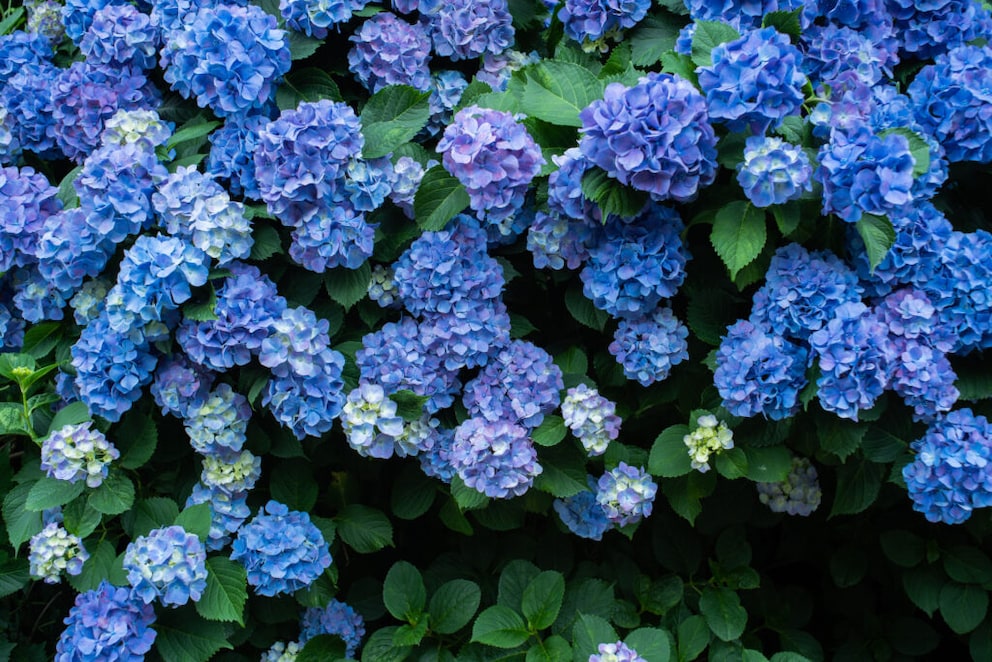
In nature, blue flowers are rare. All the more reason to want to be surrounded by the refreshing color in the form of blue flowers in the garden or on the balcony. To bloom blue, hydrangeas need the right soil or fertilizer, which can be adjusted to achieve the desired color. The color of the flowers depends on the pH level of the soil. If it’s more alkaline, the flowers will turn pink. Blue flowers appear when the pH level is acidic. So, if you choose an acidic fertilizer, you can turn pink hydrangeas blue.
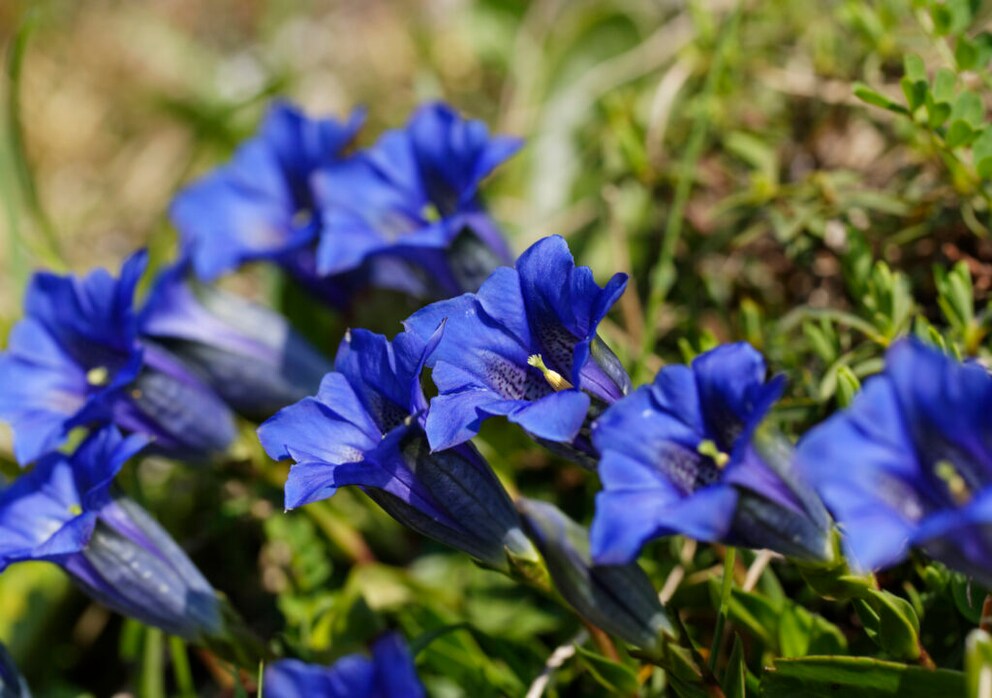
In nature, blue flowers are rare. To grow and thrive, gentian needs a rather acidic soil. When hiking in the Alps, you can spot the plant with its bright blue flowers in areas with a relatively cool climate. However, you have to be lucky to see it, as the plant is quite rare.
No matter how rare it may be, you can still cultivate it in your garden. When doing so, it’s important to ensure proper drainage, which can be made from old clay shards or stones. This way, you prevent waterlogging and root rot.
Compost is suitable as a fertilizer, as the blue flower needs many nutrients to grow and thrive. Pruning is not necessary.

Did You Know?
“In nature, plants with blue flowers are a rarity. According to one of the world’s largest plant databases (TRY), only about 10% of flowering plants are truly blue.”
8 Low-Maintenance Plants for Your Balcony
Why Hydrangeas Lose Their Color: Possible Causes
7. Speedwell (Veronica)
Speedwell grows in various ways, depending on the species. It can grow tall or stay low, forming dense carpets. The plant usually blooms in shades of blue. It is an ideal ground cover for garden beds or balcony boxes.
The blue flower should be watered regularly, avoiding waterlogging. Fertilizer can largely be omitted. However, if desired, you can treat the plant to some slow-release fertilizer in the spring.
8. Lobelia (Lobelia)
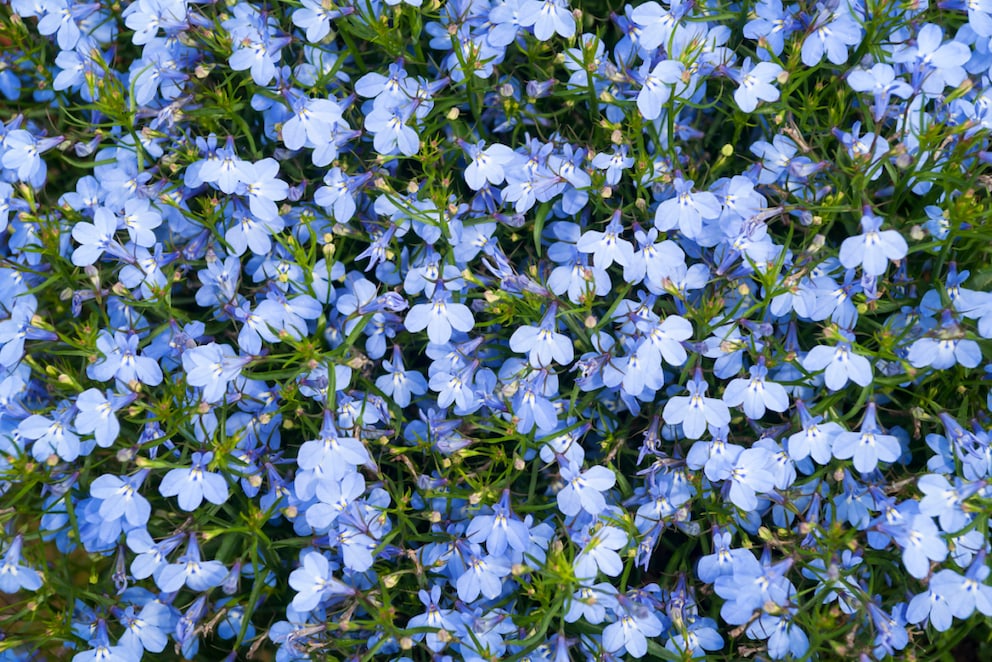
Due to its dense and compact growth form, lobelia makes a striking addition to both garden beds and balcony boxes. Bare spots and gaps are quickly filled by the perennial. The plant blooms in various colors, including violet, white, pink, and a striking blue.
If you cultivate lobelia in a pot, it’s crucial to install a drainage layer at the bottom of the pot to prevent waterlogging. Given the plant’s high nutrient needs, it’s advisable to fertilize it about every two weeks through the watering. At the same time, be careful to avoid over-fertilizing with nitrogen.