


March 11, 2026, 3:50 pm | Read time: 3 minutes
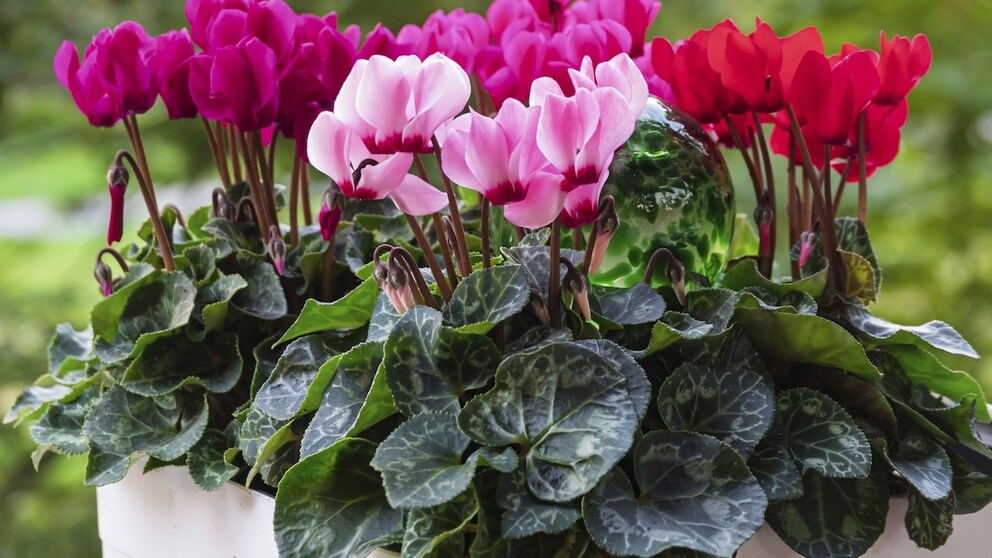
The indoor cyclamen is one of the most popular flowering plants for fall and winter—its vibrant colors add a splash of color during the dark season. After blooming, however, it is often discarded, even though it is a perennial tuber plant that can be cultivated for many years with proper care.
Many who wish to keep their cyclamen make a crucial mistake—and wonder why the plant doesn’t sprout or bloom the following year properly. myHOMEBOOK gardening expert Franka Kruse-Gering explains exactly what this mistake is and what can be done better instead.
Please Avoid This Mistake
Many hobby gardeners make a crucial mistake when continuing to cultivate their indoor cyclamen: They don’t give the plant a consistent rest period after blooming. Instead of significantly reducing water and leaving the cyclamen largely undisturbed in summer, it continues to be regularly cared for. As a result, the tuber cannot regenerate sufficiently, leading to weak new growth or no bloom at all in the next season.

What to Consider When Watering Cyclamen

Blooming Alternatives to the Poinsettia
Why the Rest Period Is So Important
The indoor cyclamen has a natural rhythm: It blooms in the cooler season and retreats in spring. As the days become longer and warmer, the leaves start to turn yellow. This is not a care mistake but a completely normal process. The plant is now storing energy in its tuber and preparing for a summer rest period.
Respecting this cycle lays the foundation for a strong plant and abundant blooms in the fall.
What Is Important for Cyclamen After Blooming
Once the leaves turn yellow, water should be gradually reduced. Wilted leaves and flowers are carefully twisted out, not cut. When all leaves have withdrawn, water sparingly—just enough to prevent the tuber from completely drying out.
The ideal location during the summer months is bright but without direct sunlight, and preferably cool. Temperatures between 59 and 68 degrees Fahrenheit are optimal. The plant does not tolerate high heat.
From late summer—usually in August or September—the first new leaves appear. This marks the beginning of the growth phase. The cyclamen is watered more regularly again, ideally from below via the saucer, to prevent the tuber from staying wet. Waterlogging should be avoided at all costs.
The best time for repotting is also late summer, once new growth is visible. Use fresh, well-draining potting soil. Important: The tuber should not be completely covered with soil but should protrude about halfway from the substrate. Additionally, cyclamen prefer rather tight pots—a slightly larger pot is sufficient.