


December 12, 2025, 4:08 pm | Read time: 5 minutes
For many, the poinsettia is as much a part of the Advent season as cookies and candlelight–but the plant is not sustainable. Those who want to be more mindful of their Christmas decorations this year will quickly find that there are numerous plants that are just as festive and bring joy for much longer. myHOMEBOOK plant expert Franka Kruse-Gering names four alternatives to the poinsettia that can continue to thrive after the holidays.
Why It’s Sensible to Choose Alternatives to the Poinsettia
Many plant enthusiasts–myself included–are increasingly questioning whether the traditional poinsettia is still relevant. The plant is now considered a typical seasonal product. While it looks impressive for a short time, it quickly loses its beauty and often ends up in the trash after just a few weeks. This is also shown by a myHOMEBOOK survey, in which about 75 percent of approximately 10,000 participants said they had already thrown away a poinsettia. Additionally, the poinsettia is cultivated under warm, tropical conditions and then exported to our cold winters–a significant energy and resource expenditure for a plant with such a limited lifespan. Those who want to decorate more sustainably and use plants long-term will find robust alternatives to be a much better choice.
1. Cyclamen
The cyclamen (Cyclamen persicum) brings lightness to the dark season with its delicate flowers and is a beautiful alternative to the poinsettia. The species originates from the eastern Mediterranean region and is not native to Germany, but has proven itself as a winter houseplant for many decades. After the Christmas season, Cyclamen persicum is allowed to enter its dormant phase: Once the leaves retract, watering is greatly reduced until the tuber rests almost dry. During the summer months, the pot remains in a shady, warm place. In early fall, the new growth period begins by slowly resuming watering. Then the plant sprouts again and often blooms the following winter–a clear advantage in terms of sustainability.
Also interesting: 6 Creative Ideas to Decorate the Living Room for Christmas
2. Christmas Rose
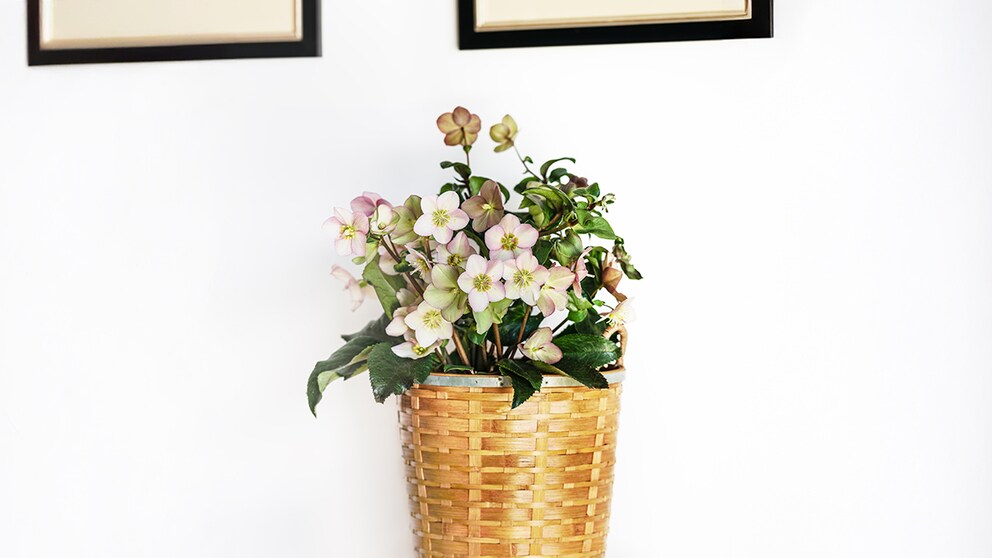
The Christmas rose (Helleborus niger) blooms in the middle of winter when hardly any other plant shows color, making it particularly elegant. It is found naturally in parts of Central Europe and is completely hardy. After Christmas, Helleborus niger is best planted outdoors promptly. It prefers semi-shaded, humus-rich locations and returns for many decades. Over the years, the plant forms strong clumps that reliably produce new flowers from late winter. Important: Christmas roses do not like regular location changes and reward a permanent spot in the garden with a long lifespan.

The Most Beautiful Christmas Plants and Their Meanings

These 7 Winter-Blooming Houseplants Add Color to the Dark Season
3. Holly
The holly (Ilex aquifolium), better known to us as holly, looks particularly festive and decorative with its shiny, dark green leaves and–depending on the variety–striking red berries. The European holly is native to large parts of Germany and plays an important role in natural gardens. After Christmas, a holly cultivated in a pot can be easily reused: It can be planted in the garden in spring or kept permanently as a container plant on the balcony or terrace. Ilex aquifolium is extremely long-lived, grows slowly, and requires little care. As an evergreen shrub, it retains its foliage even in winter and provides valuable food for birds–a sustainable alternative that brings joy well beyond the Advent season.
4. Christmas Cactus
The Christmas cactus (Schlumbergera x buckleyi and other Schlumbergera hybrids) is known for its colorful flowers that reliably appear during the Advent season. The plants originally come from the subtropical rainforests of Brazil and are not hardy, but have established themselves as long-lasting, robust houseplants. After flowering, the Christmas cactus does not enter a strict rest period but needs a few weeks with slightly less water and no fertilizer to gather new strength. From spring, Schlumbergera can be placed outdoors in a shady, warm spot, which promotes growth. In fall, a combination of cooler temperatures and shorter days ensures that new buds form. With this simple care, the Christmas cactus blooms reliably year after year–often for decades.