

October 6, 2026, 4:38 am | Read time: 4 minutes
When temperatures drop and winter slowly sets in, you might prefer not to venture out into the cold. Thinking about the plants in your garden or on your balcony, you might wonder if plants can actually freeze. myHOMEBOOK discussed this with Nabu and found out what happens to plants in the cold and which types are particularly sensitive to frost.
Follow myHOMEBOOK on WhatsApp now
What Happens to Plant Cells in Frost
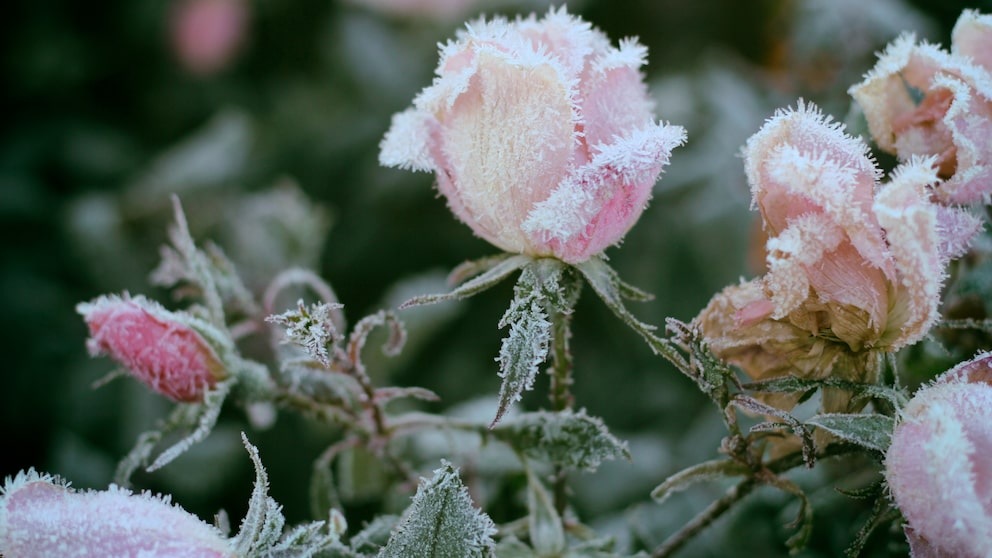
It’s known that plants can die at very low temperatures. But can they actually freeze? Silvia Teich, spokesperson for Nabu, explains that plants do react to cold. “The cells of all living beings, including plants, are largely made up of water,” the expert explains. This water expands when it freezes. Additionally, fine, sharp ice crystals can form. If the water in the cells freezes, they can be damaged and die. “A cell in which the water freezes bursts and dies because the expanding water destroys the cell membrane,” Teich explains.
In a figurative sense, plants can indeed “freeze.” Unlike humans, they don’t perceive the cold as an unpleasant sensation. What matters more are the effects of low temperatures on their tissue.
Why Some Plants Overwinter Without Issues
According to Silvia Teich, plants native to regions with regular frost have adapted to low temperatures. One strategy is to shed leaves and overwinter without particularly frost-sensitive parts. “In other plants, only the above-ground parts die off. The plants overwinter in the root parts underground,” explains the Nabu spokesperson.
An example of this is peonies. Their above-ground parts die off while the plant overwinters underground. Other plants bypass the cold season by surviving the winter only as seeds. Teich cites annual plants such as nasturtiums, marigolds, and love-in-a-mist as examples. Many frost-hardy plants also have a kind of natural antifreeze. According to Teich, they convert glucose in their cells into the antifreeze glycerin. “This way, subzero temperatures don’t harm them because the glycerin prevents the cell walls from bursting,” she explains.
Also interesting: Why are plants actually green?

What to Consider When Overwintering Hydrangeas

What’s Important for Overwintering Balcony Plants
These Plants Are Particularly Sensitive to Cold
According to Teich, plants not adapted to the local climate have problems with frost. This includes, for example, oleander, which originally comes from the Mediterranean region. Sensitive plants should therefore be protected or overwintered in a suitable winter quarters. Some types of roses can be protected in the bed with a layer of leaves. There are also frost-sensitive types among crops. According to the expert, tomatoes and potatoes, for example, cannot tolerate frost. “All plant parts above the ground are at risk because they are directly surrounded by cold air,” Teich explains. The roots are initially better protected by the soil. However, in severe frost, the ground can also freeze, so even underground plant parts are not always safe from frost damage.
How to Protect Plants from Frost Damage
For sensitive plants, some measures can help them get through cold nights and winter better:
- Place plants in a sheltered location: Container plants, for example, are more protected near a house wall or under a canopy. Non-hardy plants require a suitable frost-free winter quarters depending on the type.
- Insulate pots all around and from below: Containers can be protected with jute, fleece, or coconut mats. An insulating base can also prevent the cold from directly penetrating the pot from the ground.
- Protect sensitive plants with fleece: For frost-sensitive plants, suitable garden fleece can provide additional protection against low temperatures.
- Bring non-hardy plants into winter quarters in time: Particularly frost-sensitive plants should not overwinter unprotected outside.
- Don’t forget to water even in winter: Evergreen container and garden plants need water even during the cold season. However, it’s important to water on frost-free days if possible.
- Don’t remove frost-damaged plant parts prematurely: After frost damage, it may be wise to wait and see which parts of the plant have actually died. According to Silvia Teich, dead parts can be removed. Then, it’s a matter of waiting to see if the plant recovers and sprouts anew.
However, there are also plants that are relatively unaffected by frosty temperatures. As examples of frost-hardy garden plants, the expert names Christmas roses, snowdrops, as well as kale and Brussels sprouts.