


November 10, 2026, 1:09 pm | Read time: 2 minutes
A copper nail is said to be enough to kill an entire tree–a myth that has persisted for decades. But is there any truth to it, or is it just an old rumor? myHOMEBOOK investigates.
A tree right on the property line can quickly become a nuisance–it blocks light, sheds leaves, and causes disputes with neighbors. When cutting it down isn’t an option, some resort to questionable ideas. According to a widespread legend, a simple copper nail is enough to poison a tree discreetly. But is that really true?
Is There Any Truth to the Myth?
Using a copper nail to kill an entire tree–although debunked decades ago, the myth persists. It is a stubborn misconception.
It likely originated from the knowledge that copper in high concentrations can be toxic to plants, humans, and animals. For example, copper bands are used to keep snails out of garden beds, and copper coins are used to combat bacteria in flower water. However, healthy trees have a special ability: they can compartmentalize local injuries, preventing the poison from spreading throughout the plant.
Also interesting: 7 Lawn Myths Checked by Experts

Can a single copper nail really kill an entire tree?

Do Rusty Nails Really Help Hydrangeas Bloom Abundantly?
Scientists Addressed This in 1976
The myth of the copper nail has lingered for decades–which is why it was debunked in a 1976 experiment at the University of Hohenheim. At that time, five to eight copper nails were driven into spruces, birches, elms, ashes, and ornamental cherries. Control experiments were also conducted with nails made of lead, iron, and brass.
In all cases, the trees remained unharmed and survived the experiments. The trees compartmentalized the wounds in the wood–later examinations only found slight discolorations at the point of entry.
Iron Nails Are the Greater Evil
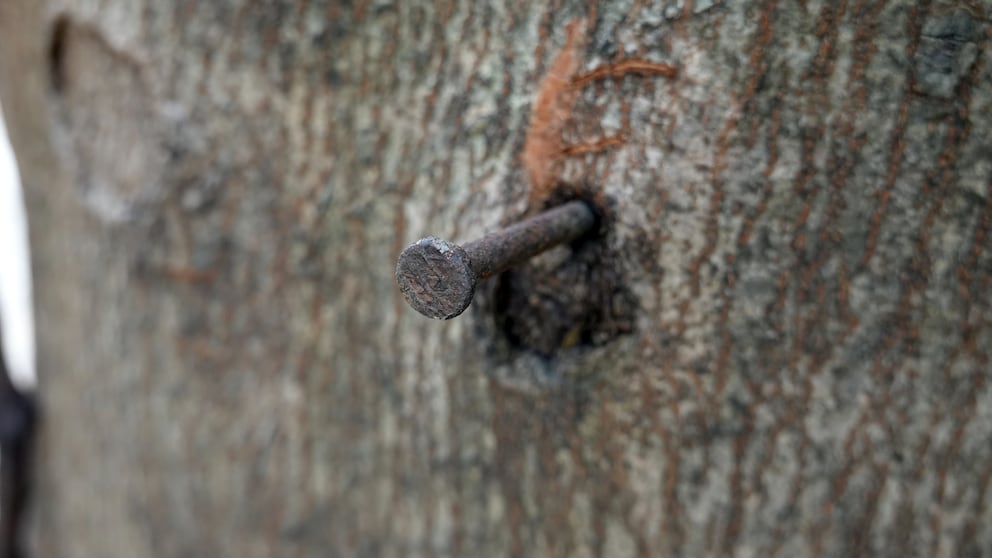
While the myth of the copper nail in the tree persists, the iron nail often goes unnoticed. However, it should not be driven into the tree–for example, to attach a birdhouse or hang a garland.
Iron nails are extremely prone to rust. Even if they are in a spot that rarely gets rain, iron nails will eventually start to rust. The rust then embeds itself in the tree and can spread to the wood. This increases the risk of infection with bacteria, viruses, and fungi.