


January 12, 2026, 9:56 am | Read time: 5 minutes
A little seed, water, and patience—that’s all you need to grow your own alfalfa sprouts. These delicate sprouts are considered a classic among sprouts: mild and nutty in flavor, versatile, and packed with nutrients. Once you’ve tried them fresh from your windowsill, you’ll hardly reach for the plastic container from the supermarket. The best part: Alfalfa sprouts can be easily grown at home, even without a green thumb.
What Exactly Are Alfalfa Sprouts?
Alfalfa is the sprout of the lucerne plant. In the kitchen, the tender, light green sprouts are mainly known from salads, bowls, or sandwiches. They have a pleasantly mild taste and therefore go well with almost anything—from savory to fresh. Nutritionally, they score with plant-based protein, fiber, and vitamins such as A, C, E, and K.
Overview
- What Exactly Are Alfalfa Sprouts?
- Growing Alfalfa Sprouts–The Right Equipment
- Step by Step: How to Grow Alfalfa Sprouts Yourself
- What to Do with the Small, Brown Seed Hulls?
- Hygiene is Key When Growing Alfalfa Sprouts
- How to Use Alfalfa Sprouts
- How Long Do Homegrown Alfalfa Sprouts Stay Fresh?
- Simple Alternative to Alfalfa: Grow Your Own Cress
Growing Alfalfa Sprouts–The Right Equipment
Not much equipment is needed. Most households already have everything:
- Organic alfalfa seeds (must be labeled as sprouting seeds)
- A sprouting jar or a regular screw-top jar
- A sprouting lid, sieve, or a piece of clean cheesecloth
- Fresh water
- A bright spot without direct sunlight
Important: Only use fresh seeds specifically intended for sprouting. Regular seeds from garden stores for growing lucerne are often treated, and the sprouts are not suitable for consumption.
Step by Step: How to Grow Alfalfa Sprouts Yourself
- Soaking: Place about a tablespoon of alfalfa seeds in the jar and cover with plenty of water. The seeds swell significantly. Let them soak for 6–8 hours or overnight.
- Draining and rinsing: After soaking, drain the water completely. Rinse the seeds thoroughly with fresh water and let the jar drain well.
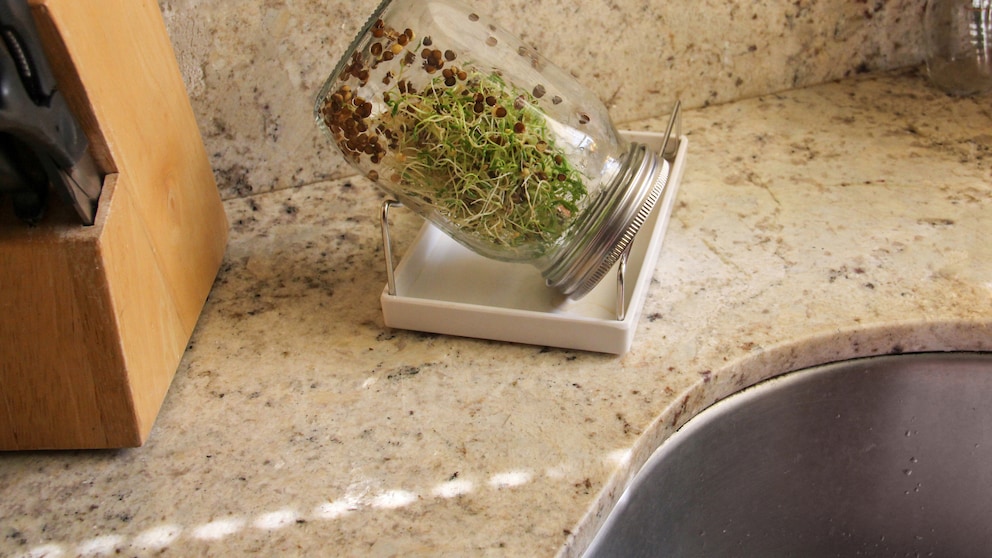
- Let them sprout: Place the jar at an angle with the opening facing down (see article image) so excess water can drain. A bright, warm spot (64–72 degrees Fahrenheit) is ideal. The sprouts do not like direct sunlight.
- Rinse regularly: Rinse the sprouts two to three times a day with fresh water. This prevents mold and ensures clean, crisp sprouts.
- Harvest: After about 4–6 days, the alfalfa sprouts are ready to harvest. They will have fine green leaves and a fresh, spicy aroma.
What to Do with the Small, Brown Seed Hulls?
With alfalfa sprouts, the brown seed hulls often come off during sprouting. They are edible but taste slightly bitter. If you prefer, you can simply skim them off while rinsing–they usually float on top.
Hygiene is Key When Growing Alfalfa Sprouts
Sprouts grow under moist conditions—a paradise for germs if you don’t work cleanly. Therefore, the following applies:
- Rinse jars with hot water before each new batch
- Wash seeds thoroughly
- Change water regularly
- Dispose of sprouts immediately if they smell musty
If you follow these rules, you usually won’t have any problems.
How to Use Alfalfa Sprouts
They taste best fresh. Alfalfa sprouts are especially popular:
- on bread or sandwiches
- in salads or wraps
- as a topping for soups and bowls
- in smoothies (used sparingly)
They should not be heated if possible, as valuable nutrients are lost in the process.
Growing Crunchy Pea Greens on a Windowsill

Make Your Own Seed Paper in a Few Easy Steps
How Long Do Homegrown Alfalfa Sprouts Stay Fresh?
After harvesting, alfalfa sprouts keep in the refrigerator for about two to three days. It’s best to store them in a breathable container and rinse them briefly before consumption.
Simple Alternative to Alfalfa: Grow Your Own Cress
Cress is one of the most rewarding plants—it germinates quickly, grows reliably, and is ideal for the windowsill. Traditionally, it is grown on cotton wool, but this method also has disadvantages: Cotton wool is not a natural product, is difficult to clean, and usually ends up in the trash after harvest. Those who want to garden more sustainably, hygienically, or simply more diversely can easily grow cress in other ways.
1. Cress on Paper Towels or Cellulose
A simple and often underestimated alternative is ordinary paper towels.
Here’s how:
Line a plate or shallow dish with several layers of paper towels. Moisten the paper well, sprinkle the cress seeds evenly on top, and keep them moist.
Advantages:
- Available almost everywhere
- Good germination rate
- Easy to dispose of
Disadvantage:
- Dries out faster than other substrates
- Can only be used once
2. Grow Cress in a Jar (as Sprouts)
Cress can also be grown like classic sprouts in a jar—without any substrate.
Here’s how:
Soak seeds for a few hours, then place them in a sprouting jar or a screw-top jar with a sieve lid. Rinse two to three times a day and let them drain at an angle.
Advantages:
- No substrate needed
- Very hygienic
- Especially space-saving
Disadvantage:
- Taste is slightly milder than soil-grown cress
- Multiple harvests by “cutting” is not possible
3. Cress on Soil or Herb Substrate
For those who prefer a classic plant-based approach, potting soil or special herb soil is the way to go.
Here’s how:
Fill a dish with soil, press it down lightly, moisten it, and sow the seeds densely. Keep them evenly moist.
Advantages:
- Very strong flavor
- Multiple cuts possible
- Natural growth environment
Disadvantage:
- Soil can mold if too wet
- More effort in cleaning

Sprouts as an Immune Booster in Winter
“Whether alfalfa sprouts or cress: The plant sprouts are the ideal, all-natural dietary supplement, especially in winter. They are bursting with vitamins and minerals—qualities that fruits and vegetables from the supermarket often lose during long transport routes.”