


July 8, 2023, 9:14 am | Read time: 4 minutes
The skimmia (Skimmia japonica) originates from Japan, where it is native to mountainous regions. Due to its attractive flowers and berries, the skimmia has been introduced and cultivated in many other parts of the world over the past decades. myHOMEBOOK offers tips for caring for this hardy plant, which bears pretty flowers and berries year-round.
The skimmia (Skimmia japonica) is an evergreen shrub popular among both indoor and outdoor gardeners for its attractive flowers, glossy foliage, and pleasant fragrance. Originally native to Japan and China, the skimmia has found its way into many gardens worldwide.

Overview
Planting Skimmia
Skimmia can be planted either in spring or fall. The planting hole should be large enough to accommodate the root ball. The plant should not be set too deep. Good drainage is also important to prevent waterlogging.
Appearance and Growth
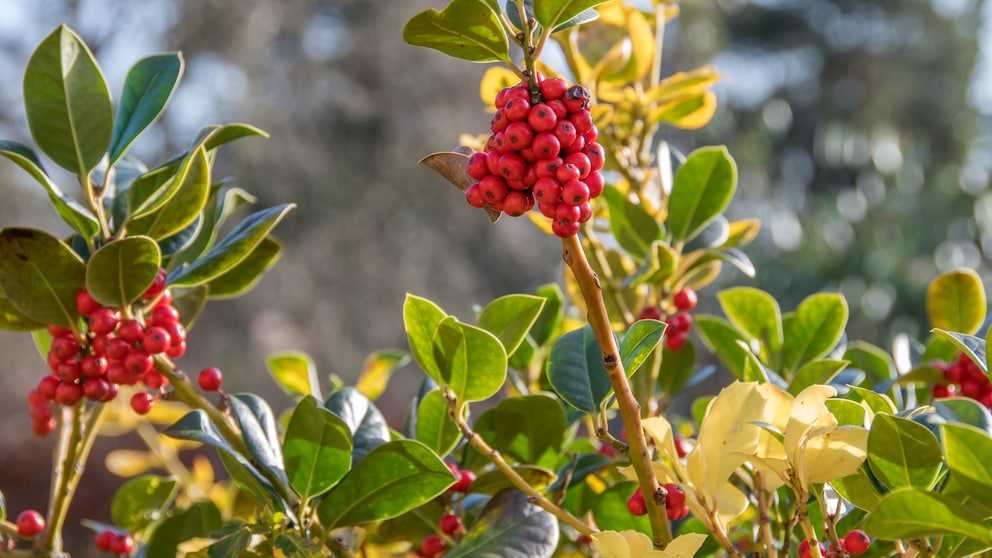
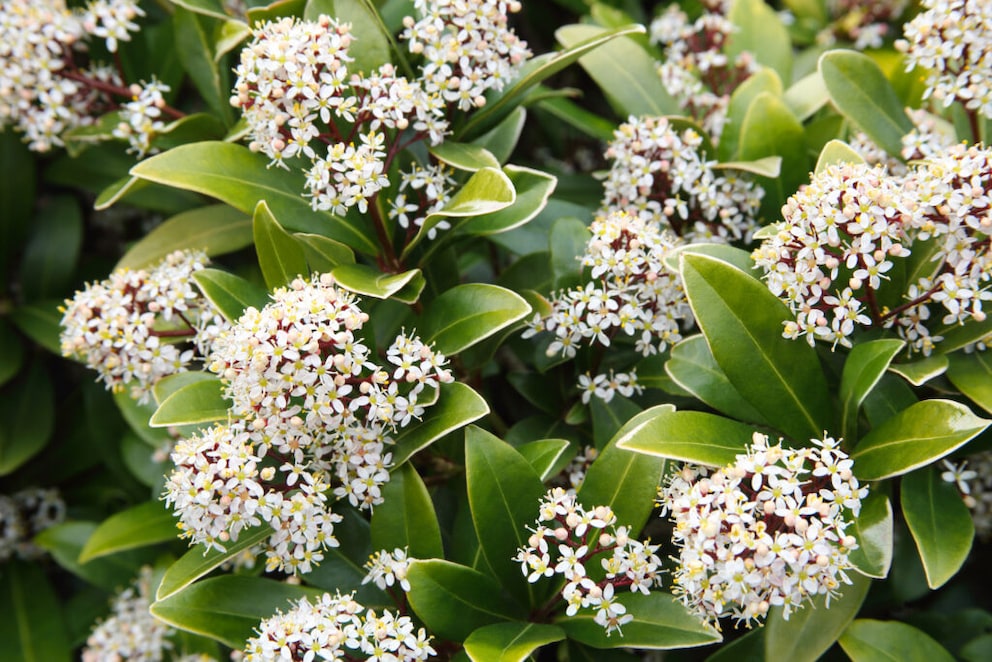
Skimmia is a compact shrub that typically reaches a height of about 3 to 5 feet. The leaves are dark green, glossy, and leathery, reminiscent of bay leaves. In spring, fragrant flower buds develop, which mature into attractive, bright red berries in fall and winter. Skimmia is a dioecious plant, meaning male and female plants are required for berry production. However, berries only form on the female flower clusters.
Location and Soil
Skimmia thrives best in semi-shaded to shaded locations. A slightly acidic soil with a pH between 5 and 6.5 is ideal. The plant does not tolerate direct sunlight, as it can cause leaf burn. A sheltered location from cold winds is also important to avoid frost damage. A shady spot against a house wall or next to a garden shed is ideal.
Varieties
There are various skimmia varieties that differ in size, flower color, and leaf pattern.
- Rubella: This popular variety develops dark red flower buds. The red berries also provide color accents in the garden during winter.
- Fragrans: This skimmia variety is especially known for its captivating fragrance.
- Veitchii: Veitchii grows slightly larger than other skimmia varieties and is particularly heat-resistant, making it a good hedge plant.
Caring for Skimmia
Watering
Skimmia prefers consistently moist soil, but waterlogging should be avoided. During dry periods, it is important to water the plant often but sparingly. A mulched root area retains moisture and can suppress weeds.
Fertilization
Skimmia benefits from regular fertilization, especially during the growth and flowering period in spring and summer. An organic fertilizer for rhododendrons or camellias should be used. Like waterlogging, over-fertilization should be avoided, as it can lead to excessive growth.
Pruning
Regular pruning is generally not required to maintain the natural shape of skimmia. Only dead or damaged branches are removed during pruning. If necessary, a light shaping cut can be made in spring to promote growth and keep the plant compact.
Winter Hardiness
Skimmia is winter-hardy and well adapted to low temperatures. However, severe frost can damage the flower buds. A mulch layer around the root area can also help protect the plant.
Diseases and Pests
Skimmias are generally resistant to pests and diseases. Occasionally, they may be infested by spider mites, aphids, or scale insects. Regular inspections, including the undersides of leaves, help detect and treat pests early.
Toxicity
All parts of the skimmia, especially the berries, are toxic to humans and animals. When planting in the garden, children and pets should be considered. The bright red berries can be almost magically attractive to children.
Propagation
Skimmia can be propagated by seeds or cuttings. Seeds usually require a cold period to become viable. Cuttings can be taken in early summer and rooted in a moist propagation substrate. Sowing requires patience and care.
Alternatives
For gardens where skimmia does not thrive, alternatives include azaleas, rhododendrons, and Japanese holly. These are similarly attractive, evergreen shrubs that develop well in shaded or semi-shaded areas.
Planting and caring for blackcurrants in the garden
Planting and Caring for Mint in the Garden or on the Balcony
Bee Friendliness
Skimmia is a valuable food source for bees and other pollinating insects, especially during its flowering period in spring.
Uses
Skimmia is versatile and suitable as a standalone shrub, hedge plant, or in mixed borders. Its attractive berries also make it a popular choice for fall and winter decorations indoors.