


October 17, 2023, 1:59 pm | Read time: 4 minutes
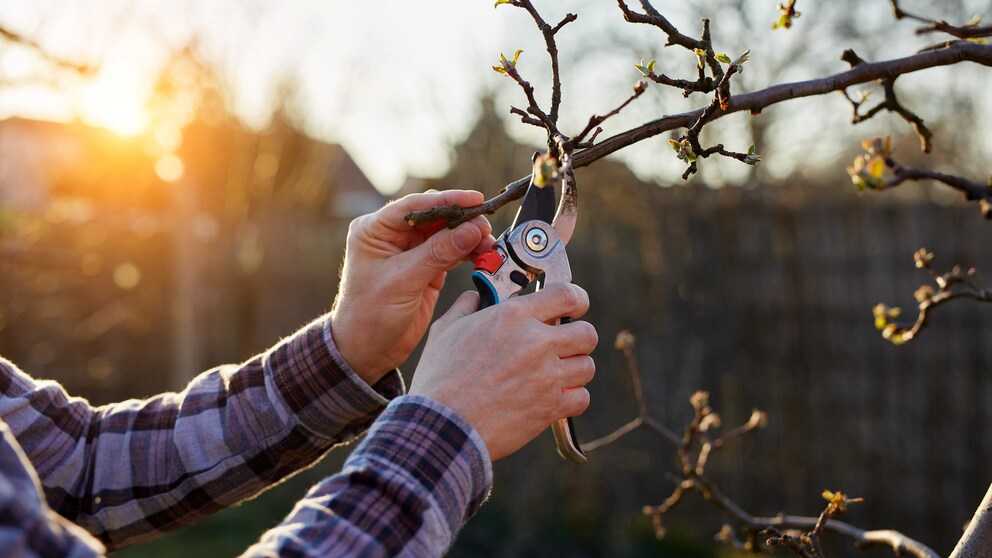
Apple trees, along with cherry, plum, and pear trees, are among the most common fruit tree varieties in our region. No wonder–most varieties are easy to care for, and the fruits are tasty and long-lasting. myHOMEBOOK author and biologist Marike Stucke explains how the apple tree remains attractive and productive for a long time with the right pruning technique.
Pruning apple trees serves several important purposes. First, it helps control the tree’s growth and shape. A well-shaped tree is not only more aesthetically pleasing but also makes harvesting and maintenance easier. Second, pruning promotes air circulation within the tree, reducing the risk of diseases and pests. Third, it allows for the removal of dead or diseased branches to maintain the tree’s health. Finally, pruning enhances fruit quality, as the tree can focus its energy on fewer but higher-quality fruits.
The Best Time for Apple Tree Pruning
The best time to prune an apple tree is during its dormant period, usually in late winter or early spring, before the buds break. Pruning during this time minimizes stress on the tree and reduces the risk of disease transmission.

Beware of Frost Damage!
“During a pronounced frost period, apple tree pruning should be avoided or postponed. Otherwise, frost damage to the cut wounds could occur.”
Sharp Tools for a Good Cut
Before starting to prune, ensure that the tools are sharp and clean. Sharp tools allow for particularly clean cuts, which promote the tree’s healing.
Pruning Apple Trees–Step by Step
- Remove dead and diseased branches: First, remove branches that show signs of disease or pest infestation. This protects the rest of the tree from spreading.
- Cut branches that are too close together: When branches grow too close together, it can hinder necessary air circulation. Excess moisture can accumulate here, creating a breeding ground for diseases such as fungal infections. For particularly close branches, the weaker one should be removed.
- Rejuvenation pruning: For very old and previously neglected trees, a rejuvenation pruning should be performed. Removing older, unproductive branches can make room for new, fruit-bearing shoots. This promotes the tree’s productivity.
- Pay attention to the correct cutting angle: Branches should be cut at an angle just above an outward-facing bud eye. This encourages growth in the desired direction.
- Do not seal large cut surfaces: Large cut surfaces on branches and trunks should remain open so the tree can heal naturally.
Also interesting: Popular Apple Tree Varieties for the Garden and What to Consider in Care

How to Prune Hibiscus Correctly

Which Plants to Prune in February
Special Pyramidal Pruning for Young Apple Trees
For young apple trees, there are a few additional points to consider. The goal in the first few years is to create a strong framework for the tree. The pyramidal pruning method is suitable for this. Proceed as follows:
- Remove competing branches: If the young tree has several main branches, some should be removed to promote a single strong leader.
- Limit growth height: The leader should be pruned to achieve the desired height of the tree. This promotes compact growth and makes future care and harvesting easier.
- Shape the crown: To form a well-structured crown, the lateral shoots are pruned in a pyramidal shape to achieve the desired form.
Also interesting: What to Do About Aphids on Apple Trees?
Further Tips for Successful Apple Tree Pruning
1. The Right Equipment:
- Sharp and clean tools are essential. Investing in a good pair of pruning shears, loppers, and a saw will pay off for many years.
- Gloves and safety glasses can protect hands and eyes from falling branches and twigs.
- Disinfectant is handy for cleaning tools between different cuts. This can minimize the spread of diseases.
2. Suitable Weather Conditions:
- Pruning should be done on a dry day to ensure good visibility of the tree and the cut surfaces. Rain or overly moist conditions should be avoided.
- Pruning in very low temperatures can stress the tree. A frost-free period in late winter or early spring is optimal.
3. Apple Varieties with Special Pruning:
- Certain apple varieties, such as espalier or columnar apples, require special pruning techniques to maintain their characteristic growth form.
- For tall-growing varieties, a so-called training cut is necessary to keep the tree in the desired shape.