


November 7, 2026, 8:19 am | Read time: 3 minutes
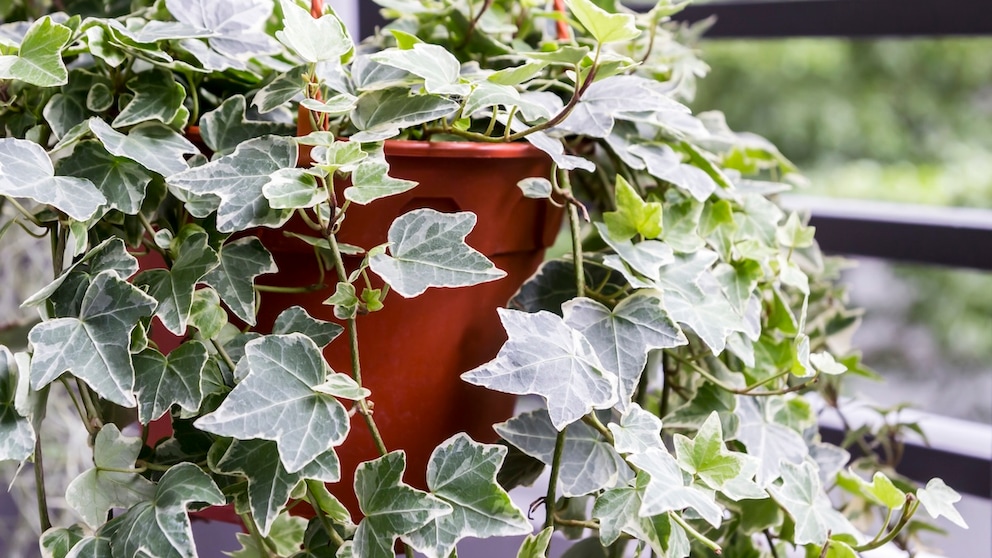
Ivy is considered robust and winter-hardy. However, when it grows in a pot or balcony box, it is more exposed to frost and drought than in the garden. With a few simple measures, ivy on the balcony can be made winter-proof. myHOMEBOOK explains what to consider now.
Is Ivy Winter-Hardy?
Common ivy (Hedera helix) generally copes well with winter temperatures and can therefore remain outside during the cold season.
However, conditions on the balcony are different from those in the garden. While the surrounding soil protects planted specimens, the root ball of potted plants is only behind a relatively thin container wall. Especially small pots can cool down significantly or freeze completely during prolonged frost. Therefore, it is worthwhile to give ivy in containers additional protection.
1. Choose a Protected Location
The plant does not need to move indoors for the winter. However, a sheltered spot on the balcony is sensible. A location near the house wall, where the plant is less exposed to wind, can be suitable.
Intense winter sun can also be problematic for evergreen plants. Ivy continues to lose moisture through its leaves. If the plant cannot absorb water due to a frozen root ball, the water supply becomes unbalanced. A wind-protected spot without intense winter sun can therefore be advantageous.
2. Protect the Plant Container from Frost
It is especially important to protect the root area. The pot can be wrapped with burlap or another insulating material. This is particularly sensible for smaller plant containers, as the soil inside can cool down more quickly.
Additionally, the container should not be left unprotected on a very cold surface. An insulating base also protects it from below. However, the water drainage must not be blocked. Excess irrigation or rainwater must still be able to drain away.
Also interesting: How to Properly Care for Ivy as a Houseplant
3. Water Ivy in Winter
The perhaps most important point is easily overlooked: Ivy needs water even in winter. Since it retains its leaves, it continues to lose moisture through them.
The combination of dry winter weather, sun, and frozen soil is particularly unfavorable. Although the plant loses water through its leaves, the roots can hardly absorb any from the frozen ground. This can result in so-called frost drought.
It is advisable to check the soil before each watering. If it is dry and not frozen, watering can be done.

5 Reasons Why Plants in the Garden Don’t Survive Winter

What’s Important for Overwintering Balcony Plants
4. Do Not Keep Ivy Too Wet in Winter
Not only dryness can cause problems for ivy. Permanently wet soil is also unfavorable. Therefore, it is important that water can drain from the plant container in winter.
When making the plant winter-proof, care should be taken not to accidentally block drainage holes with foil, insulating material, or the base. If the container is also frequently in the rain, a more sheltered location may be sensible.
5. Check the Plant During Winter
Once the ivy is wrapped up, it should not be forgotten until spring. A quick check is worthwhile, especially after prolonged frost or dry periods.
During this, check whether the soil has dried out, water can still drain well, and the winter protection is still in place. After strong autumn and winter storms, it should also be checked whether the pot and any existing climbing aids are still secure.