


September 22, 2026, 8:43 am | Read time: 3 minutes
The Monstera is one of the most popular houseplants and can reach impressive sizes with the right care. Its leaves can grow up to 20 inches. Although this easy-care tropical plant usually doesn’t require pruning, occasionally trimming can be beneficial to maintain its shape, rejuvenate it, or remove diseased leaves. myHOMEBOOK gardening expert Franka Kruse-Gering explains what is important in this process.
Follow myHOMEBOOK on WhatsApp now
Do you even need to prune a Monstera?
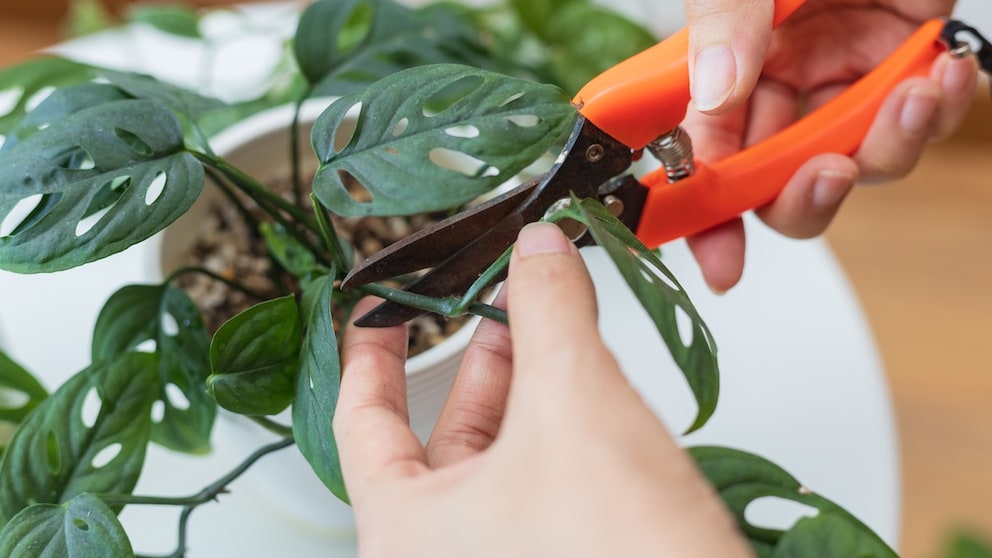
In general, it’s not necessary to prune a Monstera. It’s a low-maintenance tropical plant that does well without trimming. However, there can be advantages to occasionally cutting it back. If the plant isn’t growing in the desired shape, I would recommend a shaping cut. A rejuvenation cut can also be worthwhile. I would also cut off diseased leaves. The remaining energy can then be directed into the formation of new leaves. You can also prune the Monstera for propagation.
When to Prune an Elephant’s Foot Plant

How to Prune Hibiscus Correctly
What to consider when pruning
If you decide to prune your Monstera, there are a few things to keep in mind to prevent significant damage to the plant.
The timing of a Monstera cut is particularly important. It should be done during the growth phase, in spring or summer, as the plant can recover better during this time. The cut should be made above a leaf node or an aerial root. When removing diseased leaves, it’s important to cut them as close to the ground as possible. Since you’re creating a wound on the Monstera during pruning, I would always ensure that the tools are clean and germ-free.
Important: Never cut more than one-third of the plant. With each leaf we remove, the plant loses an energy source, as less photosynthesis can occur. If you cut too much at once, the Monstera may become too weakened by the pruning and may not grow properly.
What the Monstera needs for recovery
By pruning, we’ve inflicted a wound on the plant. However, I would advise against using wound sealants, as they can do more harm than good. The wound will dry out on its own and should be kept dry to prevent rot.
After pruning, you can reduce watering a bit. The plant now has less leaf mass and doesn’t need as much water as before. For optimal recovery, the Monstera should be placed in a warm location, but not in direct sunlight. In the first few weeks after pruning, you should not fertilize the Monstera, as it should focus entirely on healing the wound.