


February 11, 2026, 4:23 pm | Read time: 3 minutes
When an orchid loses its last blooms, the disappointment is often great. For weeks, it was the centerpiece on the windowsill, and now only bare stems and green leaves remain. Many plant enthusiasts wonder at this moment whether the orchid is sick, has been improperly cared for, or needs to be pruned immediately.
In fact, wilting in orchids is a completely normal process. The key is not that the flowers disappear, but how you handle the plant afterward. Those who take the right steps now create the best conditions for a new bloom.
Step 1: Stay Calm and Look Closely
First of all, a wilted orchid is not sick or dead. In most cases, the plant has simply finished its blooming period. However, it’s important to take a close look at the flower stem. Its color and firmness provide clues about what to do next. As long as the stem is green and strong, it is still alive and should not be removed prematurely.
Step 2: Remove Wilted Flowers
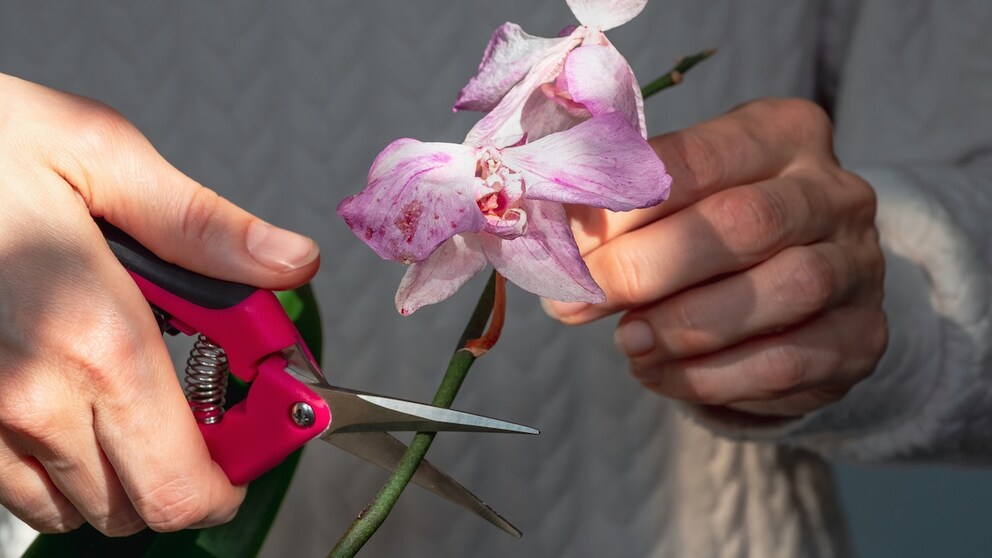
If the flowers are wilted or already dried up, they can be carefully removed. Often, they fall off on their own. Cutting off individual flowers is not necessary, but also not harmful, as long as the stem remains intact. For the orchid, this step is more cosmetic in nature.
Step 3: Properly Assess the Flower Stem
Now it’s time to decide whether to use the scissors or not. If the flower stem is green, it should be left alone. Especially with moth orchids, a seemingly spent stem can develop a new side shoot. However, if the stem turns yellow, brown, or dry, the plant has given up on it. In this case, it can be cut near the base with a clean, sharp pair of scissors.
Step 4: Adjust Care After Blooming
After blooming, many orchids enter a rest or recovery phase. They now require less attention but consistent conditions. Watering should continue moderately, and waterlogging should be avoided at all costs. Fertilizing should also be done sparingly, about every three to four weeks. A bright location without direct midday sun supports regeneration.

Expert Explains When Orchids Can Still Be Saved

Orchid Not Blooming After Repotting? Here’s Why
Step 5: Check Causes for Premature Wilting
If the orchid has lost its flowers very quickly, it’s worth looking into possible care causes. Drafts, temperature fluctuations, a change of location, or improper watering can cause flowers or buds to fall off prematurely. These factors should now be corrected so the plant can recover.
Step 6: Be Patient
Orchids take their time. Depending on the species, it can take several months for a new flower shoot to form. During this phase, the plant often shows its growth first in new leaves or roots. This is a good sign and no cause for concern.