


May 22, 2026, 4:16 am | Read time: 4 minutes
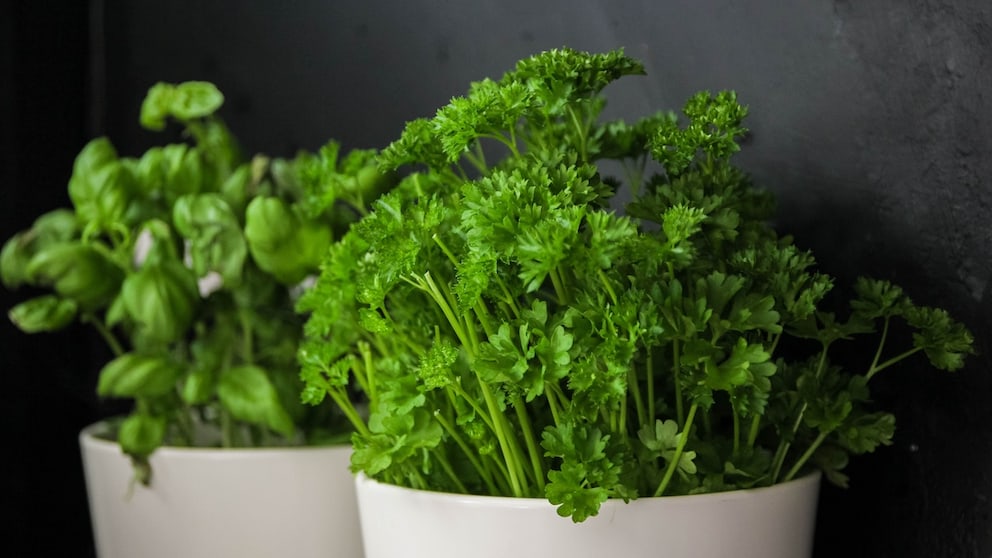
Casseroles, soups, and roasts are enhanced with a touch of green garnish. Parsley is particularly well-suited for this, not just because of its lively color. More importantly, parsley is a popular herb in the kitchen due to its flavor. If you plan to grow the plant yourself, you should pay attention to the following things. Otherwise, it’s likely that the plant won’t grow properly and yields will be lacking.
Various vitamins, folic acid, carotenoids, and minerals such as calcium, magnesium, and iron—you wouldn’t guess it by looking at the plant, but all of this is packed into parsley. A good reason to plant the herb in the garden or on the balcony. If the parsley doesn’t grow, various care mistakes might be the cause.
Wrong Location
Every plant has specific requirements for its location. If these are not met, it quickly affects its growth. For example, parsley does not thrive in a spot that is too dark or in direct sunlight. An ideal location is semi-shaded with indirect sunlight, whether in the garden bed, on the balcony, or on the windowsill.
Parsley Is Incompatible
Once you’ve found the right location, parsley should find the most optimal conditions possible. This also includes choosing the right neighboring plants. Plants that do not get along well with parsley should not be grown directly next to it. These include lettuce, other umbellifers, tarragon, and mint. Good neighbors in the bed, on the other hand, are:
- Tomato
- Pepper
- Asparagus
- Cucumber
- Basil
- Leek
Overwatering
Watering is one of the most important care measures because without enough water, parsley cannot grow. However, the right amount is crucial: If the herb is watered too often, it can inhibit growth and, in the worst case, even cause the plant to die. Especially for potted parsley, the soil should always be slightly moist but never permanently wet.
If excess water remains in the pot and cannot drain, it creates what is known as waterlogging. In this situation, the roots are constantly in water—conditions that only swamp and aquatic plants can tolerate. Parsley, on the other hand, reacts sensitively to this. The roots begin to rot, the root network is weakened, and the plant grows poorly or not at all.
Extra tip: The soil should always be moist. If you’re unsure whether to water parsley, simply stick your finger into the soil. If the top two to three centimeters feel sticky-moist, you don’t need to water. If they feel dry, then you can reach for the watering can.

4 Common Mistakes When Growing Herbs
What to Do When Parsley Turns Yellow
Mistakes in Harvesting
Many aromatic leaves are indeed the goal. But when harvesting, the right technique is crucial. If the shoots are cut back too much or too radically, it can weaken the plant and impair its growth. It’s better to regularly harvest only the outer shoots and leave the heart of the plant untouched. This way, parsley can grow back healthily and remain strong for a long time.
Crop Rotation Not Observed
It may sound odd, but some plants can actually suffer from what is known as growth depression. This includes parsley. This phenomenon is often referred to as self-incompatibility and is related to what is known as soil fatigue. Plants like parsley, dill, or even roses deplete the soil of important nutrients over time. The soil is then considered “tired” and needs a recovery period to replenish these nutrients.
To avoid soil fatigue and the resulting growth depression, parsley should be planted in a new location with fresh soil the following year. It is recommended to plant parsley in the same spot only after about four to five years. For potted plants, the substrate should also be regularly renewed.