


October 6, 2022, 9:35 am | Read time: 7 minutes
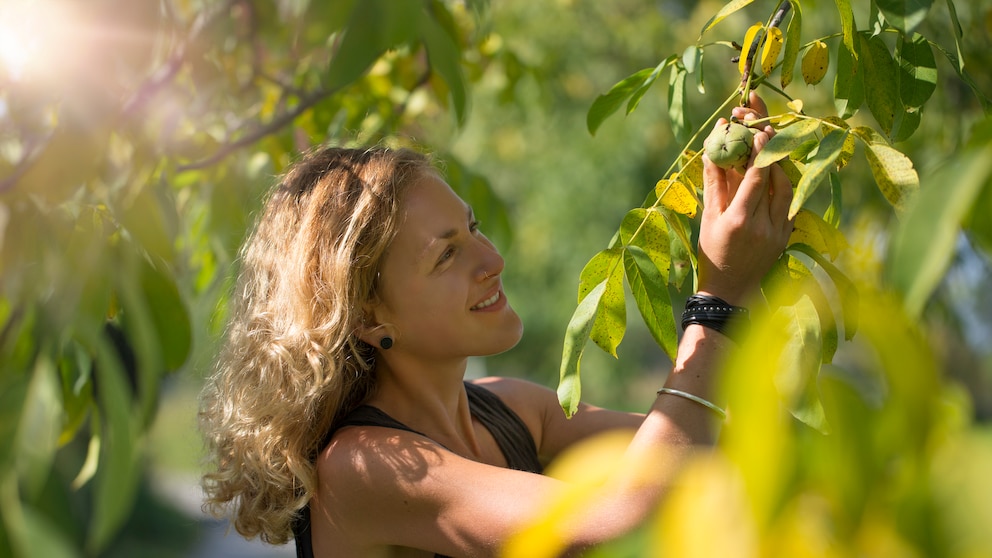
Walnut trees display beautiful blossoms in spring. In fall, they produce nutritious, delicious fruits. However, hobby gardeners need to consider a few things when planting and caring for them.
Walnuts, chestnuts, almonds, or hazelnuts–nut trees are a wonderful addition to the garden with their stunning blossoms and delicious fruits. Large trees like walnut trees are an impressive eye-catcher when planted alone. Low-growing shrubs offer privacy as a hedge. Well cared for, they reward with an opulent display of blossoms in spring and many delicious fruits in fall.
Planting Nut Trees in the Garden
The nuts hanging from the trees in fall are packed with essential fatty acids and minerals. Hazelnuts and walnuts are delicious and also serve as an important food source for many small garden inhabitants like squirrels, hedgehogs, or birds. Depending on the type, nut trees have different requirements in the garden:
1. Hazelnuts
Hazelnuts are undemanding and adapt to almost any soil. The robust shrubs are excellent as hedge plants. Blood hazels are also a true visual delight. These hazel shrubs produce dark red blossoms in spring.
Hazelnuts are vigorous shrubs. To ensure they pollinate via the wind, you need to plant two shrubs. Also, allow enough space when planting, ideally three to four meters apart. Hazel shrubs can be planted as a hedge in a large garden. A moist soil is ideal.
Also interesting: Growing and Caring for Peanuts in the Garden
2. Walnuts
Walnuts grow significantly large over time. The crown of a walnut tree can spread up to about 12 meters. However, this can take up to 20 years. The root system also spreads widely in the garden.
The original nut trees are mainly suitable for large gardens, where they make a proud figure. The catch: Those who plant a walnut tree must be patient. Walnuts planted from seedlings only bear fruit after 15 to 20 years.
However, you can now find grafted, smaller walnut trees in stores. “Esterhazy II” grows only moderately and can be planted in a “normal” sized garden, but in a warm location. The variety “No. 139” grows moderately as well. Like Esterhazy, it does not require cross-pollination. No. 139 also withstands frosty nights. These varieties grow much faster and produce fruit after just a few years.
3. Chestnuts
This nut tree produces delicious shell fruits. The catch: There’s no room for small gardens. Chestnuts can reach a height of up to 60 meters under ideal conditions and live up to 800 years. It can take 30 years for chestnuts to be in full bloom. Insects like beetles or bees pollinate the blossoms.
Hot chestnuts or marrons are delicious on a cold winter day. The fruits are also enjoyed by many rodents, such as squirrels.
4. Almonds
With their delicate pink, fragrant blossoms, almond trees herald the spring. Freshly picked fruits from the tree are particularly aromatic. It is the kernels, or seeds, in the green fruit shell that are enjoyed. An almond tree thrives particularly well in a sunny spot in the garden.
By the way: Ornamental almonds are a real eye-catcher in the garden. These shrubs grow about two meters high and form true clouds of blossoms in spring. The catch: As beautiful as they are, ornamental almonds are not edible.
Also interesting: The Most Effective Methods to Protect Fruit Trees from Maggots

Should You Feed Squirrels in Winter?
Why You Shouldn’t Completely Remove Fall Leaves From Your Garden
Optimal Care for Nut Trees
Watering
For all nut trees: Water regularly, but avoid waterlogging. The soil should be deep and nutrient-rich.
Fertilization
Mature compost is the magic word. Once your nut tree loses its fruits, apply a layer of this nutrient-rich fertilizer around the trunk.
Pruning
- Walnuts: The trees or shrubs generally do not need pruning.
- Hazelnuts: Vigorous thinning and cutting back promote growth and renewed fertility.
- Almonds: To maintain a beautiful shape and promote fruiting, ornamental almonds should be pruned regularly.
- Ornamental almonds: Prune back heavily after blooming to encourage a second bloom.
- Chestnuts: Pruning is generally not necessary. Only remove branches that are too dense or diseased.
Propagation
- Walnuts: Place walnuts without shells in a pot with seedling soil. Keep the soil consistently moist. Place the pot in a bright location. Now, it’s time to wait! In spring, the first shoots will appear. Then you can repot the walnuts and place them in a sunny, sheltered spot outdoors.
- Hazelnuts: To germinate well, store hazelnuts in a cool place and plant the seeds in the garden bed in fall. In spring, the first tender shoots will appear.
- Almonds: An almond tree can easily be grown as a container plant from seeds. Give the shell a generous cut. Then place the prepared almond in seedling soil and water it well, but not too much. After some time, the seed will begin to germinate. Then you can transplant the almond into a pot and place it outdoors. An ideal location is wind-protected and sunny.
- Chestnuts: Simply plant fresh chestnuts in the soil–and wait 20 years. Soak dry chestnuts in water for two days before planting the seeds.
Tip: For all fruit trees, propagation through cuttings is also possible. How exactly this works is explained by myHOMEBOOK in this article.
Frost Protection
Young fruit trees in the garden need protection from frost and winter cold in the first few years. A layer of fleece is suitable for this. To prevent it from being blown away by the next storm, tie the protective layer to the trunk with a band or weigh it down with stones. A layer of mulch around the fruit trees also protects against dry cold.
The Right Time to Harvest
- Walnuts: In September and October, ripe walnuts fall to the ground, and their shells crack open. Now is harvest time! Dried walnuts can be stored for months.
- Hazelnuts are harvested in fall. Simply shake the tree, and the ripe nuts will fall off and can be collected.
- Almonds: In fall, fuzzy, green, and wrinkled fruits form. The shells are not only unsightly but also inedible. However, the kernels inside are edible. They can be eaten raw or used as a baking ingredient.
- Chestnuts: From early fall to November, chestnuts ripen into tasty fruits. They fall from the tree and can be easily collected. Marrons, as chestnuts are also called, should not be eaten raw. They can cause gastrointestinal issues. Score chestnuts crosswise on the shell and boil them for 20 minutes in salted water. Once the shells crack open, they are edible.
Also worth reading: Tea Tree Oil–The Secret Weapon Against Annoying Garden Pests?
Diseases and Pests
- Walnuts are susceptible to pests like the walnut fruit fly. Infested shells turn black and become slimy and mushy. Fallen fruits must be immediately removed and destroyed or disposed of in household waste. Not in compost! The same applies to plant parts that are infested with fungi or diseased.
- Hazelnuts are sometimes infested by the hazelnut borer, which shows as small puncture marks on the leaves and fruits. A stretched fleece on the ground and SC nematodes help against this. How to use nematodes as a biological plant protection is explained by myHOMEBOOK here.
- Aphids sometimes spread on the shoot tips of almond trees. But there is also a remedy for this. The fruits can also be infested by a fungus and then appear gray and shriveled. The tree then bears so-called fruit mummies. In this case, quickly remove infested fruits in household waste.
- Even chestnuts are not spared from pests and fungi. Healthy trees that are in a sunny and wind-protected location are more resistant to infestation. Additionally, a clay ring around the tree trunk helps. When planting a new chestnut, choose varieties resistant to the dreaded chestnut blight.