


August 4, 2025, 11:09 am | Read time: 3 minutes
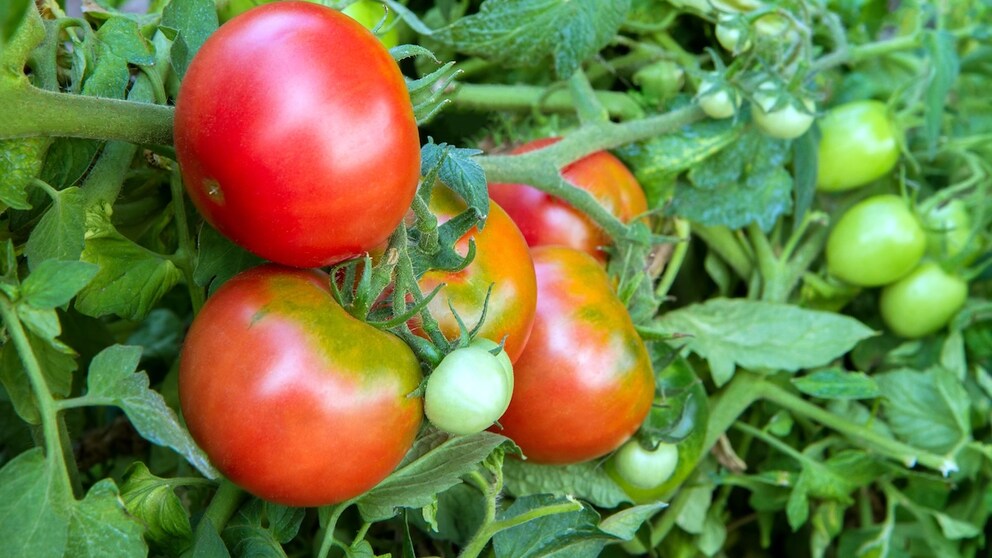
Tomatoes are among the most popular vegetables to grow in home gardens, but they’re not entirely hassle-free. The most dreaded tomato problem is undoubtedly late blight. However, there are several other issues that can arise when growing tomatoes. One of them is the so-called green shoulder. myHOMEBOOK explains what’s behind green shoulders in tomatoes.
What Is Green Shoulder and What Does It Look Like?
Green shoulder is not a disease in the true sense, nor is it caused by pests. It is rather a physiological disorder that hinders the ripening process of the fruit. Instead of turning uniformly red, tomatoes develop green and sometimes yellowish spots around the stem. The flesh underneath becomes hard and tasteless. Simply waiting won’t help, as the green shoulder does not ripen further.
Also interesting: Common Mistakes When Harvesting Tomatoes
What Causes Green Shoulders in Tomatoes?
Green shoulder is a disorder likely due to multiple factors. Both care mistakes and unfavorable weather and site conditions can be decisive. The possible reasons in detail:
1. The sunlight was too intense. The outer fruits are usually more affected than those growing inside the plant, which are more shaded.
2. It was too hot for too long.
3. Too many leaves were cut off.
4. The tomatoes were over-fertilized or fertilized incorrectly.
5. They were watered too much.
Are Tomatoes with Green Shoulders Edible?
Tomatoes with green shoulders cannot ripen further, but you don’t have to throw them away. It’s perfectly fine to cut off the green part. The rest of the tomato is, as long as it looks normal, perfectly edible.
Are Affected Plants Lost?
Even if the fruits of a tomato plant have green shoulders, it doesn’t mean that all subsequent fruits will also develop it. Once the growing conditions are sufficiently improved, new fruits will ripen completely.
Why Zucchini Rot at the Tip
The 5 Most Common Tomato Diseases and How to Combat Them
How Can You Prevent Green Shoulders?
Preventive measures arise from the possible causes of the disorder.
1. In very strong sunlight, sun protection can be helpful. Depending on the number of plants, shading nets, but also simple umbrellas or bed sheets can be used.
2. Nets, umbrellas, or sheets can also protect against overheating.
3. Tomato leaves should always be removed judiciously, not too abundantly. Even if diseased leaves need to be removed and thinning can be sensible, tomato plants need leaves.
4. Fertilization should match the needs of the tomatoes. A high nitrogen content is unfavorable, as is a lack of potassium. Special tomato fertilizers contain all the important nutrients in a balanced ratio.
5. Do not water too much. Tomatoes should not dry out, but too much water is also harmful.
Choosing tomato varieties can also help avoid green shoulders. Older varieties are more often affected, especially dark tomato varieties and beefsteak tomatoes. Light-fruited types are generally less affected.
Trouble at the Other End of the Tomato: Blossom End Rot
The other end of the tomato can also cause trouble: With the so-called blossom end rot, dark, sunken spots appear at the blossom end. Just like green collar, blossom end rot is not a disease in the true sense, but also a physiological disorder. The good news: These disorders can be well managed with appropriate care measures.