


November 25, 2025, 1:51 pm | Read time: 2 minutes
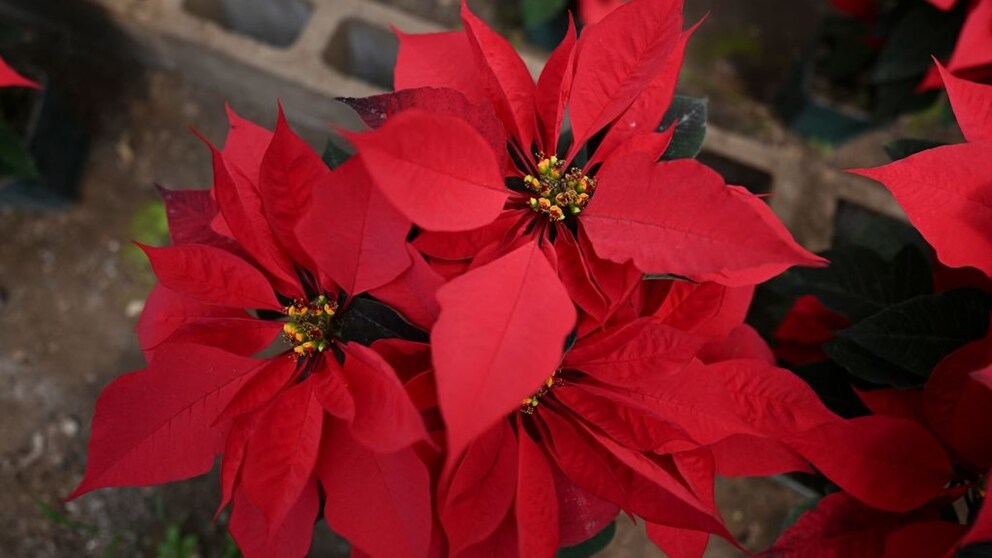
When winter days grow shorter, and many plants have long lost their green attire, the poinsettia brings color into the home. Its bright red, pink, or cream-colored leaves are a popular focal point during the Advent season. But what many don’t know: These colorful leaves are not flowers, but so-called bracts—a clever deception by nature.
What Exactly Are Bracts?
Bracts, botanically called “bracteae,” are specially colored leaves located directly below the inconspicuous flowers. In the case of the poinsettia, they serve a special purpose: They attract insects because the actual flowers are small, yellowish, and easy to overlook. These flowers sit in the center of the colorful leaves and are called “cyathia.”

Why the Poinsettia Loses Its Color

4th Advent Quiz: Can You Answer All the Questions Correctly?
The Function of Bracts
In its native Central and South America, the poinsettia (Euphorbia pulcherrima) grows as a shrub and can reach several meters in height. There, the striking bracts serve as a signal: They attract pollinators like insects and birds so that the inconspicuous flowers can be pollinated. The vibrant colors are no accident but an evolutionary adaptation for reproduction.
The bracts of the poinsettia thus take on the role that would otherwise be fulfilled by showy flower petals. However, there is a crucial difference: For the plant, it is much more energy—efficient to color only the top leaves in a striking red, pink, or white. The formation of showy flowers, on the other hand, would be very energy-intensive. Flowers consist of more complex structures to produce substances like fragrances and nectar.
How Do the Colors of the Poinsettia Develop?
The coloring of the bracts depends on light and temperature. For the vibrant colors to develop, the poinsettia requires a specific day length. As the days shorten and the plant experiences longer dark phases, the colorful bracts begin to form. This is also why poinsettias are in full bloom just in time for the Advent season—they respond to the natural change between day and night.