


October 20, 2025, 11:26 am | Read time: 4 minutes
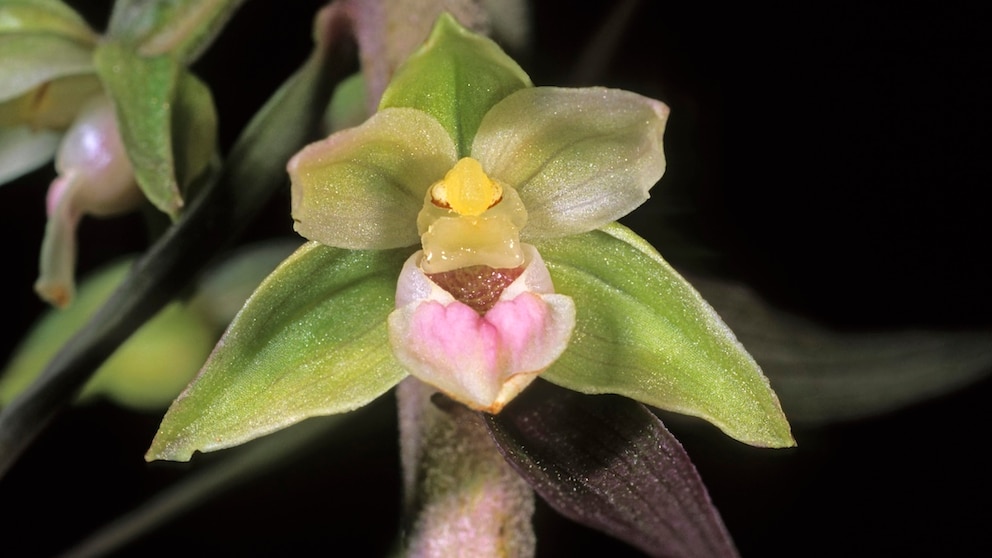
The delicate yet impressive Violet Helleborine (Epipactis purpurata) has been named the Orchid of the Year 2026. This decision highlights a species that captivates not with bright colors but with its subtle elegance and ecological significance.
The Working Group for Native Orchids (AHO) has named the Violet Helleborine as the Orchid of the Year 2026. The selection aims to draw attention to the fascinating lifestyle of this native orchid and the protection of its endangered habitats—a topic relevant to both garden and nature enthusiasts.
Characteristics and Special Features
At first glance, the Violet Helleborine may seem inconspicuous, but upon closer inspection, it reveals its full beauty. Its sturdy, often violet-colored stem gives the plant its name. It can grow up to half a meter tall and bears numerous, densely packed flowers in an elegant, slightly drooping cluster.
Particularly noteworthy is its late blooming period. While many orchids have already faded, the Violet Helleborine often opens its flowers only in August. This timing is advantageous, as it faces little competition from other plants for pollinators and still attracts bumblebees, hoverflies, and wasps in the late summer forests.
Its preferred habitat is shady, moist locations in beech or hornbeam forests. The Helleborine thrives where the soil is rich in humus and slightly moist. It can also occasionally be found on moist slopes, near ponds, or along stream banks—anywhere light, moisture, and soil life are in a delicate balance.
A Habitat in Transition
The designation as Orchid of the Year is much more than an aesthetic honor. It is also a call to protect sensitive ecosystems. The natural habitats of the Violet Helleborine are increasingly threatened by human intervention. The loss of shady, moist forest structures, such as through clear-cutting, spruce dieback, or drainage, alters the microclimate and deprives the plant of its livelihood.
Forests are particularly at risk when their moist soils dry out or are compacted by forestry measures. The increasing summer heat also plays a role: The plant relies on a stable, cool forest climate. Its populations are therefore declining in many regions. By choosing it as the Orchid of the Year 2026, the aim is to draw attention to these developments and the need to restore native forests to a more natural state.
Orchid of the Year 2023 Has Been Chosen
Why Orchids Prefer a Transparent Pot
What Garden and Homeowners Can Learn from This
While the Violet Helleborine is not a typical indoor or potted orchid, garden enthusiasts can learn much from its lifestyle. Those who design their gardens naturally also create valuable habitats for native orchids and many other species. Under trees with loose leaf litter, moist humus soil, and semi-shaded conditions, similar ecological niches can be created as the Helleborine prefers in nature.
Equally important is the appreciation of native plants. While exotic orchid species often take center stage, the fascinating representatives of our own flora are easily forgotten. Yet they are not only beautiful but also ecologically significant. They provide food for insects and indicate the health of a habitat.
By avoiding chemical fertilizers, maintaining moist areas, and not completely removing leaf litter, small refuges can be created where even more sensitive wild plants can thrive. Thus, the Orchid of the Year becomes a symbol of sustainable garden design and a conscious approach to nature.
An Ambassador of the Quiet Forests
The Violet Helleborine represents the quiet beauty and ecological sensitivity of our native flora. Its selection as the Orchid of the Year 2026 invites us to take a closer look: in the forest, in the garden, perhaps even in our own surroundings. Thus, a rare orchid becomes more than just a botanical treasure: It becomes an ambassador for biodiversity, for the protection of native habitats, and for a new, more mindful way of experiencing nature.