


June 30, 2023, 9:18 am | Read time: 7 minutes
Natural toxins are present in many plant-based foods. For the plants themselves, they serve an important function. For us, however, they can lead to health problems. We offer a few tips on safely enjoying beans, tomatoes, and other vegetables.
Those who want to eat healthily should reach for vegetables several times a day. And not without reason: Vegetables contain essential vitamins, minerals, and fiber that the body urgently needs. Yet, vegetables can also be harmful or even downright toxic. With a bit of background knowledge and a cooking pot, you can easily avoid the plant toxins in beans, tomatoes, and the like.
What Function Do Plant Toxins Have?
Plant toxins, found in tomatoes, potatoes, beans, rhubarb, spinach, and some other vegetables, are highly beneficial to the plants themselves. They serve as protection against small and large predators like insects or mice. They also protect the plants to some extent from fungal infections. We introduce a few popular vegetables that contain phasin, glycoalkaloids, or oxalic acid and explain what to consider during harvesting, preparation, and consumption.
Phasin in Legumes
Phasin is a toxin from the lectin group. It is found in legumes such as beans, lentils, and chickpeas. Although sugar peas, marrowfat peas, and garden peas are also legumes, they are an exception. They do not contain phasin.
Eating raw beans, chickpeas, or lentils can cause significant health damage, such as intestinal inflammation and bleeding, which can even be fatal. Therefore, these foods should only be consumed if they are thoroughly cooked. “Phasin is destroyed by heat. Depending on the size of the legumes, a cooking time of 10 to 15 minutes is recommended,” explains Gabriele Kaufmann, a nutritionist at the Federal Center for Nutrition (BZfE). Steamers are not suitable for cooking beans because the temperatures required to completely destroy phasin may not be reliably reached.
It is generally recommended to discard the cooking water from phasin-containing foods. At the same time, there are many recipes where discarding the cooking water is not intended. In bean soup, for example, the beans are usually cooked with other vegetables simultaneously. How does that fit together? Gabriele Kaufmann: “Discarding the cooking water is recommended as a second precaution. For normal, healthy people, cooking is sufficient, as the phasin is destroyed by adequate heating.” However, for the elderly, sick people, and small children, it may be advisable to discard the cooking water regardless of the recipe. This also reduces substances that can cause unwanted bloating in sensitive individuals.
Related: Can you still eat leaf lettuce when it blooms?
Which vegetables should not be eaten raw?
How to Store Potatoes Properly to Keep Them Fresh Longer
Glycoalkaloids in Nightshades
Nightshade plants like tomatoes, potatoes, peppers, and eggplants contain various toxic alkaloids. These can cause stomach pain, headaches, and nausea and–in severe cases–lead to the breakdown of red blood cells, cramps, and paralysis. Unlike phasin, these substances are heat-resistant and cannot be destroyed by cooking.
1. Tomatine in Tomatoes
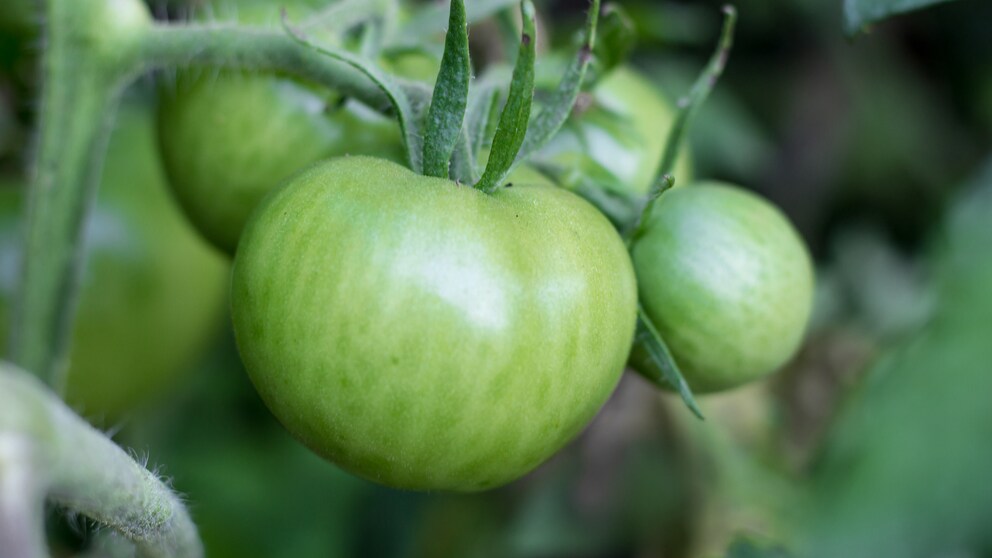
In tomato plants, the toxic alkaloid tomatine is found in all parts of the plant, except the fruits. However, this is not entirely true. Unripe tomatoes contain tomatine, as do the stem attachments of the fruits. Therefore, tomatoes should be allowed to ripen before consumption, and–at least for tomatoes larger than cocktail size–the green, hard stem attachment should be removed.
There also seems to be a contradiction between the recommendation not to eat unripe tomatoes and the fact that there are plenty of recipes for chutneys or jams that use green, unripe tomatoes.
Gabriele Kaufmann explains: “Tomatine is currently considered less harmful than solanine found in potatoes. If a healthy adult does not exceed typical consumption amounts, problems are generally not expected. However, one should be aware that we are dealing with natural products and thus with natural fluctuations. Elderly and sick people, as well as small children, may react more sensitively, even to smaller amounts.”
2. Solanine in Potatoes
The potato was not named the Poisonous Plant of the Year 2022 for nothing. Solanine is present in all parts of the plant in varying concentrations, least in the tubers. However, the toxin can accumulate in them as well. It is found in green spots, sprouting and damaged potatoes, and even in the potato skin.
Solanine forms in the tubers under the influence of light. Those who grow potatoes in the garden should ensure that the tubers are always well covered with soil. Even harvested potatoes form solanine if stored too brightly. If the green spots are generously cut out of the potato, the rest can still be eaten. Sprouting, still firm potatoes can also be consumed, provided the sprouts are no more than one centimeter long and are also cut out deeply into the tuber. The same applies to damaged potatoes. Potatoes with skin should generally be eaten only rarely. If they do end up on the plate, they should be fresh and undamaged tubers. Small children should not eat unpeeled potatoes at all.
Related: How to prevent potatoes from sprouting
3. Solanine in Eggplants
Eggplants should always be consumed ripe, as unripe fruits contain solanine. While eggplants were considered toxic when raw regardless of ripeness until recently, today’s varieties usually contain very little or no solanine. Nevertheless, it is advisable to eat them only cooked, fried, or grilled, as they are not enjoyable raw.
4. Solanine in Peppers
Green peppers can be eaten raw without concern. Although they are not yet ripe, they contain only negligible amounts of solanine. However, all other parts of the pepper plants contain solanine and are therefore not suitable for consumption.
Oxalic Acid in Rhubarb, Swiss Chard, and Spinach
Oxalic acid is a natural fruit acid found in many fruits and vegetables. It is present in carrots, kale, cucumbers, and various berries. However, the content is so low that it has no significant effects.
In other vegetables like rhubarb, Swiss chard, and spinach, the situation is different. Here, larger amounts of oxalic acid are present. The acid prevents the absorption of important minerals, especially calcium. Therefore, it is generally a good idea to combine oxalic acid-containing foods with calcium-rich ones. For example, serve rhubarb with yogurt or cream, or cook a cream sauce with spinach or prepare a calcium-rich dessert. Vegans can opt for combinations with nut butter or drink a glass of calcium-rich mineral water with their meal. Special caution is advised for people prone to kidney stones: “They should avoid oxalic acid-containing vegetables, as oxalic acid cannot be broken down in the body and must be excreted through the kidneys,” says Gabriele Kaufmann.
Healthy people need not worry if they do not regularly consume these vegetables in large quantities. Additionally, oxalic acid can be reduced with a few tips and tricks.
Oxalic Acid in Rhubarb
By following a few rules and keeping these tips in mind, you can significantly reduce the oxalic acid content in rhubarb.
- Harvesting ends on June 24, as oxalic acid formation increases afterward.
- Young stalks grown in a sunny location contain less oxalic acid than older stalks grown in partial shade.
- Red-stemmed or even red-fleshed varieties contain less oxalic acid than green-stemmed ones.
- If rhubarb is peeled, cut into small pieces, and poured over with hot water, the oxalic acid content is reduced by about half. The water is then discarded.
- A pinch of baking soda or baking powder in the cooking water can partially neutralize the oxalic acid.
Oxalic Acid in Swiss Chard
Similar to rhubarb, the oxalic acid content in Swiss chard can also be reduced.
- Cooking removes some of the harmful acid from Swiss chard. Even brief blanching reduces the oxalic acid by about half. However, this only works if the water is discarded afterward.
- Swiss chard should be fertilized sparingly, as the oxalic acid content can increase due to the nitrogen in the fertilizer.
- Young Swiss chard leaves contain less oxalic acid than older ones.
Oxalic Acid in Spinach
Spinach is also known for its oxalic acid content. And there are a few measures to minimize it.
- The younger the leaves, the less oxalic acid they contain. So don’t wait too long to harvest.
- Cooking and blanching reduce the oxalic acid content, provided the water is not used.
- The leaves contain more oxalic acid than the stems. So if you don’t remove the stems, you’ll have less oxalic acid in more spinach.