

August 5, 2026, 4:47 am | Read time: 5 minutes
In hot weather, fresh fruit can be the ideal snack for in between meals. Unfortunately, fruit flies often enjoy fruit baskets too, quickly becoming a nuisance, especially in the summer months. To get rid of these insects, you don’t always need a long list of home remedies. Carnivorous plants can also help keep fruit flies away. myHOMEBOOK shares which types are suitable for a fruit fly infestation and how to use them.
Carnivorous Plants Against Fruit Flies
Fruit flies love the smell of ripe and rotting fruit. They particularly enjoy feeding on microorganisms like yeasts and bacteria that break down the fruit sugar. Plants such as basil and lavender are often recommended as a defense against fruit flies because they emit essential scents that are supposed to keep insects away. While these herbs are a great visual addition to the kitchen, they are often not enough on their own to combat fruit flies.
If you want to consistently eliminate these pests, you should opt for a specific type of plant. Carnivorous plants, also known as carnivores, are a good alternative to herbs in defending against fruit flies. Unlike basil and others, they attract insects and then digest them.
Cape Sundew Attracts Fruit Flies with Sticky Leaves
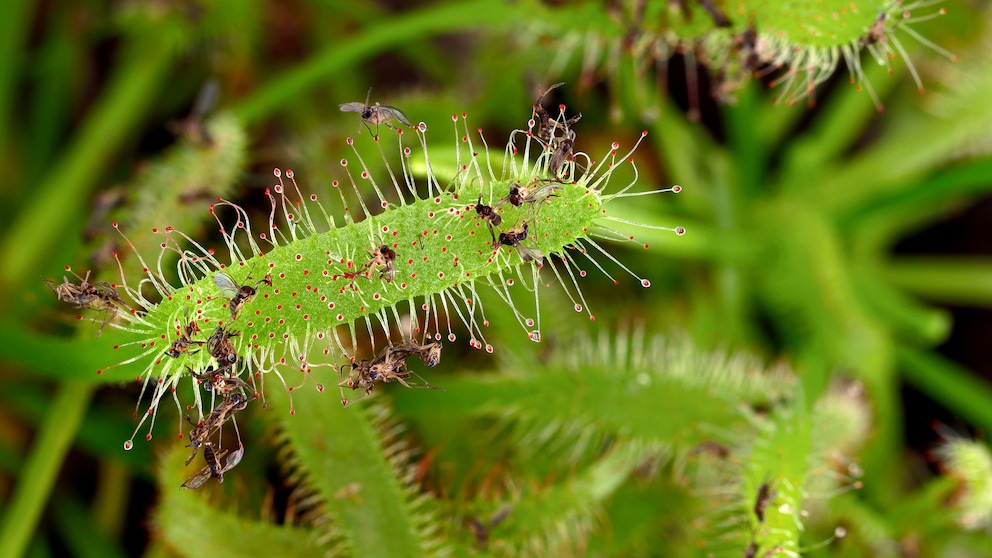
Visually, the Cape Sundew (Drosera capensis) is quite striking. It forms elongated trap leaves with reddish-brown tentacles. The plant is not only beautiful to look at but also effective against fruit flies. “It has a larger surface area to catch and ‘process’ insects than other carnivores. Additionally, Drosera capensis produces a secretion that attracts insects,” explains Tom Donat from the Botanical Garden Berlin.
But it’s not just the shiny secretion that attracts fruit flies. With sufficient light exposure, the leaves of the Cape Sundew turn reddish, which, according to the expert, is appealing to insects. Once a fruit fly gets caught in the Sundew’s leaves and becomes ensnared in the secretion, the tentacle wraps around the fruit fly and presses it against the leaf.
The Cape Sundew is very low-maintenance, requires no winter dormancy, and is available in many home and garden stores. However, care should be taken when watering the plant. “Rainwater or distilled water is best for watering—not water with lime. An ideal setup is a pot cover filled two-thirds with rainwater. Once the water is used up or evaporated, it should be refilled,” says Donat.
If you want to plant this type of carnivore, you should also be careful not to fertilize it. Since the carnivorous plant originally comes from nutrient-poor habitats, it is not designed to absorb high amounts of minerals. If necessary, it is more advisable to catch small insects and provide them to the plant as additional food, the expert advises.
Butterwort is Also Popular
Butterwort, known as Pinguicula, is another popular carnivorous plant and is also suitable as a defense against fruit flies. Native species include the Alpine Butterwort (Pinguicula alpina) and the Common Butterwort (Pinguicula vulgaris). Both species are frost-hardy and can overwinter outdoors, but they require a consistently moist substrate.
With its sticky leaves, Butterwort catches fruit flies and other small insects. The glands on the leaf surface produce a secretion that traps the prey. The Butterwort then secretes enzymes that break down the animal. In some species, the leaf edges can also curl up and enclose the prey. However, some Butterwort species require rest periods. During this phase, the number of their leaves decreases, and they catch fewer fruit flies, Donat explains.
The Mystery Behind the Sticky Droplets on Orchids
What You Can Do About Annoying Houseflies in Your Home
The Right Location for Carnivorous Plants
It makes the most sense to place carnivorous plants where most fruit flies are found, such as in the kitchen. Naturally, the location should also match the plant’s living conditions. Butterwort thrives best in a bright, semi-shaded window spot where it is protected from the sun.
The Cape Sundew should be placed in a semi-shaded or sunny spot, the expert explains. However, the carnivore’s secretion is so attractive to fruit flies that it also attracts insects that are not in the immediate vicinity of the plant, the expert adds.
Further Tips for Fruit Flies
With proper care, carnivores like the Cape Sundew can significantly reduce fruit fly infestations, Donat shares. However, the plant’s exact effectiveness also depends on the size of the infestation. So if you don’t want to immediately place a row of carnivorous plants in your kitchen, you should also consider other measures.
To reduce the number of fruit flies, you should limit their living conditions. Therefore, fruit should not be left out in the open for long periods, especially in summer, to prevent it from rotting. Overripe fruits should be consumed promptly or disposed of along with organic waste, as fruit flies also multiply quickly there. Open wine, juice, and beer bottles are best stored in the refrigerator. After consumption, the bottles should be rinsed quickly or disposed of directly. Additionally, it helps to regularly clean work surfaces and the organic waste container thoroughly.