


November 18, 2026, 10:17 am | Read time: 5 minutes
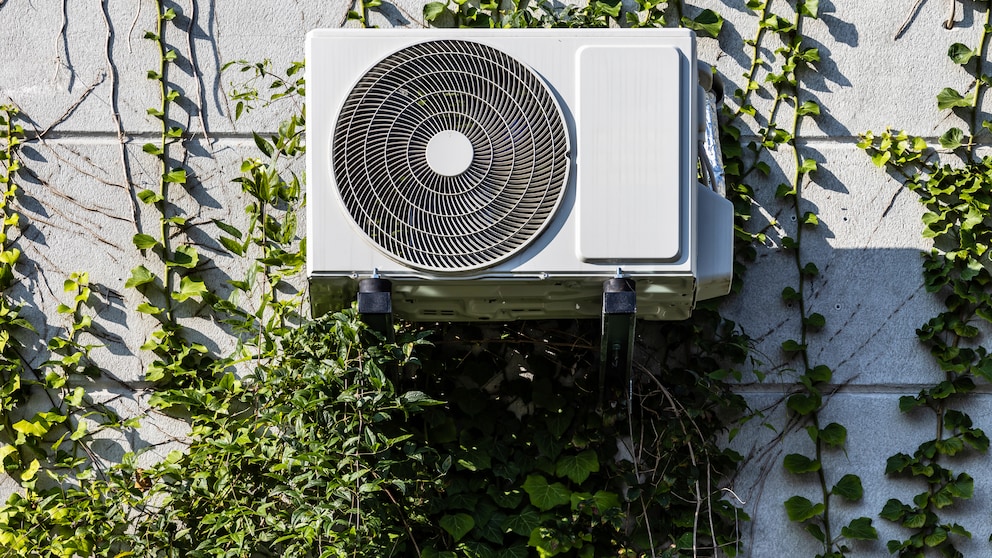
Those who install an air-water heat pump in their garden often want to visually conceal the usually bulky outdoor unit. However, not all types of planting are suitable for this. In the worst case, the efficiency of the system could suffer. myHOMEBOOK consulted Torsten Brämer from the online gardening community “Wir sind Garten” and the Consumer Center NRW for advice.
To make a heat pump less noticeable in the garden, a loose, suitable planting is usually sufficient. “The unit should not be completely surrounded or enclosed by greenery. It needs adequate air and must remain accessible for maintenance work,” clarifies gardening expert Torsten Brämer.
Why dense hedges slow down the heat pump
Dense hedges, fast-growing shrubs, climbing plants, and trees directly next to the outdoor unit are therefore unfavorable. These plants “can obstruct the airflow or shed leaves, seeds, and twigs toward the unit,” Brämer explains the problem.
Air-water heat pumps move large volumes of air. The device extracts heat from the drawn-in outside air and expels it cooled. If plants hinder the air supply or the device draws in its own cooled air again, it extracts less heat. More electricity is then needed for the same heating output.
Privacy screens or trellises should only be placed on the unit according to the manufacturer’s specifications. Plants that require regular pruning should also not be placed directly next to the outdoor unit of a heat pump.
Also interesting: 4 herbs that need pruning in the fall
Which plants are suitable next to the heat pump
“Compact, low-maintenance perennials and low, clump-forming grasses that do not grow into the air openings are well-suited,” advises Torsten Brämer from “Wir sind Garten.”
This description includes well-known garden plants such as:
- Blue fescue forms a gray-blue, semi-spherical tuft about 8 to 14 inches high. Gardeners call this growth clump-forming. The grass remains as a dense tuft in its place and does not spread in the bed. It likes sun and dry soil.
- The evergreen Japanese sedge tolerates shade and is therefore also suitable for the north side of the house. However, some varieties like “Ice Dance” spread through runners in the ground and gradually move closer to the unit.
- The bloody cranesbill grows about 6 to 18 inches high and thrives in sun and partial shade.
- Catnip withstands dry spells, blooms purple from June to September, and attracts bees.
- Coral bells form compact cushions of red, reddish-brown, or silvery foliage, which remains in many varieties even in winter. Their flower stalks rise significantly above the foliage depending on the variety. Therefore, lower varieties are the better choice.
Grasses with strong seed dispersal or fluffy flower heads like fountain grass or pampas grass are considered unfavorable by Brämer. Near the outdoor unit, seeds and fibers could be sucked in. “The key is less about a specific plant species and more about maintaining a consistently sufficient free space around the unit,” emphasizes Brämer.

“The Traditional Lawn Sprinker Is a Thing of the Past!”—Expert

How Often Should You Clean a Rain Barrel and Cistern?
How much distance plants need from the heat pump
There is no general rule for distance. The necessary clearances vary depending on the model and installation location. The specifications in the manufacturer’s installation manual are decisive.
Benedikt Sienz, heating technology consultant in the energy sector at the Consumer Center NRW e. V., notes upon inquiry from myHOMEBOOK: “A distance of one meter on the sides of the air intake and outlet should generally suffice. The distance is also beneficial for the plants themselves, as the outgoing air can be cooler in winter and hotter in summer, if the heat pump cools, than the surrounding outside air.”
For winter, Torsten Brämer specifies: “In heating mode, the expelled air is significantly colder than the ambient air. Plants directly in front of the exhaust side can suffer cold damage. It’s better to place them to the side or behind the unit.”
When the air cools, moisture condenses on the unit, similar to a cold glass. A drain or small hose directs this condensate away from the unit. Around this condensate drain, it can become wet and freeze in winter. “Moisture- or frost-sensitive plants are out of place there,” Brämer emphasizes. The drain itself should always remain clear.
Also interesting: Is a heat pump worth it for my house?
What else to consider around the heat pump
Plants around the outdoor unit are hardly suitable as noise protection, explains Torsten Brämer. “Those who want to reduce noise should discuss a suitable location with the specialist company,” advises the gardening expert.
Leaves, branches, and snow should be regularly removed from the area of the outdoor unit, warns Brämer. Snow should also not be placed directly in front of or on the unit.
In case of icing, the gardening expert recommends refraining from using tools to avoid damaging components. “The outdoor unit usually has its own defrost function,” adds Torsten Brämer.